








 English
 Français
 Deutsch
 Português
 Español
 русский
  한국어
한국어 العربية
 Italiano
 Indonesia
 Schweiz
 Polski
 Nederlands
 ישראל - עברית
 Perzisch
 ไทย
ไทย 日本語
日本語 ኢትዮ-አማርኛ
 Việt Nam
 Kiswahili
 Srpski
 Ελληνικά
 简体中文
简体中文Application and Advantages of AC Servo Drive Systems in Precision Manufacturing
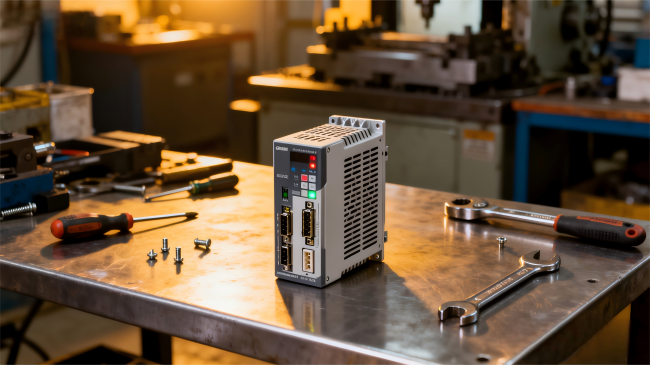
As manufacturing shifts toward high precision, high flexibility, and intelligent automation, traditional motor control methods are no longer sufficient. AC servo drive systems have emerged as the preferred choice for CNC machines, industrial robots, and automated assembly lines. This article provides an in-depth look at AC servo drive principles, selection criteria, and application advantages in precision control environments.
1. Understanding AC Servo Drive Systems
An AC servo system consists of a servo motor, servo drive (amplifier), feedback device (encoder or resolver), and a controller. The system uses a closed-loop control algorithm that adjusts motor speed, torque, and position in real time. Compared with standard VFDs, servo drives offer superior precision and faster dynamic response.
Key features include:
-
High-speed response and fine low-speed control
-
Excellent torque performance and overload capacity
-
Ideal for frequent start-stop, position tuning, and reverse operation
2. Key Parameters in Servo System Selection
-
Rated and peak torque: Must meet the load’s maximum torque demand and acceleration requirements.
-
Speed range: High-speed spindles or cutting tools may require speeds above 20,000 rpm.
-
Encoder resolution: Determines positioning precision. A 20-bit or higher encoder is recommended for precision systems.
-
Inertia matching: The motor and load inertia ratio should be within 1:3 to ensure responsiveness and stability.
-
Control and communication interface: Common options include EtherCAT, CANopen, and pulse+direction interfaces.
-
Environmental protection: Choose sealed or fan-cooled designs for workshops with oil mist, dust, or temperature fluctuations.
3. Typical Application Scenarios
-
CNC Machining Centers: Servo drives provide high-speed acceleration and precise toolpath control with positioning accuracy up to ±0.005 mm.
-
Robotic Arms: Servo motors ensure smooth, responsive motion across multiple axes.
-
Automated Assembly Lines: Enable high-frequency operations and synchronized motion between stations.
-
Tension Control Systems: In textile or film production, servo drives maintain precise tension during winding and stretching processes.
4. Common Issues and Solutions
| Issue | Possible Cause | Recommended Action |
|---|---|---|
| Overheating | Poor ventilation, excessive load | Check airflow, clean filters, verify load sizing |
| Encoder error | Cable interference or poor grounding | Reconnect cables, ensure shielding, inspect encoder |
| Slow response | Improper tuning or inertia mismatch | Re-tune control parameters, verify mechanical couplings |
| Vibration or noise | Bearing wear or imbalance | Inspect alignment, replace worn components |
(The table format here is illustrative but can be replaced with short paragraphs if preferred.)
5. Selecting the Right Supplier and Support
For global industrial customers, after-sales support and certification are as critical as product performance:
-
Ensure documentation and manuals are provided in English.
-
Confirm CE, UL, and RoHS compliance for international trade.
-
Choose suppliers offering remote diagnostics and firmware updates.
-
Verify spare part availability and warranty policy for long-term reliability.
6. Conclusion
AC servo drive systems are essential for achieving high-end automation and precision control. For foreign trade companies, mastering servo technology, selection logic, and customer needs allows for tailored, professional solutions. Providing technical value through detailed guidance builds trust and long-term cooperation in the global market.