








 English
 Français
 Deutsch
 Português
 Español
 русский
  한국어
한국어 العربية
 Italiano
 Indonesia
 Schweiz
 Polski
 Nederlands
 ישראל - עברית
 Perzisch
 ไทย
ไทย 日本語
日本語 ኢትዮ-አማርኛ
 Việt Nam
 Kiswahili
 Srpski
 Ελληνικά
 简体中文
简体中文A Comprehensive Analysis of Fan Technology: Principles, Classification, and Applications
1. Introduction
Fans, as key equipment that converts mechanical energy into gas energy, play a vital role in various fields such as industrial production, building ventilation, and energy development. From ventilation in factory workshops to energy conversion in wind farms, fans are ubiquitous. With the continuous advancement of science and technology, fan technology is also constantly innovating to meet the increasing demands for high efficiency, energy conservation, and environmental protection. This article will delve into the working principles, classification methods, performance parameters, design essentials, application fields, and future development trends of fans, presenting a comprehensive knowledge system of fan technology to readers.
2. Working Principles of Fans
2.1 Working Principle of Centrifugal Fans
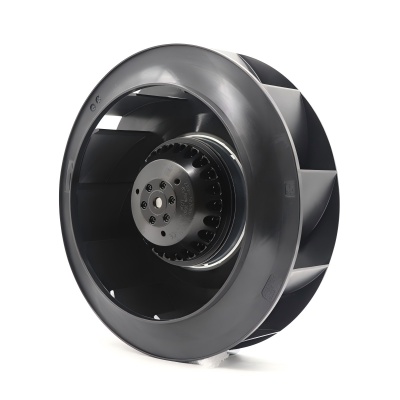
The working principle of centrifugal fans is based on the action of centrifugal force. When the impeller of the fan rotates at high speed driven by a motor, gas enters the central area of the impeller axially. Under the action of centrifugal force generated by the high-speed rotation of the impeller, the gas is quickly thrown to the edge of the impeller, and its speed and kinetic energy increase significantly. Subsequently, the high-speed airflow enters the volute-shaped casing. The cross-sectional area of the volute gradually increases, reducing the gas flow rate. According to the law of conservation of energy, kinetic energy is converted into static pressure energy, thereby increasing the gas pressure. Finally, the gas with a certain pressure is discharged from the fan outlet, providing power for subsequent processes or ventilation needs.
In this process, factors such as the geometric shape of the impeller, the number and angle of the blades, and the rotational speed have an important impact on the performance of the fan. A reasonably designed impeller can keep the energy loss of the gas low during flow and improve the efficiency of the fan. For example, compared with forward-curved blades, backward-curved blades can usually keep the fan efficient in a wider range of working conditions because they can better guide the gas flow and reduce flow separation and secondary flow phenomena.
2.2 Working Principle of Axial Fans
The working principle of axial fans is different from that of centrifugal fans. In axial fans, gas enters the fan axially and passes through the blades driven by a motor. The shape of the blades is similar to the wings of an airplane. When the blades rotate, their special airfoil structure causes a pressure difference on the blade surface. According to Bernoulli's principle, gas flows from the side with lower pressure to the side with higher pressure, thereby gaining energy and realizing axial flow and pressure increase of the gas. The airflow of axial fans basically maintains axial flow throughout the flow channel, unlike centrifugal fans, which have obvious radial acceleration and conversion of kinetic energy to static pressure energy.
Axial fans are characterized by large flow rates but relatively small pressure increases. Their efficiency is usually high near the design conditions, making them suitable for occasions where large flow rates are required but not too high pressures, such as ventilation systems in large buildings and cooling systems in power stations. Parameters such as the installation angle of the blades, the number of blades, and the rotational speed of the fan are also key factors affecting the performance of axial fans. By adjusting the blade installation angle, the working characteristics of the fan can be changed to adapt to different working conditions.
2.3 Brief Description of Working Principles of Other Types of Fans
In addition to the two common types of centrifugal and axial fans, there are other types of fans, such as mixed-flow fans, cross-flow fans, roots fans, etc., each with unique working principles.
Mixed-flow fans combine the characteristics of centrifugal and axial fans. After entering the fan, the gas has both axial and radial flow components. The shape of the impeller and the design of the blades make the gas subject to both centrifugal force and axial thrust during flow, thus to a certain extent combining the higher pressure rise capability of centrifugal fans and the larger flow characteristics of axial fans, which is suitable for some occasions with specific requirements for flow and pressure.
The airflow of cross-flow fans enters along the axial direction of the fan and flows out axially after passing through the impeller. Its impeller is usually flat, and the gas moves circumferentially inside the impeller, realizing gas transportation through the rotation of the impeller. Cross-flow fans are characterized by generating flat and high-speed airflow, and are often used in equipment with special requirements for airflow forms, such as air conditioning indoor units and air curtains.
Roots fans belong to positive displacement fans. It consists of two three-lobe or two-lobe rotors rotating in mesh in the casing. A small gap is maintained between the rotors and between the rotors and the casing. When the rotors rotate, gas is sucked into the cavity formed by the rotors and the casing from the air inlet. As the rotors rotate, the gas in the cavity is pushed to the exhaust port and discharged. Roots fans can provide a relatively stable flow rate and maintain good performance under high pressure, and are often used in occasions requiring a stable gas source, such as aeration links in sewage treatment and pneumatic conveying systems.
3. Classification of Fans
3.1 Classification by Gas Flow Direction
3.1.1 Centrifugal Fans
As mentioned earlier, in centrifugal fans, gas enters the impeller axially and mainly flows radially. Based on the principle of centrifugal force, kinetic energy is imparted to the gas through the high-speed rotation of the impeller, and then the kinetic energy is converted into static pressure energy through the volute. In the industrial field, centrifugal fans are widely used in ventilation, dust removal, air conditioning systems, etc. For example, in thermal power plants, centrifugal fans send air into the boiler to provide sufficient oxygen for fuel combustion; in industrial dust removal systems, the negative pressure generated by centrifugal fans is used to collect dust to ensure a clean working environment.
3.1.2 Axial Fans
The gas of axial fans enters the impeller axially and flows approximately along the axis on the cylindrical surface. Axial fans are characterized by large flow rates and relatively low pressure. In the ventilation systems of large buildings, axial fans can quickly send a large amount of fresh air into the room to maintain air circulation and freshness; in the cooling towers of power stations, axial fans are used to accelerate the heat exchange between air and cooling water and improve cooling efficiency.
3.1.3 Mixed-Flow Fans
The gas flow direction of mixed-flow fans has both axial and radial directions. It combines some advantages of centrifugal and axial fans and performs well in some occasions with specific requirements for flow and pressure. For example, in mine ventilation systems, mixed-flow fans can effectively adjust air volume and pressure according to different roadway layouts and ventilation requirements to ensure the safety of the underground working environment.
3.1.4 Cross-Flow Fans
The airflow of cross-flow fans flows transversely in the impeller after entering. Its unique airflow form makes it suitable for some special application scenarios. For example, in air curtain equipment, the flat airflow generated by cross-flow fans can effectively block the exchange of air inside and outside the room, playing the roles of heat insulation and dust prevention; in some small ventilation equipment, cross-flow fans are also widely used due to their compact structure and specific airflow characteristics.
3.2 Classification by Pressure
3.2.1 Ventilators
Ventilators usually generate relatively low pressure, and the general outlet pressure (pressure rise) is ≤ 15,000 Pa. Ventilators are mainly used for ventilation of buildings, air transportation in air conditioning systems, etc. In home and office air conditioning systems, ventilators are responsible for sending treated air into various rooms to create a comfortable indoor environment; in factory workshops, ventilators can discharge harmful gases and dust to improve workers' working conditions.
3.2.2 Blowers
The pressure range of blowers is between that of ventilators and compressors, and the outlet pressure is generally 15,000 - 350,000 Pa. Blowers are widely used in industrial production. For example, in sewage treatment plants, blowers provide sufficient oxygen for microorganisms in the aeration tank to promote sewage purification; in pneumatic conveying systems, the high-pressure airflow generated by blowers is used to convey powdery or granular materials, such as cement and grain.
3.2.3 Compressors
Compressors generate the highest pressure, with an outlet pressure ≥ 350,000 Pa. Compressors are mainly used in occasions requiring high-pressure gas. For example, in the petrochemical industry, gas is compressed for chemical reactions, gas storage and transportation, etc.; in air compression stations, compressors compress air into high-pressure gas to provide power sources for various pneumatic tools and equipment.
3.3 Classification by Application
3.3.1 Industrial Fans
Industrial fans play a key role in various industrial production processes. In the iron and steel smelting industry, fans are used in blast furnace blowing, converter oxygen supply and other links to provide necessary gas power for the smelting process; in chemical production, fans can be used to transport special gases such as corrosive gases, flammable and explosive gases, and control gas flow and pressure during chemical reactions to ensure safe and stable production.
3.3.2 Building Fans
Building fans are mainly used in building ventilation, air conditioning, and fire smoke exhaust systems. In large commercial buildings, ventilators and air conditioning fans work together to provide a comfortable indoor temperature, humidity, and air quality; in case of fire, fire smoke exhaust fans can quickly discharge smoke, creating favorable conditions for personnel evacuation and fire fighting and rescue.
3.3.3 Agricultural Fans
Agricultural fans are used in many links of agricultural production. In the process of grain drying, fans send hot air into the drying equipment to accelerate the evaporation of moisture in grain and achieve efficient drying; in livestock breeding places, fans are used for ventilation to adjust indoor temperature and humidity, maintain a good breeding environment, and reduce disease transmission.
3.3.4 Special-Purpose Fans
Special-purpose fans are designed and manufactured to meet specific environmental or process requirements. For example, in flammable and explosive environments such as coal mines, explosion-proof fans are needed. Their structure and materials are specially designed to prevent sparks generated by electrical faults or mechanical friction from causing explosions; high-temperature fans working in high-temperature environments are made of high-temperature resistant materials and equipped with special cooling systems to ensure normal operation under high-temperature conditions; for conveying gases containing corrosive media, anti-corrosion fans are made of corrosion-resistant materials, such as fiberglass and stainless steel, to extend the service life of the fans.
4. Performance Parameters of Fans
4.1 Flow Rate
Flow rate refers to the volume of gas passing through the fan per unit time, usually denoted by the symbol Q, with units such as cubic meters per second (m³/s) and cubic meters per hour (m³/h). Flow rate is one of the important performance parameters of fans, which directly reflects the ability of the fan to transport gas per unit time. In practical applications, fans with appropriate flow rates need to be selected according to different process requirements and ventilation requirements. For example, in the ventilation system of large industrial plants, in order to ensure good ventilation effect, the fan needs to provide a sufficiently large flow rate to ensure that indoor air can be updated in time and harmful gases and dust can be discharged. The flow rate of the fan is affected by many factors, such as the type of fan, impeller diameter, rotational speed, and the resistance of the inlet and outlet pipelines. Generally speaking, under the same conditions, the larger the impeller diameter and the higher the rotational speed, the larger the flow rate of the fan. However, increasing the impeller diameter and rotational speed may also bring other problems, such as increased power consumption of the fan, increased noise, and reduced stability of the equipment. Therefore, in the design and selection of fans, various factors need to be comprehensively considered to determine the most appropriate flow parameter.
4.2 Pressure
Pressure refers to the increase in pressure of gas in the fan, also known as wind pressure, which is divided into static pressure, dynamic pressure, and total pressure. Static pressure (Ps) is the pressure that gas has in a static state, which reflects the vertical force of gas molecules on the container wall, with the unit of Pascal (Pa). Dynamic pressure (Pd) is the pressure due to gas flow, and its magnitude is proportional to the square of the gas flow rate, with the same unit of Pa. Total pressure (Pt) is the sum of static pressure and dynamic pressure, i.e., Pt = Ps + Pd. Total pressure represents the total energy imparted by the fan to a unit volume of gas and is one of the important indicators to measure fan performance. In practical applications, the fan needs to overcome the resistance of the pipeline system to transport gas to a specified location, which requires the fan to have sufficient total pressure. For example, in long-distance pneumatic conveying systems, the frictional resistance of the pipeline and the local resistance of various pipe fittings are large, and the fan needs to provide high total pressure to ensure that materials can be smoothly transported to the destination. The pressure of the fan is closely related to factors such as the type of fan, impeller structure, rotational speed, and gas density. Different types of fans have different pressure generation mechanisms. Centrifugal fans can usually generate higher pressure, while axial fans have relatively lower pressure but larger flow rates. By reasonably designing parameters such as the shape of the impeller, the angle and number of blades, the pressure performance of the fan can be adjusted to meet the needs of different working conditions.
4.3 Power
Power refers to the input power of the fan, i.e., shaft power, denoted by the symbol N, with units such as watts (W) and kilowatts (kW). Shaft power is the power required by the driving motor when the fan is running, which reflects the energy consumption of the fan during operation. The shaft power of the fan is related to the flow rate, pressure, and efficiency of the fan. Generally speaking, the larger the flow rate and pressure, the greater the shaft power required by the fan. The shaft power of the fan can be calculated by the following formula: N = Q × Pt / (3600 × η), where Q is the flow rate (m³/h), Pt is the total pressure (Pa), and η is the total pressure efficiency of the fan. The total pressure efficiency of the fan is the ratio of the effective power of the fan to the shaft power. The effective power refers to the useful work done by the fan on the gas per unit time, i.e., effective power = Q × Pt. Total pressure efficiency reflects the effectiveness of the fan in converting input mechanical energy into gas energy and is one of the important indicators to measure the performance of the fan. The total pressure efficiency of modern high-efficiency fans can reach 85% - 92%. By optimizing the design and manufacturing process of the fan and adopting advanced materials and technologies, the total pressure efficiency of the fan can be improved, energy consumption can be reduced, and the goals of energy conservation and emission reduction can be achieved.
4.4 Efficiency
Efficiency is an important evaluation index of fan performance, which reflects the effectiveness of the fan in converting input mechanical energy into gas energy. The efficiency of the fan is divided into total pressure efficiency (ηt), static pressure efficiency (ηs), etc. As mentioned earlier, total pressure efficiency is the ratio of the effective power of the fan to the shaft power, i.e., ηt = (Q × Pt) / (3600 × N) × 100%. Static pressure efficiency is the ratio of the static pressure effective power of the fan to the shaft power, i.e., ηs = (Q × Ps) / (3600 × N) × 100%. Improving the efficiency of fans is of great significance for saving energy and reducing operating costs. In the design process of the fan, the efficiency of the fan can be improved by optimizing the aerodynamic design of the impeller, selecting appropriate blade profiles, and reducing the loss of airflow in the flow channel. The adoption of advanced manufacturing processes and materials to improve the processing accuracy and surface quality of the impeller also helps to reduce the energy consumption of the fan and improve its operating efficiency. For example, the use of three-dimensional twisted blade design and optimization of the shape and structure of the blade through CFD (Computational Fluid Dynamics) simulation can improve the flow of airflow on the blade surface, reduce flow separation and secondary flow loss, thereby significantly improving the efficiency of the fan. The application of some new materials, such as lightweight and high-strength composite materials for manufacturing impellers, can not only reduce the weight of the impeller and lower the moment of inertia but also help improve the efficiency of the fan.
4.5 Rotational Speed
Rotational speed refers to the number of rotations of the fan impeller per minute, denoted by the symbol n, with the unit of revolutions per minute (r/min). Rotational speed is one of the important parameters affecting fan performance, and it has a close relationship with flow rate, pressure, and power. According to the similarity law of fans, under similar working conditions, the flow rate is proportional to the rotational speed, i.e., Q1 / Q2 = n1 / n2; the pressure is proportional to the square of the rotational speed, i.e., Pt1 / Pt2 = (n1 / n2)²; the power is proportional to the cube of the rotational speed, i.e., N1 / N2 = (n1 / n2)³. By adjusting the rotational speed of the fan, the flow rate, pressure, and power of the fan can be changed to adapt to different working conditions. For example, in some occasions where the air volume demand changes with time, such as air conditioning systems having different requirements for indoor air flow in different seasons or different time periods, the air volume can be adjusted by adjusting the rotational speed of the fan, thereby achieving the purpose of energy conservation. Common methods for adjusting fan rotational speed include
frequency conversion speed regulation, hydraulic coupling speed regulation, electromagnetic speed regulation, etc. Frequency conversion speed regulation is a widely used speed regulation method at present. It adjusts the speed of the motor by changing the power supply frequency of the motor, thereby realizing the adjustment of the fan speed. Frequency conversion speed regulation has the advantages of wide speed regulation range, high regulation accuracy, and significant energy-saving effect, enabling the fan to maintain high operating efficiency under different working conditions.
5. Design Essentials of Fans
5.1 Aerodynamic Design
5.1.1 Impeller Design
The impeller is the core component of the fan for energy conversion, and its design plays a decisive role in the performance of the fan. In impeller design, the first step is to determine the type of impeller, such as centrifugal impeller, axial impeller, or mixed-flow impeller. Different types of impellers are suitable for different working conditions and performance requirements. For centrifugal impellers, the design of blade shape and angle is crucial. Due to their good airflow guiding performance, backward-curved blades can make the gas flow more smoothly in the impeller, reduce energy loss, and thus improve the efficiency of the fan, which is suitable for occasions with high efficiency requirements. Although forward-curved blades can generate higher pressure under the same size, their efficiency is relatively low, and they are generally suitable for situations where pressure requirements are high and efficiency requirements are relatively low. The number of blades also needs to be reasonably selected. Too many blades may lead to increased mutual interference of airflow between the blades, causing increased flow loss; too few blades may not make full use of the circumferential area of the impeller, affecting the performance of the fan. In addition, geometric parameters such as the diameter and width of the impeller need to be accurately calculated and optimized according to the performance requirements such as flow rate and pressure of the fan.
5.1.2 Volute Design
The main function of the volute is to collect the gas flowing out of the impeller and convert the kinetic energy of the gas into static pressure energy. The design of the volute should ensure minimal loss when the gas flows in the volute, and at the same time, it can effectively convert kinetic energy into static pressure energy. The cross-sectional shape of the volute is usually a gradually expanding spiral shape, which can make the gas decelerate gradually in the volute, realizing the smooth conversion of kinetic energy to static pressure energy. Parameters such as the size and expansion angle of the volute have an important impact on the performance of the fan. If the expansion angle of the volute is too large, it may cause separation and backflow of gas in the volute, increasing energy loss; if the expansion angle is too small, it may not make full use of the kinetic energy of the gas, affecting the effect of static pressure energy improvement. In the design of the volute, it is also necessary to consider the cooperation relationship between the volute and the impeller to ensure smooth airflow transition between the two and reduce airflow impact and local loss. Through CFD simulation analysis, the design of the volute can be optimized, the flow of gas in the volute under different working conditions can be simulated, and the geometric parameters of the volute can be adjusted according to the simulation results to improve the overall performance of the fan.
5.1.3 Inlet and Outlet Design
The design of the inlet and outlet also has an undeniable impact on the performance of the fan. The design of the inlet should ensure that the gas can enter the impeller uniformly and smoothly, reducing inlet loss. Common inlet forms include axial inlets and radial inlets, and different inlet forms are suitable for different types of fans. For example, axial fans usually adopt axial inlets to ensure that the gas enters the impeller axially, reducing the disturbance of the airflow. The inlet may be equipped with a bell mouth or a guide vane to improve the uniformity of the inlet airflow and reduce energy loss. The design of the outlet should consider the connection with the subsequent pipeline system to minimize the local resistance at the outlet. The shape and size of the outlet should be matched with the pipeline to avoid sudden expansion or contraction of the airflow, which may cause additional energy loss. In some cases, a diffuser may be installed at the outlet to further convert the kinetic energy of the gas into static pressure energy, improving the efficiency of the fan system.
5.2 Structural Design
5.2.1 Material Selection
The selection of materials for fan components is crucial to ensure the reliability, durability, and performance of the fan. The impeller, as a key rotating component, needs to withstand centrifugal force, airflow impact, and possibly corrosion or high-temperature effects. For general ventilation fans, cast iron or steel plates are commonly used due to their good mechanical properties and low cost. In high-temperature environments, such as in boiler fans, heat-resistant materials such as heat-resistant steel or nickel-based alloys are required to withstand high temperatures without losing their mechanical properties. For fans used in corrosive environments, such as those conveying acidic or alkaline gases, corrosion-resistant materials such as stainless steel, fiberglass-reinforced plastic (FRP), or plastic are selected to prevent material degradation and ensure a long service life. The casing of the fan is usually made of steel plates, which can be welded or bolted together, providing sufficient strength to withstand the internal gas pressure.
5.2.2 Rotor Dynamics Design
The rotor of the fan, consisting of the impeller, shaft, and possibly other components, needs to have good dynamic performance to ensure stable operation at high speeds. Rotor dynamics design involves analyzing the critical speed, vibration, and balance of the rotor. The critical speed is the rotational speed at which the natural frequency of the rotor coincides with the excitation frequency, which may cause resonance and severe vibration, leading to equipment damage. Therefore, the design must ensure that the operating speed of the fan is far away from the critical speed. Dynamic balance is also essential. Unbalanced rotors will generate centrifugal force during rotation, causing vibration and noise, reducing the service life of bearings and other components. The rotor needs to undergo strict dynamic balance testing and correction to ensure that the residual unbalance is within the allowable range. In addition, the design of the shaft and bearings should consider the load-bearing capacity, stiffness, and lubrication conditions to ensure stable operation of the rotor.
5.2.3 Sealing Design
Sealing design is important to prevent gas leakage and ensure the efficiency of the fan. For fans conveying toxic, flammable, or corrosive gases, reliable sealing is crucial to prevent gas leakage and ensure safety. Common sealing forms include packing seals, mechanical seals, and labyrinth seals. Packing seals use packing materials such as asbestos or PTFE to fill the gap between the shaft and the casing, achieving sealing through compression. Mechanical seals have higher sealing performance and are suitable for high-pressure and high-speed applications, consisting of stationary and rotating rings that form a sealing surface through contact. Labyrinth seals use a series of labyrinth clearances to prevent gas leakage by increasing the flow resistance of the gas, which is suitable for high-temperature and high-speed occasions with low leakage requirements. The selection of sealing forms should be based on the working conditions such as gas properties, pressure, and temperature.
5.3 Noise Control Design
Noise is an important issue in fan operation, which may affect the working environment and human health. Therefore, noise control design is an important part of fan design. The main sources of fan noise include aerodynamic noise, mechanical noise, and electromagnetic noise. Aerodynamic noise is generated by the interaction between the rotating impeller and the airflow, including vortex noise and dipole noise, which is the main noise source of fans. Mechanical noise comes from the friction and vibration of components such as bearings, gears, and shafts. Electromagnetic noise is generated by the electromagnetic excitation of the motor. To control noise, measures can be taken from the following aspects: optimizing the aerodynamic design of the impeller and volute to reduce airflow turbulence and vortex generation, thereby reducing aerodynamic noise; improving the machining accuracy and assembly quality of mechanical components to reduce mechanical vibration and friction noise; selecting low-noise motors and adopting vibration isolation measures such as installing shock absorbers between the fan and the foundation to reduce noise transmission. In addition, sound insulation covers or mufflers can be installed on the fan to further reduce noise emission.
6. Application Fields of Fans
6.1 Industrial Field
Fans are widely used in the industrial field. In the thermal power industry, boiler fans (including induced draft fans and forced draft fans) are essential equipment. Induced draft fans extract flue gas from the boiler and discharge it into the atmosphere through the chimney, while forced draft fans send air into the boiler to support fuel combustion. In the metallurgical industry, fans are used in blast furnaces, converters, and annealing furnaces, providing necessary gas for smelting and heat treatment processes. In the chemical industry, fans are used to convey various process gases, control reaction conditions, and ensure the normal operation of chemical production. In the building materials industry, such as cement plants and glass factories, fans are used in drying, grinding, and kiln systems to provide air and exhaust gas.
6.2 Construction Field
In the construction field, fans are mainly used for ventilation, air conditioning, and fire protection. In large commercial buildings, office buildings, and residential buildings, ventilation systems use fans to exchange indoor and outdoor air, ensuring fresh indoor air. Air conditioning systems rely on fans to circulate cold or hot air, adjusting indoor temperature and humidity. In underground spaces such as subway stations and tunnels, fans are used for ventilation to remove harmful gases and ensure air quality. Fire smoke exhaust fans are an important part of the fire protection system. In case of fire, they can quickly exhaust smoke, reduce the concentration of smoke and toxic gases, and provide a safe evacuation channel for personnel.
6.3 Agricultural Field
Agricultural fans play an important role in agricultural production. In grain storage and processing, drying fans are used to blow hot air through the grain pile, reducing the moisture content of the grain and preventing mildew. In livestock and poultry breeding, ventilation fans are used to circulate air in the house, reduce the concentration of harmful gases such as ammonia, adjust temperature and humidity, and create a suitable growth environment for livestock and poultry. In greenhouse cultivation, fans are used in conjunction with wet curtains to regulate the temperature and humidity in the greenhouse, promoting the growth of crops.
6.4 Energy Field
In the energy field, fans are used in various energy production and conversion processes. In wind power generation, wind turbines (a type of fan) convert wind energy into electrical energy, which is a clean and renewable energy source. In solar thermal power generation, fans are used in heat exchange systems to circulate heat transfer media and improve heat utilization efficiency. In biomass energy utilization, fans are used in gasification and combustion systems to provide air and exhaust gas, ensuring the efficient conversion of biomass energy.
6.5 Environmental Protection Field
Fans are widely used in environmental protection engineering. In dust removal systems, fans generate negative pressure to collect industrial dust, reducing air pollution. In waste gas treatment systems, fans convey waste gas to treatment equipment (such as scrubbers, adsorption towers) for purification, making the exhaust gas meet environmental protection standards. In sewage treatment plants, blowers provide aeration for aerobic biological treatment, promoting the growth and reproduction of microorganisms and improving the sewage treatment effect.
7. Future Development Trends of Fan Technology
7.1 High Efficiency and Energy Saving
With the increasing awareness of energy conservation and environmental protection, high efficiency and energy saving will be an important development direction of fan technology. Through continuous optimization of aerodynamic design, such as adopting more advanced blade profiles and impeller structures, the efficiency of fans can be further improved. The application of variable frequency speed regulation technology will be more popular, enabling fans to adjust their operating parameters according to actual needs, reducing energy waste. In addition, the development and application of high-efficiency motors (such as permanent magnet synchronous motors) will also contribute to energy saving of fan systems.
7.2 Intelligentization
Intelligentization is another important trend in the development of fan technology. Fans will be equipped with sensors and intelligent control systems to realize real-time monitoring of operating parameters (such as flow rate, pressure, temperature, vibration, etc.). Through data analysis and processing, the system can automatically adjust the fan's operating state to ensure optimal performance. Predictive maintenance based on big data and artificial intelligence will be widely used, which can predict potential faults in advance and arrange maintenance plans reasonably, reducing downtime and maintenance costs. Remote monitoring and control functions will also make fan management more convenient and efficient.
7.3 Low Noise and Environmental Protection
Reducing fan noise and improving environmental performance will receive more attention. New noise reduction technologies and materials will be continuously developed and applied, such as optimizing the structure of impellers and volutes to reduce aerodynamic noise, using sound-absorbing materials for casings, and adopting advanced vibration isolation measures. In terms of environmental protection, fans will be more suitable for conveying special gases (such as corrosive, toxic gases) with better sealing performance and corrosion resistance. The use of environmentally friendly materials and manufacturing processes will also reduce the impact of fan production and use on the environment.
7.4 Lightweight and Compact Design
With the development of new materials (such as composite materials) and advanced manufacturing technologies, fans will tend to be lightweight and compact. Lightweight materials can reduce the weight of the impeller and other components, reducing energy consumption and improving the dynamic performance of the rotor. Compact design can save installation space, making fans more suitable for applications with limited space, such as in ships, vehicles, and small equipment.
7.5 Integration and Systemization
Fan technology will develop towards integration and systemization. Fan systems will be more closely integrated with other equipment and systems (such as air conditioning systems, dust removal systems, etc.) to achieve overall optimization of the system. The integration of fan and motor, as well as the integration of control systems, will simplify the structure of the system, improve reliability, and reduce energy loss. System-level simulation and optimization will be more widely used to improve the overall performance and energy efficiency of the entire system.