







 English
 Français
 Deutsch
 Português
 Español
 русский
  한국어
한국어 العربية
 Italiano
 Indonesia
 Schweiz
 Polski
 Nederlands
 ישראל - עברית
 Perzisch
 ไทย
ไทย 日本語
日本語 ኢትዮ-አማርኛ
 Việt Nam
 Kiswahili
 Srpski
 Ελληνικά
 简体中文
简体中文Fan Procurement Guide: Professional Solutions from Selection to After-Sales Service
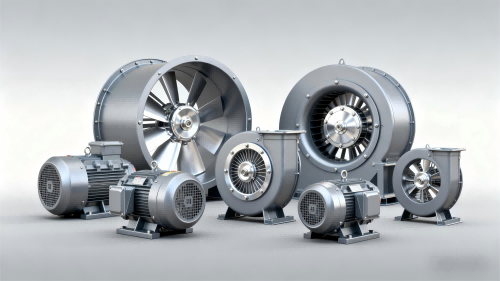
As a professional engaged in overseas fan procurement, do you often encounter challenges such as difficult working condition adaptation, complex cost accounting, and delayed after-sales response during cross-border procurement? Combining 15 years of experience in serving the global fan market, we have sorted out professional solutions in three core dimensions—selection, cost, and after-sales service—based on the actual needs of overseas procurement, providing you with rigorous and practical procurement references.
1. Working Condition Adaptation: Accurate Selection Strategy Centered on Parameters
The core prerequisite for overseas fan procurement is to ensure that the equipment performance is highly compatible with the local application scenarios and environmental conditions. Different application scenarios have significantly different technical parameter requirements for fans, and the selection logic needs to be refined based on specific working conditions:
1.1 Industrial Production Scenarios: Focus on Air Pressure and Medium Compatibility
In industrial scenarios such as workshop ventilation, boiler draft, and chemical gas transportation, it is necessary to focus on the matching degree between static pressure value and pipeline system resistance, as well as the compatibility between fan materials and the transported medium:
If the length of the ventilation pipeline exceeds 20 meters and includes 3 or more turning bends, a centrifugal fan with a static pressure of no less than 800Pa should be selected to avoid airflow attenuation at the end due to insufficient air pressure, which affects the workshop ventilation efficiency;
When transporting gases containing corrosive components in the chemical industry, in addition to calculating the air volume according to the standard of "workshop volume × 6-8 times/hour", the fan casing should be made of 304 stainless steel, and the impeller should be treated with PTFE coating to prevent premature equipment failure caused by medium corrosion.
We provide free cross-border working condition adaptation calculation services: You only need to provide parameters such as workshop area, pipeline diameter and length, medium temperature, and corrosion level, and you will receive a customized selection plan within 24 hours. The plan includes performance comparison data of more than 3 alternative models, covering key indicators such as air volume, air pressure, energy consumption, and materials, helping you intuitively evaluate cost-effectiveness.
1.2 Building Ventilation and Fire Protection Scenarios: Compliance with International Standards and Local Requirements
When fans are used for ventilation in commercial buildings (such as shopping malls and office buildings) or fire smoke extraction, they must meet both internationally accepted standards and local regulatory requirements at the procurement location:
Fire smoke extraction fans must comply with EN 12101-3 (European Standard) or UL 1995 (US Standard), have high-temperature resistance to operate continuously for 30 minutes at 280°C, and provide certification documents recognized by the procurement location such as CE, UL, or CSA;
Mixed-flow fans are recommended for underground garage ventilation. Compared with axial fans, under the same air volume of 30,000 m³/h, the noise can be reduced by 5-8 dB(A), and the static pressure can meet the resistance requirements of garage shaft ventilation, adapting to the acoustic and airflow requirements of underground spaces.
All our fire protection fans have passed mainstream international certifications, and each piece of equipment is accompanied by a complete compliance test report. After procurement, it can be directly connected to the local fire acceptance process without the need to coordinate third-party testing additionally.
1.3 Precision Equipment Cooling Scenarios: Strict Control of Noise and Airflow Stability
When equipping fans for medical equipment, electronic laboratories, and precision instruments, noise level and airflow uniformity directly affect the operating accuracy of the equipment, which requires focused control:
For fans supporting laboratory fume hoods, cross-flow fans are preferred, with an airflow uniformity error of ≤ 3%, which can avoid deviations in experimental data caused by turbulent airflow;
For medical equipment cooling, silent axial fans with noise ≤ 40 dB(A) should be used, and they should be integrated with PWM speed regulation function, which can automatically adjust the speed according to the real-time temperature of the equipment, ensuring cooling effect while reducing energy consumption.
For precision scenarios, we can provide on-site noise measurement reports and airflow simulation analysis diagrams to verify in advance whether the fan meets the technical requirements for equipment operation.
2. Cost Accounting: Lifecycle Economic Evaluation
Overseas fan procurement should go beyond the limitation of "only focusing on the initial quotation" and calculate costs from a full-lifecycle perspective. According to industry statistics, the initial procurement cost of a fan accounts for only 20%-30% of its total lifecycle cost, while energy consumption and maintenance costs account for more than 70%. The cost structure needs to be optimized from two aspects:
2.1 Energy Consumption Cost: Long-Term Energy-Saving Planning Based on Motor Type
Under the same air volume, motor efficiency directly determines energy consumption expenditure, and the appropriate motor should be selected based on operating hours and load fluctuations:
The efficiency of ordinary asynchronous motors (IE1) is about 75%-80%, which is suitable for short-term and low-frequency use scenarios, such as intermittent backup ventilation systems;
The efficiency of high-efficiency energy-saving motors (IE3) is ≥ 90%. Taking a 15kW fan operating for 8 hours a day as an example, calculated at the European industrial electricity price of 0.15 euros/kWh, an IE3 motor can save about 1,400 euros in electricity costs per year compared with an IE1 motor;
Variable frequency motors can dynamically adjust the speed according to the actual air volume demand. If there are obvious load fluctuations in the use scenario (such as the workshop operating at full load during the day and low load at night), variable frequency motors can achieve an additional 20%-30% energy-saving effect.
We will recommend the most cost-effective motor configuration based on the daily average operating hours and load fluctuation curve you provide, and issue a detailed energy consumption comparison calculation table to clearly show the long-term cost differences of different motor solutions.
2.2 Maintenance Cost: Budget Planning Based on the Durability of Wear Parts
The maintenance cost of fans is mainly concentrated on wear parts such as bearings and belts, and their durability directly affects subsequent investment:
Fans with Sintec sleeve bearings have a service life of up to 37,000 hours under the working condition of 40°C, which is 50% longer than that of ordinary bearings, reducing replacement frequency and downtime;
The drive belt is made of neoprene, which has oil-resistant and high-temperature-resistant properties, and its service life is twice that of ordinary rubber belts, reducing maintenance costs and production impacts caused by frequent replacements.
Our fans are all equipped with high-durability wear parts as standard, and we provide a detailed maintenance schedule, marking the recommended replacement time, replacement cost, and operation process of each component, helping you plan maintenance budgets in advance and avoid additional expenses caused by sudden failures.
3. After-Sales Service: Response and Support System for Cross-Border Services
One of the core concerns of overseas procurement is the efficiency of after-sales response. We have established a global service network and ensure the stable operation of equipment through three clear commitments:
3.1 Response Time: Global Rapid Service Mechanism
No matter whether you are in Europe, North America, Southeast Asia, or the Middle East, when a fan fails.
Within 2 hours: A professional technical team will connect via video or phone to initially diagnose the cause of the failure and provide remote troubleshooting guidance;
3.2 Warranty Period
1-year full machine warranty;
During the warranty period, for failures caused by product quality issues, free parts replacement and maintenance services are provided.
3.3 Value-Added Services: Full-Process Technical Support
Installation and commissioning service: After the fan arrives, engineers can be arranged to guide the installation on-site and calibrate the start-up parameters to ensure that the equipment operating parameters meet the design requirements;
4. Customized Solutions: One-on-One Service Based on Needs
Each overseas procurement project has different working conditions, budgets, and compliance requirements. We abandon the "standardized product recommendation" model and adopt one-on-one demand connection:
If you are promoting fan procurement, you only need to provide the following information:
Specific application scenarios (such as workshop ventilation, fire smoke extraction, equipment cooling, etc.);
Core technical parameter requirements (air volume, air pressure, medium temperature, corrosion level, etc.);
Procurement budget range and expected service life;
Special requirements (such as noise limits, certification standards, installation environment restrictions, etc.).
We will issue a customized solution within 24 hours, including selection suggestions, cost calculation, warranty details, and service commitments, helping you achieve efficient, compliant, and economical overseas fan procurement.
For further communication, you can contact us through the following methods:
Email: Anthony@icxsg.com