





 English
 Français
 Deutsch
 Português
 Español
 русский
  한국어
한국어 العربية
 Italiano
 Indonesia
 Schweiz
 Polski
 Nederlands
 ישראל - עברית
 Perzisch
 ไทย
ไทย 日本語
日本語 ኢትዮ-አማርኛ
 Việt Nam
 Kiswahili
 Srpski
 Ελληνικά
 简体中文
简体中文Technical Analysis of PLC Programmable Logic Controller
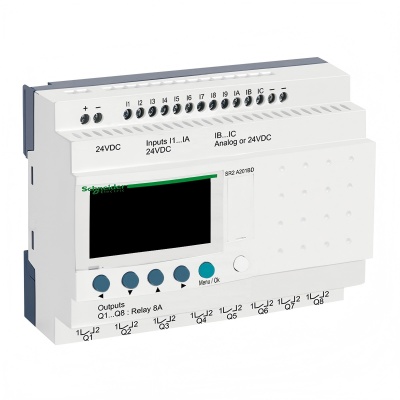
Behind the precise spot welding of robotic arms at the welding station of an automobile production line, a PLC (Programmable Logic Controller) coordinates the timing of solenoid valves and servo motors according to a preset program. In the central control room of a sewage treatment plant, when an operator adjusts parameters through the screen, the PLC immediately regulates the operation status of aeration fans and dosing pumps. As a core control device in industrial automation, the PLC has evolved from an early "relay replacement" to an "industrial nerve center" integrating logic control, motion control, and process control. This article will elaborate on the technical architecture, core functions, application scenarios, and development trends of PLCs, systematically sorting out their technical principles and engineering practice points.
1. Technical Architecture of PLC: Layered Design from Hardware to Software
The core value of PLC lies in "flexible programming + stable control". Its architectural design revolves around "quick response to industrial signals and reliable execution of control logic", mainly divided into hardware and software layers. Each module collaborates to achieve a closed-loop control of "signal acquisition - logical operation - instruction output".
(1) Hardware Layer: Physical Carrier of Industrial-Grade Reliability
PLC hardware adopts a modular design. Different modules are connected through a backplane bus and can be flexibly configured according to actual needs. The core components include four major categories: Central Processing Unit (CPU), Input/Output Modules (I/O Modules), Power Supply Modules, and Communication Modules:
Central Processing Unit (CPU): It is equivalent to the "brain" of the PLC, responsible for parsing program instructions, processing input signals, and outputting control commands. Industrial-grade PLC CPUs mostly use embedded processors (such as ARM Cortex-A9, Intel Atom), with a main frequency usually between 100MHz and 1GHz, and support real-time multi-tasking operating systems (such as VxWorks, FreeRTOS), ensuring that the control cycle (the time from signal input to instruction output) can be as low as within 1ms. For example, the basic control cycle of the Siemens S7-1200 series PLC is about 0.1ms, which can meet the timing control requirements of high-speed switching quantities.
Input/Output Modules (I/O Modules): They are the "interfaces" between the PLC and external devices (sensors, actuators). According to signal types, they can be divided into digital I/O and analog I/O:
Digital I/O: Processes on-off signals (such as "presence/absence" detection of photoelectric sensors, "engagement/disengagement" of contactors). The input module uses optocouplers to isolate external interference (with a voltage withstand level of mostly 250V AC/30V DC). The output module is divided into relay output (suitable for AC loads, with a load capacity of 5A per point), transistor output (suitable for DC loads, with a response speed ≤10μs), and triac output (suitable for AC loads, without mechanical contact wear).
Analog I/O: Processes continuously changing signals (such as 4-20mA current signals from temperature sensors, 0-10V speed given signals from frequency converters). It realizes signal conversion through 12-bit/16-bit A/D (analog-to-digital) and D/A (digital-to-analog) converters. The accuracy error of 16-bit analog modules is usually ≤0.1%, which can meet the precise control of process parameters such as temperature and pressure.
Power Supply Modules: Provide stable power supply for the entire PLC. Industrial-grade power supplies mostly adopt a wide voltage input design (such as 85-264V AC), with overvoltage, overcurrent, and short-circuit protection functions. The output voltage is usually 24V DC (to supply power to input modules and external sensors) and 5V DC (to supply power to the CPU and internal circuits). The output ripple coefficient is ≤1%, ensuring stable operation even when the power grid fluctuates (such as a 10% voltage drop).
Communication Modules: Realize data interaction between PLC and upper computers (such as touch screens, SCADA systems) and other devices (such as frequency converters, servo drives). Mainstream communication interfaces include Ethernet (Profinet, EtherNet/IP, Modbus-TCP) and field buses (Profibus-DP, DeviceNet, Modbus-RTU). Some high-end PLCs support 5G/4G wireless communication modules, which can be used for remote monitoring and data uploading. For example, in a distributed photovoltaic power station, the PLC uploads the inverter operation data to the cloud platform through the 4G module to realize remote operation and maintenance.
(2) Software Layer: Core of Programmable Logic Implementation
PLC software is divided into system software and user programs. The system software is pre-installed by the manufacturer and is responsible for hardware driving, task scheduling, and communication management. User programs are written by engineers according to control requirements and use graphical or textual programming languages. The mainstream standard is the five languages defined by IEC 61131-3:
Ladder Diagram (LD): The most commonly used programming language, imitating the circuit diagram of traditional relay control circuits, and expressing logical relationships (such as normally open contacts, normally closed contacts, timers, counters) in the form of "contacts - coils". It is suitable for digital timing control. For example, in the star-delta starting control of a motor, a timer is used to realize the switching from star starting (10 seconds) to delta operation. Engineers can complete program writing by dragging and dropping contact and coil symbols without mastering complex programming languages.
Function Block Diagram (FBD): Takes "function blocks" as the basic unit (such as addition blocks, PID control blocks), and indicates signal flow through connections. It is suitable for process control and mathematical operations. For example, in temperature control, the analog signal of a temperature sensor is connected to the PID function block, and the output signal controls the power of the heating rod. The parameters of the function block (proportional coefficient, integral time) can be directly set in the software.
Structured Text (ST): Similar to high-level programming languages (such as Pascal, C), it supports variable definition, conditional judgment (IF-THEN-ELSE), and loop statements (FOR, WHILE). It is suitable for complex logic control and algorithm implementation. For example, in an automatic sorting system, the material identification algorithm is written in ST language, and according to the material number read by the code scanner, the robotic arm is controlled to sort the materials to the corresponding workstation.
Sequential Function Chart (SFC): Expresses the sequential control process (such as process switching in an assembly line) in the form of "step - action - transition condition". It is suitable for multi-step control scenarios with clear timing. For example, the four-step process of "feeding - positioning - pressing - unloading" of a bottle cap assembly machine can clearly define the action and transition condition of each step (such as the "feeding complete" signal triggering the positioning action) using SFC.
Instruction List (IL): Uses mnemonics to represent instructions (such as LD for "loading normally open contacts" and OUT for "coil output"). It is suitable for small PLCs or simple logic programming. Currently, its application is relatively less and is mostly replaced by ladder diagrams.
2. Core Control Functions of PLC: From Logic Control to System Integration
The functions of PLC have expanded from early single digital control to a comprehensive control system covering "logic control, motion control, process control, and data processing", which can meet the needs of different industrial scenarios.
(1) Logic Control: Basic Function of Industrial Automation
Logic control is the core capability of PLC. By writing programs, the logic of "if the condition is met, the corresponding action is executed" is realized. Typical applications include motor start-stop control, valve switch control, and alarm logic judgment. Taking "motor forward and reverse rotation control" as an example, its control logic needs to meet two core requirements:
The forward contactor (KM1) and the reverse contactor (KM2) cannot be engaged at the same time (to avoid power short circuit). Therefore, "interlocking" needs to be added to the program - the normally closed contact of KM1 is connected in series in the coil circuit of KM2, and the normally closed contact of KM2 is connected in series in the coil circuit of KM1, ensuring that when one contactor is engaged, the circuit of the other contactor is cut off.
When the motor starts, the current steering needs to be stopped first (for example, when switching from forward rotation to reverse rotation, the stop button needs to be pressed first, and then the reverse button). "Interlocking" needs to be added to the program - the normally closed contact of the stop button is connected in series in the coil circuits of KM1 and KM2. When the stop button is pressed, both contactors are disconnected.
The above logic can be intuitively realized through ladder diagram programming, and the program can be modified online through software (such as adjusting the interlocking delay time) without changing the hardware wiring. Compared with traditional relay control (which requires rewiring), the flexibility is greatly improved.
(2) Motion Control: High-Precision Position and Speed Control
With the increasing demand for "high precision and high speed" in industrial automation, PLC has integrated motion control functions. It drives servo motors and stepper motors through pulse output or bus control to achieve position (such as positioning to a specific coordinate), speed (such as uniform operation), and torque (such as constant tension control) control. Typical applications include CNC machine tools, robotic arms, and conveyor belt speed regulation.
There are two core ways for PLC to realize motion control:
Pulse Control: The high-speed pulse output module (such as the SM1232 module of Siemens S7-1200) outputs pulse signals (with a pulse frequency of up to 1MHz) to control the "pulse/direction" interface of the servo drive to realize the position control of the motor. For example, in an automatic assembly line, the PLC outputs 1000 pulses (with a pulse equivalent of 0.01mm per pulse), which can control the servo motor to drive the manipulator to move 10mm.
Bus Control: The PLC is connected to the servo drive through real-time Ethernet such as Profinet and EtherCAT, and the "message control" method is used to send control instructions (such as target position, operating speed). Compared with pulse control, bus control supports multi-axis synchronization (such as 3-axis linkage to realize circular motion) and has stronger anti-interference ability, which is suitable for complex motion scenarios. For example, in laser cutting equipment, the PLC controls 3 servo axes through the EtherCAT bus to realize high-precision contour cutting.
(3) Process Control: Closed-Loop Regulation of Continuous Parameters
In industries such as chemical, pharmaceutical, and food processing, it is necessary to accurately control continuously changing process parameters such as temperature, pressure, flow, and liquid level. The PLC collects parameter signals through analog I/O modules, combines with the PID (Proportional-Integral-Derivative) control algorithm, and outputs control signals to adjust actuators (such as regulating valves, frequency converters) to achieve stable parameter control.
Taking "temperature control of a reactor" as an example, its control process is:
The temperature sensor (such as PT100) converts the temperature in the reactor into a 4-20mA analog signal and transmits it to the analog input module of the PLC.
The PLC converts the input signal into the actual temperature value (for example, 4mA corresponds to 0℃, 20mA corresponds to 200℃), compares it with the set temperature (for example, 100℃), and calculates the deviation value.
The PID algorithm calculates the output value according to the deviation value (for example, when the deviation is +5℃, the output value decreases to reduce the heating power), and outputs a 4-20mA signal through the analog output module to control the opening of the electric regulating valve (the opening decreases, and the heating steam flow decreases).
Repeat the above steps until the actual temperature stabilizes near the set value (error ≤±0.5℃).
Mainstream PLCs all have built-in PID function blocks. Engineers do not need to manually write complex algorithms, but only need to set PID parameters (proportional coefficient Kp, integral time Ti, derivative time Td). Some high-end PLCs also support adaptive PID (automatically adjust parameters according to working conditions), avoiding overshoot or oscillation problems of traditional PID when working conditions change (such as changes in the feed rate of the reactor).
(4) Data Processing and Communication: Information Hub of Industrial Systems
Modern industrial systems need to realize "equipment interconnection and data intercommunication". As a control core, PLC has data storage, operation, and communication functions, and can realize data interaction with upper computers and other equipment:
Data Processing: The PLC can calculate (such as counting the production quantity of a workstation, calculating the running time of the motor), store (store data in the built-in EEPROM or SD card with a capacity of up to 16GB), and display (display real-time data and historical curves through a touch screen) the collected on-site data. For example, on a packaging machine, the PLC counts the number of packages per hour. When the number reaches the set value (such as 1000 pieces), an alarm is triggered and the operation stops.
Data Communication: The PLC establishes connections with other equipment through communication modules to realize two-way data transmission:
Communication with upper computers (such as SCADA systems): Upload real-time operation data (such as motor current, temperature value) and receive control instructions (such as modifying the set temperature).
Communication with frequency converters: Control the speed of the frequency converter (such as setting the frequency converter frequency to 50Hz) through the Modbus-RTU protocol, and read the operation status of the frequency converter (such as whether it is overloaded).
Communication with other PLCs: In a distributed control system (such as multiple workshops in a large chemical plant), data synchronization between PLCs is realized through the Profinet bus (such as the raw material conveying signal of workshop A is synchronized to the PLC of workshop B).
3. Typical Application Scenarios of PLC: Covering All Industrial Fields
With the advantages of "high reliability, strong anti-interference, and flexible scalability", PLC has been widely used in manufacturing, energy, municipal administration, transportation and other fields, and has become a "standard" equipment for industrial automation.
(1) Manufacturing: Core of Production Line Automation
In industries such as automobile, electronics, and machinery manufacturing, PLC is the "control core" of the production line, responsible for coordinating the actions of various equipment to realize automated production:
Automobile Manufacturing Industry: In the automobile welding production line, the PLC controls the welding sequence of the robotic arm (such as welding the door first, then the body), and detects the position of the workpiece through photoelectric sensors to ensure welding accuracy. At the same time, the PLC collects welding current and voltage data. When the data exceeds the normal range, an alarm is triggered and welding stops to avoid the production of unqualified products.
Electronic Manufacturing Industry: In the mobile phone assembly line, the PLC controls the suction nozzle action of the placement machine (pick up the chip - position - place), and adjusts the placement coordinates in real time through the position deviation fed back by the vision sensor to ensure that the chip placement accuracy is ≤0.01mm.
Mechanical Manufacturing Industry: In CNC machine tools, the PLC controls the auxiliary actions of the machine tool (such as tool magazine tool change, coolant switch), and cooperates with the numerical control system (CNC) to realize the automated process of "cutting - tool change - cleaning".
(2) Energy Industry: Guarantee of Stable Operation
In energy fields such as electric power, photovoltaics, and wind power, PLC is used to monitor the operation status of equipment to ensure the stability of energy production and transmission:
Thermal Power Plant: The PLC controls the coal feeding amount, air supply amount, and induced air amount of the boiler, and keeps the boiler pressure stable through PID adjustment. At the same time, the PLC monitors the speed and vibration value of the steam turbine. When the vibration exceeds the standard (such as vibration speed >5mm/s), an emergency shutdown is triggered to avoid equipment damage.
Photovoltaic Power Station: The PLC controls the grid connection and off-grid switching of the inverter. When the power grid fails, the connection between the inverter and the power grid is quickly cut off to ensure the safety of maintenance personnel. At the same time, the PLC collects the output voltage and current of photovoltaic modules, counts the power generation and uploads it to the cloud platform.
Wind Farm: The PLC controls the pitch system of the wind turbine (adjusts the blade angle according to the wind speed). When the wind speed exceeds the safe value (such as 25m/s), the blades are adjusted to the feathering position to stop power generation and protect the wind turbine from damage by strong winds.
(3) Municipal Engineering: Automation of Public Services
In municipal fields such as sewage treatment, water supply, and rail transit, PLC realizes the automated operation of public service facilities and reduces labor costs:
Sewage Treatment Plant: The PLC controls the start and stop of the grille machine (regularly removes debris in the sewage), the air volume of the aeration fan (adjusts according to the dissolved oxygen concentration), and the operation status of the sludge dewatering machine to realize the automated treatment of "inlet water - aeration - sedimentation - outlet water". At the same time, the treated water quality data (such as COD, ammonia nitrogen content) is uploaded to the supervision platform of the environmental protection department.
Urban Water Supply System: The PLC controls the start and stop of water pumps in the water plant (adjusts according to the pipe network pressure, and starts the standby pump when the pressure is lower than 0.3MPa) and the dosing amount of the dosing equipment (adjusts according to the turbidity of raw water) to ensure stable pressure and up-to-standard water quality of the water supply pipe network.
Rail Transit: In the subway system, the PLC controls the opening and closing of platform screen doors (synchronized with train arrival/departure signals) and the emergency exhaust of tunnel fans (automatically starts in case of fire) to ensure the safe operation of the subway.
4. Technical Development Trend of PLC: From "Control" to "Intelligence"
With the advancement of Industry 4.0 and the Industrial Internet, PLCs are moving toward intelligence, networking, and integration, gradually evolving from "single control devices" to "industrial intelligent nodes" that connect physical production and digital management.
(1) Intelligence: Integration of AI and Edge Computing
Traditional PLC control logic relies on preprogrammed instructions by engineers, making it difficult to adapt to complex and variable working conditions (such as fluctuations in raw material composition or equipment aging). In the future, PLCs will integrate AI algorithms and edge computing capabilities to achieve autonomous learning and adaptive adjustment:
Predictive Maintenance: PLCs will collect equipment operation data (e.g., bearing temperature, motor vibration) through built-in sensors and use AI fault diagnosis models (such as machine learning-based random forest algorithms) to identify potential faults (e.g., bearing wear) in advance and generate maintenance recommendations. For instance, the Siemens S7-1500 series PLC can run AI models via its "Edge Computing" function to monitor equipment health in real time, reducing unplanned downtime by 30%–50% compared to traditional scheduled maintenance.
Adaptive Control: In chemical reaction processes, PLCs will use AI algorithms to analyze real-time data (e.g., raw material composition, reaction temperature, and pressure) and automatically adjust PID parameters to maintain stable reaction results without manual intervention from engineers. For example, in polymerization reactions, if the viscosity of raw materials changes, the AI algorithm can adjust the speed of the stirring motor within 1 second to avoid uneven reactions—a capability traditional fixed-parameter PID control cannot achieve.
Visual Recognition Integration: High-end PLCs will directly integrate machine vision interfaces, enabling direct connection to industrial cameras for "visual inspection-control execution" integration. In bottle cap inspection lines, for example, PLCs can identify defects (e.g., cracks, missing corners) via cameras and simultaneously control sorting mechanisms to reject unqualified products, eliminating the need for independent vision controllers and simplifying system architecture.
(2) Networking: Deep Integration with the Industrial Internet
As 5G and Ethernet technologies mature, PLCs will serve as critical "data entry points" for the Industrial Internet, enabling full-device interconnection and seamless data flow:
Fully Connected Factories: PLCs will connect seamlessly with on-site robots, sensors, and frequency converters via 5G/Industrial Ethernet, forming a three-tier architecture of "device-PLC-cloud platform." In smart factories, for example, PLCs upload real-time production data (e.g., output, energy consumption) to the MES (Manufacturing Execution System); the MES optimizes production schedules based on this data and issues instructions back to the PLC, realizing closed-loop management of the production process.
Remote Operation and Maintenance: Cloud platforms will enable remote programming, parameter modification, and fault diagnosis of PLCs, eliminating the need for engineers to be on-site. In remote wind farms, for instance, operation and maintenance personnel can modify PLC control parameters via the cloud to adjust wind turbine operating strategies, reducing travel costs by 60%–70% and shortening fault response time from hours to minutes.
Interoperability Across Protocols: Future PLCs will support multi-protocol compatibility (e.g., Profinet, EtherNet/IP, Modbus-TCP, and OPC UA) natively, solving the "information island" problem caused by incompatible protocols between devices from different manufacturers. This will allow PLCs to communicate seamlessly with third-party equipment (e.g., robots from ABB, frequency converters from Danfoss) and integrate into unified industrial control systems.
(3) Integration: All-in-One Solutions with Multiple Functions
In traditional industrial systems, logic control, motion control, and process control often require separate devices (PLCs, motion controllers, DCS), leading to high equipment costs and poor compatibility. Future PLCs will integrate more functions to achieve "one device for multiple purposes":
PLC-DCS Convergence: High-end PLCs (e.g., Rockwell ControlLogix, Siemens S7-1900) already incorporate DCS (Distributed Control System) process control capabilities, enabling them to replace DCS in small-to-medium chemical plants. This reduces system complexity by 40%–50% and lowers overall investment costs compared to traditional DCS systems.
Integration with Energy Management: PLCs will integrate energy monitoring and optimization functions, enabling real-time collection of energy consumption data (e.g., electricity, gas, water) and automatic adjustment of equipment operating parameters to reduce energy use. In data centers, for example, PLCs can coordinate server cooling fans and UPS systems based on real-time energy prices, cutting energy costs by 15%–20%.
Compact Integration for Small Applications: For small-scale automation scenarios (e.g., small assembly lines, vending machines), compact PLCs will integrate I/O modules, communication ports, and basic motion control functions into a single unit. These all-in-one PLCs (e.g., Mitsubishi FX5UC, Omron CP2E) will reduce installation space by 30%–40% and simplify wiring, making them ideal for decentralized, space-constrained applications.
5. Key Points for PLC Selection and Engineering Practice
The selection and commissioning of PLCs directly affect the reliability and performance of industrial systems. The following key points should be prioritized in practical applications:
(1) Selection Principles: Matching Actual Requirements
Function Matching: Choose PLC types based on control needs:
For digital-dominant control (e.g., motor start-stop), select small PLCs (e.g., Mitsubishi FX5U series, Siemens S7-1200 series) with sufficient I/O points and basic logic control capabilities.
For motion control or process control (e.g., multi-axis linkage, temperature regulation), select medium-to-large PLCs (e.g., Siemens S7-1500 series, Rockwell ControlLogix series) with built-in motion control modules or PID function blocks.
I/O Point Estimation: Calculate I/O points as "actual demand + 20% redundancy" to avoid insufficient points during later expansion. For example, if a system requires 30 digital inputs, 20 digital outputs, and 5 analog inputs, select a PLC with at least (30+20+5)×1.2 = 66 I/O points.
Environmental Adaptability: Industrial sites often have dust, humidity, and temperature fluctuations, so select PLCs that meet industrial standards:
Temperature range: Typically -10°C to 60°C (extended-temperature models for harsh environments: -25°C to 70°C).
Humidity range: 5%–95% (non-condensing).
Protection level (IP rating): IP20 for cabinet-mounted PLCs, IP65 for on-site-mounted PLCs (to resist dust and water splashes).
Communication Compatibility: Select PLCs based on the communication protocols of existing equipment. For example, if existing frequency converters support Modbus-RTU, choose a PLC with an RS485 interface; if integration into an Industrial Ethernet is required, select a PLC supporting Profinet or EtherNet/IP.
(2) Commissioning and Operation: Ensuring Stable Operation
Program Debugging: Adopt a "segmented debugging" strategy:
First, test individual I/O points (e.g., verifying that a button triggers an input signal).
Next, debug logic loops (e.g., motor start-stop logic) and use PLC software’s "online monitoring" function (e.g., Siemens TIA Portal’s "Monitor & Modify") to observe program operation and locate logic errors.
Finally, debug the entire system to ensure coordinated operation of all devices.
Anti-Interference Measures: Industrial sites have strong electromagnetic interference (e.g., voltage fluctuations during motor startup), so take the following measures:
Separate I/O wiring from power wiring (minimum distance ≥10cm) to avoid electromagnetic induction.
Use shielded cables for analog signals (single-end grounding of the shield layer) to reduce signal distortion.
Ensure PLC grounding resistance ≤4Ω to discharge static electricity and interference currents.
Regular Maintenance: Perform maintenance every 6–12 months:
Clean dust from the CPU and I/O modules (using compressed air) to prevent overheating.
Check the output voltage of the power module (ensuring it remains within the standard range: 24V DC ±5%).
Back up user programs (saving to a computer or SD card) to prevent program loss due to equipment failure.
Replace aging components (e.g., relay output modules with worn contacts) to avoid control failures.