








 English
 Français
 Deutsch
 Português
 Español
 русский
  한국어
한국어 العربية
 Italiano
 Indonesia
 Schweiz
 Polski
 Nederlands
 ישראל - עברית
 Perzisch
 ไทย
ไทย 日本語
日本語 ኢትዮ-አማርኛ
 Việt Nam
 Kiswahili
 Srpski
 Ελληνικά
 简体中文
简体中文Practical Guide to Industrial Servo System Troubleshooting and Optimization
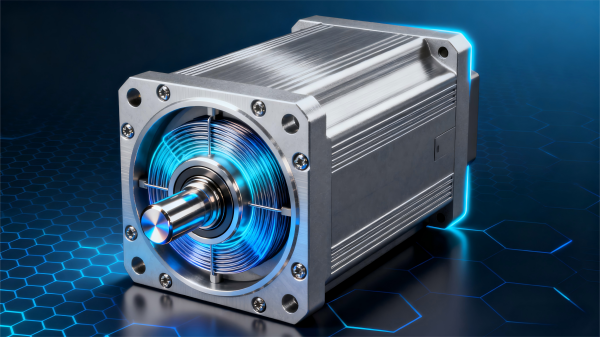
In modern industrial automation production lines, industrial servo systems play a core role in precise motion control and positioning. Whether in robotics, CNC machines, or automated assembly lines, the stable operation of servo motors directly affects production efficiency and equipment lifespan. However, during long-term operation, servo systems inevitably encounter various faults. If not properly handled, these issues can cause production downtime, equipment damage, and high maintenance costs. This article summarizes practical troubleshooting and optimization methods for servo systems, based on real engineering experience, providing actionable guidance for industrial automation engineers.
1. Common Servo System Faults
-
Motor not starting or intermittent startup
-
Common causes: power issues, disabled enable signal, drive fault codes, or overload protection triggered.
-
Troubleshooting: Check if the input voltage meets specifications (e.g., single-phase 220V or three-phase 380V) and ensure wiring is secure. Verify the control signal from the PLC to the servo drive and check the enable status using the drive indicator or software.
-
-
Unstable operation or jitter
-
Common causes: mechanical looseness or wear, improper servo parameter settings, or encoder feedback issues.
-
Troubleshooting: Inspect couplings, gears, and belts; adjust position loop and speed loop gains via the servo tuning software; check encoder wiring or replace faulty encoders if feedback signals are abnormal.
-
-
Overheating or abnormal temperature
-
Common causes: excessive load, poor cooling, internal winding faults.
-
Troubleshooting: Measure the motor housing temperature (normally < 80°C). Ensure the load torque is within rated limits. Check cooling fans and clean heatsinks. If internal winding faults occur, repair or replace the motor.
-
-
Abnormal noise
-
Common causes: mechanical friction, worn bearings, loose gears, or electromagnetic interference.
-
Troubleshooting: Disconnect mechanical load to determine the source of noise. For mechanical noise, replace worn bearings or tighten transmission parts. For electromagnetic noise, adjust servo parameters or install power filters.
-
2. Servo Parameter Optimization Tips
-
Position and speed loop tuning
-
Start with default parameters, then gradually fine-tune based on load characteristics.
-
Goal: ensure fast response while avoiding overshoot or jitter. Balance of control loops is key.
-
-
Acceleration and deceleration settings
-
Adjust according to mechanical structure and load capacity to prevent impact during start/stop.
-
For high-inertia loads, reduce acceleration/deceleration to improve system stability.
-
-
Control mode selection
-
Choose between position, speed, or torque modes based on application.
-
Position mode is suitable for precise operations like assembly or cutting; speed mode is preferred for continuous production or material handling.
-
3. Maintenance and Monitoring
-
Regular inspections
-
Check wiring, fan operation, and transmission parts for wear.
-
Clean dust and oil deposits to maintain cooling efficiency and sensor accuracy.
-
-
Data monitoring
-
Use PLC or SCADA systems to monitor current, voltage, temperature, and other key parameters in real-time.
-
ICX offers industrial servo solutions supporting standard communication protocols for real-time monitoring and remote diagnostics.
-
-
Backup and software management
-
Regularly back up servo drive parameters and PLC programs for quick recovery.
-
For complex issues, contact technical support. ICX engineers provide remote or on-site troubleshooting to minimize downtime.
-
4. Practical Case Study
A car parts production line experienced frequent servo motor alarms due to uneven mechanical load and insufficient cooling. The following optimization measures were implemented:
-
Adjusted position loop gain to reduce jitter.
-
Optimized acceleration and deceleration parameters to prevent load shocks.
-
Added cooling fans to the cabinet to improve motor temperature.
-
Monitored current and temperature regularly to detect anomalies early.
After the improvements, weekly downtime reduced from 5 occurrences to 0, and overall production efficiency increased by approximately 20%.
5. Conclusion
Industrial servo systems are core execution units in modern automated production. Through fault troubleshooting, parameter optimization, and proactive maintenance, engineers can effectively reduce downtime and improve production efficiency. ICX provides a full range of industrial servo and control solutions, combined with remote monitoring and technical support, helping customers build high-reliability, high-efficiency production lines.