







 English
 Français
 Deutsch
 Português
 Español
 русский
  한국어
한국어 العربية
 Italiano
 Indonesia
 Schweiz
 Polski
 Nederlands
 ישראל - עברית
 Perzisch
 ไทย
ไทย 日本語
日本語 ኢትዮ-አማርኛ
 Việt Nam
 Kiswahili
 Srpski
 Ελληνικά
 简体中文
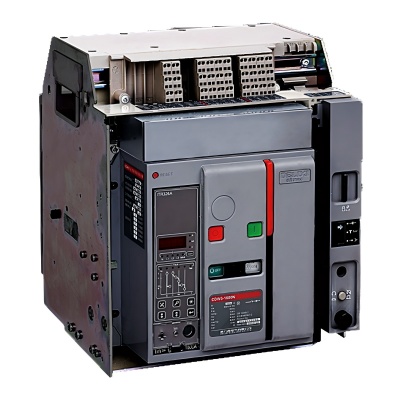
简体中文Frame Circuit Breaker: A Key Protection Device in Power Systems
1. Definition and Basic Concepts
The Frame Circuit Breaker, also known as the air circuit breaker (ACB), usually has a steel frame structure, and all components are installed within this frame. It can switch on, carry, and break currents under normal circuit conditions, and also has the ability to switch on, carry for a certain time, and break currents under specified abnormal circuit conditions (such as overload, short circuit, ground fault, etc.). Its rated current range is relatively wide, generally from 630A to 6300A, and some special models can even reach higher values, with a breaking capacity of up to 150kA, which can meet the needs of power systems and loads of different scales.
2. Working Principles
2.1 Overload Protection Principle
Thermomagnetic Overload Protection: Frame Circuit Breakers are often equipped with thermal protection components, such as bimetallic strips. When the current in the circuit exceeds the set overload current threshold, the bimetallic strip will heat up due to the heat generated by the current. Since the bimetallic strip is made of two metals with different thermal expansion coefficients bonded together, it will bend and deform when heated. As the current continues to overload, the bending degree of the bimetallic strip gradually increases. When it reaches a certain level, it will trigger the tripping mechanism, causing the circuit breaker to trip and cut off the circuit, thereby achieving protection against overload. This thermal protection method is mainly aimed at long-term overload conditions, with a relatively slow response, but it can effectively prevent equipment damage due to long-term overload operation.
Electronic Overload Protection: Electronic overload protection collects current signals in the circuit through current transformers and transmits them to the intelligent release. The microprocessor in the intelligent release analyzes and processes the current signals and compares them with the preset overload protection thresholds. When it is detected that the current exceeds the overload threshold, the microprocessor calculates the required tripping time according to a specific algorithm based on the magnitude and duration of the overload current, and issues a tripping command to control the release to act, causing the circuit breaker to trip. Electronic overload protection has higher accuracy and flexibility, and can be set more precisely according to actual needs.
2.2 Short Circuit Protection Principle
Electromagnetic Short Circuit Protection: When a short-circuit fault occurs, the current in the circuit will increase sharply in an instant. The electromagnetic release in the Frame Circuit Breaker will respond quickly to this change. When the strong electromagnetic force generated by the short-circuit current exceeds the set action value of the electromagnetic release, the electromagnetic release will act immediately, driving the tripping mechanism, causing the circuit breaker to trip in an extremely short time (usually within a few milliseconds) and cut off the short-circuit current, thereby protecting the circuit and equipment from the huge damage of the short-circuit current. This electromagnetic short-circuit protection mechanism has an extremely fast response speed and can perform protection actions at the first moment when a short-circuit fault occurs.
Short-Time Delay Short Circuit Protection: For some occasions with specific requirements for the action time of short-circuit protection, Frame Circuit Breakers also have a short-time delay short-circuit protection function. Similarly, the intelligent release monitors and analyzes the current signal. When a short-circuit current is detected, the intelligent release does not issue a tripping command immediately, but delays according to the preset short-time delay. If the short-circuit current persists within the short-time delay, the intelligent release will issue a tripping command to cause the circuit breaker to trip. Short-time delay short-circuit protection can be used to achieve selective coordination between upper and lower circuit breakers, avoiding unnecessary tripping of the upper circuit breaker due to a short-circuit fault in the lower level, which would expand the power outage range.
2.3 Ground Fault Protection Principle
Ground fault protection is used to detect ground fault currents in the circuit. Frame Circuit Breakers detect zero-sequence currents in the circuit through zero-sequence current transformers. When a ground fault occurs in the circuit, a zero-sequence current will be generated. The zero-sequence current transformer transmits the detected zero-sequence current signal to the intelligent release. The intelligent release analyzes and judges the received zero-sequence current signal. When the zero-sequence current exceeds the set ground fault protection threshold, the intelligent release issues a tripping command to cause the circuit breaker to trip and cut off the faulty circuit, thereby preventing electrical accidents caused by ground faults and ensuring personal and equipment safety.
3. Structural Composition
3.1 Contact System
Main Contacts: Main contacts are key components in Frame Circuit Breakers for switching on and breaking normal working currents. They are usually made of high-conductivity alloy materials, such as AgW alloy, to ensure good conductivity and low contact resistance (generally required to be ≤20μΩ), reducing heat generation and energy loss when the contacts conduct current. The design and manufacturing quality of main contacts directly affect the current-carrying capacity and service life of the circuit breaker.
Arc Contacts: Arc contacts are mainly used to withstand arc ablation when the circuit breaker breaks current, protecting the main contacts from severe damage by the arc. Arc contacts are generally made of copper-tungsten sintered materials, which have good arc resistance and can withstand arc temperatures up to 3000°C. When the circuit breaker breaks current, the arc contacts separate before the main contacts, causing the arc to generate and burn on the arc contacts, thereby protecting the normal working performance of the main contacts and improving the breaking capacity and electrical life of the circuit breaker.
3.2 Arc Extinguishing Device
Arc Chute Plates: The arc chute plates in the arc extinguishing device are important components for splitting and cooling the arc. They are generally composed of multiple metal plates, with the number of plates usually between 12-24 and a plate spacing of 3-5mm. When the circuit breaker breaks current and generates an arc, the arc is drawn into the space between the arc chute plates under the action of magnetic force. Due to the splitting effect of the plates, the arc is split into multiple short arcs, and the voltage drop of each short arc increases (each segment's voltage drop increases to 40-50V), which increases the total voltage of the arc. At the same time, the plates can also absorb the heat of the arc, accelerating the cooling and extinguishing of the arc, thereby improving the arc extinguishing capacity of the circuit breaker.
Magnetic Blow Coil: The magnetic blow coil is another important part of the arc extinguishing device. It drives the arc movement by generating a magnetic field, making it quickly enter the arc chute plate area. The magnetic field strength generated by the magnetic blow coil is generally ≥50mT. Under the action of a strong magnetic force, the moving speed of the arc can reach 100m/s, which greatly accelerates the arc extinguishing process and improves the breaking speed and capacity of the circuit breaker.
3.3 Operating Mechanism
Spring Energy Storage Operating Mechanism: Frame Circuit Breakers often use spring energy storage operating mechanisms, which store energy by stretching the spring through a motor or manually. When closing is needed, the energy stored in the spring is released to drive the contacts to close quickly. The spring energy storage time is generally ≤5 seconds, ensuring that the circuit breaker can complete the closing operation in a short time. At the same time, the spring energy storage operating mechanism has high reliability and operating life, with a mechanical life of generally ≥10,000 times, which can meet the needs of frequent operations.
Electric Operating Mechanism: The electric operating mechanism realizes the closing and opening operations of the circuit breaker through a motor driving transmission devices such as gears and chains. The electric operating mechanism can realize remote control, facilitating operation of the circuit breaker in the distribution room or monitoring center. Its control voltage usually covers various specifications such as AC220V/400V and DC110V/220V to adapt to different power supply environments. In addition, the electric operating mechanism can also be matched with an intelligent control system to realize intelligent operation and monitoring of the circuit breaker.
3.4 Intelligent Release
The intelligent release is the core control component of the Frame Circuit Breaker, which integrates multiple protection and monitoring functions. The intelligent release collects current and voltage signals in the circuit through current transformers and voltage transformers, analyzes and processes these signals, and realizes multiple protection functions such as overload protection, short circuit protection, ground fault protection, and undervoltage protection. At the same time, the intelligent release can also monitor the operating parameters of the circuit in real time, such as current, voltage, power factor, and power quality, and transmit these data to the upper computer or monitoring system through a communication interface to realize remote monitoring and management. Some high-end intelligent releases also have functions such as fault diagnosis and life prediction, providing strong support for equipment maintenance and management.
4. Performance Indicators
4.1 Rated Current (In)
Rated current refers to the current value that the Frame Circuit Breaker can continuously carry, with a range from 630A to 6300A. Circuit breakers of different models and specifications have different rated currents. When selecting a Frame Circuit Breaker, the appropriate rated current should be determined according to the load current in the actual circuit to ensure that the circuit breaker can operate stably for a long time. Generally, it is required that the rated current of the circuit breaker is not less than the calculated current of the circuit. For occasions with large starting currents such as motor loads, the impact of the starting current needs to be considered additionally to avoid false tripping of the circuit breaker due to excessive current during startup.
4.2 Ultimate Breaking Capacity (Icu)
Ultimate breaking capacity refers to the maximum short-circuit current that the Frame Circuit Breaker can break under specified test conditions. Its value range is generally between 36-150kA, and different application scenarios have different requirements for the ultimate breaking capacity of the circuit breaker. In occasions such as building distribution, Icu is usually required to be 36-50kA; data centers, due to their high requirements for power supply reliability, need to withstand large short-circuit current impacts, and generally require Icu to be 65-100kA; in large industrial occasions such as heavy industry, Frame Circuit Breakers with Icu up to 100-150kA may be needed. When selecting a circuit breaker, it is necessary to ensure that its ultimate breaking capacity is greater than the maximum short-circuit current that may occur in the circuit, so as to ensure that the circuit breaker can reliably break the short-circuit current when a short-circuit fault occurs, protecting the safety of the circuit and equipment.
4.3 Short-Time Withstand Current (Icw)
Short-time withstand current refers to the short-circuit current that the Frame Circuit Breaker can withstand within a specified short time (such as 1 second). For example, a common short-time withstand current indicator is 25kA/1s, which means that the circuit breaker can withstand a short-circuit current of 25kA for 1 second without damage. The short-time withstand current indicator reflects the ability of the circuit breaker to withstand the thermal and electrodynamic effects of short-circuit current in the short time before the protection device acts when a short-circuit fault occurs. In the design of electrical systems, it is necessary to reasonably select Frame Circuit Breakers with appropriate short-time withstand current according to the short-circuit current level of the system and the action time of the protection device to ensure the stability of the system during short-circuit faults.
4.4 Breaking Time
Breaking time refers to the time from the moment the circuit breaker receives the breaking command until the contacts separate and the arc is completely extinguished. For short-circuit protection, the shorter the breaking time, the better. Generally, the short-circuit breaking time of Frame Circuit Breakers is less than 30ms to quickly cut off the short-circuit current and reduce the damage of the short-circuit current to equipment. In some occasions with extremely high requirements for power supply continuity, such as data centers, the total breaking time of the circuit breaker, including the action time of the operating mechanism and the arc extinguishing time, also needs to be considered to ensure that power supply can be quickly restored when a fault occurs.
5. Application Scenarios
5.1 Industrial Field
Factory Distribution Systems: In various factories, Frame Circuit Breakers, as key protection equipment in distribution systems, are used to distribute electrical energy and protect lines and power supply equipment from overload, short circuit, ground, and other faults. For example, in large industrial enterprises such as steel plants and chemical plants, a large number of motors, transformers, and other equipment require reliable power supply. Frame Circuit Breakers can quickly cut off the circuit when a fault occurs, prevent the expansion of the fault, and ensure the continuity of production and the safe operation of equipment.
Automated Production Lines: With the continuous improvement of industrial automation, automated production lines have higher requirements for the stability and reliability of power supply. Frame Circuit Breakers can be used to protect electrical equipment in automated production lines, ensuring that the production line will not shut down due to electrical faults during production, thereby improving production efficiency. At the same time, intelligent Frame Circuit Breakers can also be integrated with automated control systems to realize real-time monitoring and remote control of the power system of the production line, facilitating timely detection and handling of faults.
5.2 Commercial Building Field
Shopping Malls, Office Buildings: In commercial buildings such as shopping malls and office buildings, Frame Circuit Breakers are used for protection at all levels of the distribution system. From the incoming line switch of the main distribution room to the branch switch of the floor distribution box, Frame Circuit Breakers can effectively protect the power system of the entire building. In these places, there are dense crowds and numerous electrical equipment. Once an electrical fault occurs, it may cause serious safety accidents and economic losses. The overload and short-circuit protection functions of Frame Circuit Breakers can ensure the safe operation of electrical equipment and provide reliable protection for personnel and property.
Hotels, Entertainment Venues: Electrical equipment in hotels, entertainment venues, and other places operates for a long time and has large load changes, so it has high requirements for the stability of power supply. Frame Circuit Breakers can be reasonably protected according to the actual load conditions to ensure reliable operation under different power consumption conditions. At the same time, some high-end hotels and entertainment venues also use intelligent Frame Circuit Breakers to realize intelligent management of the power system, such as power quality monitoring and fault early warning, improving the management efficiency and reliability of the power system.
5.3 Power Infrastructure Field
Substations: In substations, Frame Circuit Breakers are used for protection and control of low-voltage distribution systems. It can protect different feeders on the low-voltage side of the substation. When overload, short circuit, and other faults occur, it can quickly cut off the faulty line to ensure the normal operation of other parts of the substation. At the same time, Frame Circuit Breakers can also be used in conjunction with other protection equipment (such as fuses, relays, etc.) to realize selective protection of the low-voltage distribution system of the substation and improve power supply reliability.
Distribution Networks: In urban and rural distribution networks, Frame Circuit Breakers, as important protection equipment, are widely used in distribution boxes, distribution cabinets, and other equipment. It can protect branch lines in the distribution network. When a line fault occurs, it can timely cut off the faulty line to avoid affecting the normal power consumption of other users. With the development of smart grids, intelligent Frame Circuit Breakers are increasingly used in distribution networks. Through communication technology, remote monitoring and intelligent management of distribution networks are realized, improving the operation efficiency and reliability of distribution networks.
6. Technological Development Trends
6.1 Intelligence
Intelligent Monitoring and Diagnosis: In the future, Frame Circuit Breakers will have more powerful intelligent monitoring functions, able to monitor various parameters in the circuit in real time, such as current, voltage, power factor, harmonic content, etc., and through data analysis and processing, realize real-time diagnosis of equipment operating status and fault early warning. For example, using big data analysis and artificial intelligence technology to mine and analyze the operating data of circuit breakers, predict possible faults of equipment, arrange maintenance in advance, reduce equipment downtime, and improve the reliability of power systems.
Remote Control and Communication: With the development of Internet of Things technology, Frame Circuit Breakers will realize more convenient remote control and communication functions. Through wireless communication modules (such as LoRaWAN, NB-IoT, etc.), the operating status and parameters of the circuit breaker can be transmitted to the remote monitoring center in real time. Operators can perform operations such as closing and opening the circuit breaker remotely, realizing remote management of the power system. At the same time, intelligent circuit breakers can also interconnect with other intelligent devices to form an intelligent power system ecosystem, improving the overall operating efficiency of the power system.
6.2 High Reliability and Long Life
Material and Manufacturing Process Improvement: To improve the reliability and service life of Frame Circuit Breakers, new
materials will continue to be developed and applied. For instance, using higher-performance contact materials to enhance the wear resistance and arc erosion resistance of contacts; employing better insulating materials to improve the insulation performance and electrical strength of the circuit breaker. Meanwhile, by improving manufacturing processes, the processing accuracy and assembly quality of products can be enhanced, reducing the probability of faults caused by manufacturing defects.
Redundancy Design and Fault-Tolerant Technology: In some applications with extremely high reliability requirements, such as nuclear power plants and aerospace fields, Frame Circuit Breakers will adopt redundancy design and fault-tolerant technology. By setting up multiple independent protection and control units, when one unit fails, other units can automatically take over the work to ensure the normal operation of the circuit breaker. At the same time, fault-tolerant technology is used to design fault tolerance for some key components, improving the survival ability and reliability of the equipment in case of faults.
6.3 Miniaturization and Lightweight
Optimized Structural Design: As power equipment develops towards miniaturization and compactness, Frame Circuit Breakers will also achieve miniaturization and lightweight through optimized structural design. Adopting new arc-extinguishing technologies and compact contact system designs, the volume and weight of products can be reduced without reducing the performance of the circuit breaker, facilitating installation and maintenance. For example, using an integrated arc-extinguishing chamber design to reduce the volume of the arc-extinguishing device; optimizing the structure of the operating mechanism to improve its transmission efficiency and reduce the size and weight of the operating mechanism.
Application of New Materials: In addition to optimizing structural design, the application of new materials will also contribute to the miniaturization and lightweight of Frame Circuit Breakers. Using high-strength, low-density materials to manufacture the frame and shell of the circuit breaker, such as carbon fiber composite materials, can reduce the weight of the product while ensuring the strength and reliability of the product. At the same time, the application of new materials can also improve the heat dissipation performance and insulation performance of the product, further enhancing the product's performance and reliability.