








 English
 Français
 Deutsch
 Português
 Español
 русский
  한국어
한국어 العربية
 Italiano
 Indonesia
 Schweiz
 Polski
 Nederlands
 ישראל - עברית
 Perzisch
 ไทย
ไทย 日本語
日本語 ኢትዮ-አማርኛ
 Việt Nam
 Kiswahili
 Srpski
 Ελληνικά
 简体中文
简体中文Vacuum Contactor: A Comprehensive Analysis of Principle, Structure, Application and Maintenance
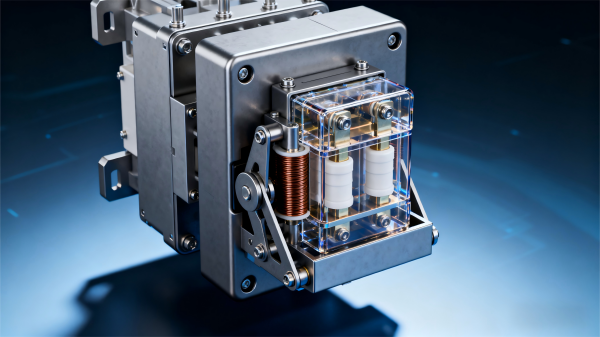
In modern industrial electrical systems, the vacuum contactor, as a key control and protection device, plays an extremely important role. With its unique arc-extinguishing method and many excellent performances, it is widely used in various power control scenarios to ensure the reliable operation of power systems. Next, let's deeply explore the working principle, structural composition, application fields and maintenance points of the vacuum contactor.
Working Principle
The core working mechanism of the vacuum contactor revolves around the vacuum interrupter. When the electromagnetic coil is energized with a control voltage, the generated electromagnetic force attracts the armature, driving the transmission mechanism to close the main contacts inside the vacuum switch tube, and the circuit is connected. At this time, the current can pass through the main contacts to supply power to the load equipment. When the electromagnetic coil is de-energized, the force of the opening spring returns the armature to its original position, the main contacts are quickly separated, and the circuit is disconnected.
At the moment of current interruption, an arc will be generated between the contacts. Since the interior of the vacuum interrupter is in a high vacuum state (usually the vacuum degree is above 0.01Pa), the air is extremely scarce, and the arc is difficult to maintain in this environment. At the same time, the contact material is generally made of alloys such as copper, antimony and osmium, which have good arc erosion resistance. The shielding cover inside the interrupter also plays a key role. It can condense the metal vapor diffused from the contact gap, which not only helps to extinguish the arc, but also prevents the metal vapor from splashing on the insulating shell, thereby avoiding reducing its insulation strength. The moving contact is connected to the lower end of the shell through a bellows. This design allows the moving contact to move up and down while ensuring that the vacuum degree inside the interrupter is not affected.
Structural Composition
Vacuum Interrupter
The vacuum interrupter is the core component of the vacuum contactor, and its shell is usually made of glass or ceramic insulating materials. Glass materials have good insulation performance and transparency, which is convenient for observing the state of internal contacts; ceramic materials have higher mechanical strength, heat resistance and impact resistance, and can adapt to harsher working environments. Taking the corrugated ceramic tube made of 95 ceramic insulating material as an example, it has a large creepage distance, which can effectively prevent leakage.
A pair of static and moving contacts are encapsulated in the vacuum interrupter. The contact material is mostly Cu-W-Wc alloy with wear resistance and low chopping current value. This material not only meets the breaking performance, but also can significantly reduce the overvoltage caused by current chopping during the breaking process, greatly improving the electrical service life of the vacuum switch tube. When the metal bellows moves axially, it drives the moving contact to perform opening and closing actions, realizing the connection and disconnection of the circuit.
Operating Mechanism
The operating mechanism is mainly composed of a holding coil with an iron core and an armature. The holding coil generally has two forms: DC and AC. In order to make the contactor operate with low noise and power saving, the electromagnetic system often adopts a retentive double coil, which is composed of a starting winding and a maintaining winding, and is switched through an auxiliary switch. When operating with AC power supply, the contactor is usually equipped with a bridge rectifier device to convert AC power into DC power for the coil to ensure the stability of the suction force.
Some vacuum contactors are also equipped with a mechanical latching device. When the closing coil is energized and the contactor is closed, the mechanical latch locks; when the tripping coil is energized, the mechanical latch trips and the contactor is released. Moreover, when the tripping coil is in a hot state, its voltage is within the range of 85% - 110% of the rated voltage, which can make the contactor release reliably, ensuring the safety and reliability of operation.
Other Components
In addition to the vacuum interrupter and the operating mechanism, the vacuum contactor usually also includes components such as an insulating frame, a metal base, a transmission crank arm and an auxiliary switch. The insulating frame is used to support and isolate various components to ensure electrical insulation performance; the metal base provides mechanical support and an installation foundation for the entire contactor; the transmission crank arm is responsible for transmitting the movement of the operating mechanism to the moving contact of the vacuum interrupter to realize opening and closing actions; the auxiliary switch is used to feed back the working state of the contactor and provide signals for the control system, such as indicating the closing and opening positions of the contactor and performing interlocking control with other equipment.
Application Fields
Industrial Production
In the industrial field, vacuum contactors are widely used in the control of various motors. For example, in the coal mining industry, due to the existence of flammable and explosive gases in the underground environment, the requirements for the explosion-proof performance of electrical equipment are extremely high. The vacuum contactor has strong arc-extinguishing ability, no arc spray, and good voltage resistance, which can meet the needs of the harsh underground environment of coal mines. It is often used to control the motors of underground ventilators, hoists, shearers and other equipment to ensure the safe and stable operation of the equipment.
In the metallurgical industry, various large-scale smelting equipment and rolling mills need to start and stop the motor frequently. The vacuum contactor has the characteristics of high operating frequency and long service life, making it an ideal control component, which can effectively reduce equipment maintenance costs and improve production efficiency.
Power System
In the power system, vacuum contactors can be used for the switching control of capacitor banks in substations. When it is necessary to adjust the reactive power of the power grid and improve the power factor, the vacuum contactor is used to connect and disconnect the capacitor bank circuit quickly and accurately, realizing the precise control of the reactive power compensation of the power system. At the same time, in some small hydropower stations or distributed generation systems, vacuum contactors are also used to control the output circuit of generators and cooperate with other power equipment to ensure the stable transmission and distribution of electricity.
Other Industries
In the electrical control system of high-rise buildings, vacuum contactors are often used to control the motors of equipment such as elevators and water pumps. Its advantages of small size and light weight facilitate installation and layout in the limited space of electrical equipment. In industries such as textiles and chemicals, due to the possible existence of corrosive gases or dust in the production environment, the vacuum contactor has good sealing performance and anti-pollution ability, enabling it to work reliably and provide stable power control for production equipment.
Maintenance Points
Daily Inspection
Regularly conduct a visual inspection of the vacuum contactor to check for damaged or deformed components, loose terminal blocks, and cracks or discharge marks on the insulating shell. Check whether the auxiliary switch operates flexibly, whether the contact points are in good contact, and whether the signal feedback is accurate. At the same time, pay attention to whether there are abnormal noises, vibrations or heating phenomena during the operation of the contactor. If any abnormality is found, stop the machine in time for inspection.
Vacuum Degree Detection
The vacuum degree of the vacuum interrupter is a key factor affecting the performance of the vacuum contactor. For a newly replaced vacuum switch tube, the power frequency withstand voltage method can be used to check the vacuum degree. When the withstand voltage reaches the specified value (such as 10kV for 1 minute), there should be no breakdown or flashover. When there is no power frequency withstand voltage test condition, a 5000V megohmmeter can also be used to measure the insulation resistance of the switch tube. The insulation resistance of a new vacuum switch tube should be greater than 100MΩ, and the insulation resistance of a vacuum switch in long-term use should be greater than 20MΩ (during the test, the outer surface of the vacuum switch tube must be clean and dry). Regularly detect the vacuum degree, and if a decrease in vacuum degree is found, replace the vacuum interrupter in time to ensure the normal operation of the contactor.
Contact Inspection and Adjustment
Regularly check the wear of the contacts. When the contacts are worn to a certain extent, it will affect the breaking performance and contact resistance of the contactor. If the contact wear exceeds the specified range, replace the contacts in time. At the same time, check whether the opening distance and overtravel of the contacts meet the requirements. For example, the opening distance of the main contacts of the vacuum interrupter can be detected by a specific measurement method. When the opening distance needs to be adjusted, the opening distance can be changed by adjusting the relevant nuts according to the instructions in the product manual, and it is necessary to ensure that the three-phase contacts are opened and closed simultaneously, with flexible movement and no blockage or jamming. The opening distance and overtravel of the auxiliary contacts also need to be adjusted. Generally, the opening distance is adjusted to 3 - 4mm, and the overtravel is 2 - 3mm, which can be adjusted by using the pressure plate screws that push the auxiliary contacts.
Cleaning and Maintenance
Keep the vacuum contactor clean, and regularly clean the dust, oil stains and debris on the surface to prevent these pollutants from affecting the insulation performance and heat dissipation effect of the equipment. For mechanical friction parts, apply an appropriate lubricant such as petroleum jelly to reduce wear and ensure the flexible operation of the transmission mechanism. In places with frequent operations, after a certain number of operations (such as 100,000 times), the contactor should be fully inspected and maintained, including cleaning, contact inspection, parameter adjustment, etc., to ensure that its performance is always in a good state.
With its unique working principle and structural design, the vacuum contactor plays an irreplaceable role in many fields such as industrial production and power systems. By understanding its working principle, structural composition, application scenarios and mastering the correct maintenance methods, we can better exert the performance advantages of the vacuum contactor and ensure the safe, stable and efficient operation of the electrical system.