






 English
 Français
 Deutsch
 Português
 Español
 русский
  한국어
한국어 العربية
 Italiano
 Indonesia
 Schweiz
 Polski
 Nederlands
 ישראל - עברית
 Perzisch
 ไทย
ไทย 日本語
日本語 ኢትዮ-አማርኛ
 Việt Nam
 Kiswahili
 Srpski
 Ελληνικά
 简体中文
简体中文Key Points for Selecting Industrial PLCs in 2025: A Comprehensive Guide from Function to Compatibility
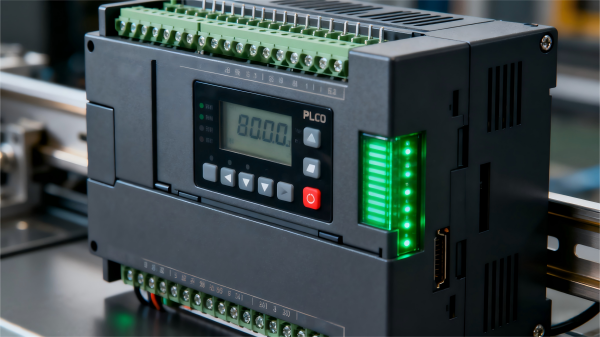
In industrial automation, the PLC (Programmable Logic Controller) is the core control component. Choosing the right PLC can boost production efficiency by over 30%. Many international customers make the mistake of overlooking key selection factors, leading to mismatches between the PLC and production requirements — and additional costs for later adjustments. Based on years of industry experience, here’s a practical, field-tested PLC selection guide.
Step 1: Match PLC Functions to Application Needs
Different industries have very different functional requirements for PLCs.
- In electronics assembly, a PLC must handle high-speed counting to control placement machine frequency precisely — models supporting >10kHz counting are recommended.
- In chemical process control, analog signal processing is more critical — the PLC should accurately receive 4–20mA signals from temperature or pressure sensors and support PID control to maintain process stability.
For small or medium-sized production lines, basic PLCs (≤128 I/O points) offer a good balance of cost and capability. Large-scale lines require mid-range or high-end PLCs that support multi-axis motion control and network communication for coordinated equipment operation.
Step 2: Consider Environmental Adaptability
Industrial environments can be harsh — PLCs must tolerate temperature, humidity, and electrical interference.
- In high-temperature steel plants, PLCs should operate reliably from –10°C to 60°C and feature robust heat dissipation.
- In humid seafood processing plants, a minimum IP20 protection rating is required to prevent moisture ingress.
- In areas with strong electromagnetic interference (e.g., near large motors), select PLCs with EMI-resistant designs, such as those using optical isolation technology, to prevent control errors caused by signal noise.
Step 3: Ensure Compatibility and Expandability
PLC compatibility with existing equipment — sensors, servo drives, HMIs — is critical.
For example, if a system already uses Siemens servo drives, choose a PLC that supports the Profinet protocol for seamless integration and reduced debugging time.
Also, consider future scalability — PLCs with modular architecture allow easy expansion by adding I/O modules without replacing the main unit, reducing upgrade costs.
Step 4: Evaluate After-Sales and Technical Support
PLC projects often involve debugging and troubleshooting. Choosing a supplier with strong technical support can significantly reduce downtime.
For instance, icxsg.com offers a wide range of PLC brands and models, along with professional technical teams that provide selection guidance, programming support, and on-site services, helping customers implement automation solutions efficiently.