






 English
 Français
 Deutsch
 Português
 Español
 русский
  한국어
한국어 العربية
 Italiano
 Indonesia
 Schweiz
 Polski
 Nederlands
 ישראל - עברית
 Perzisch
 ไทย
ไทย 日本語
日本語 ኢትዮ-አማርኛ
 Việt Nam
 Kiswahili
 Srpski
 Ελληνικά
 简体中文
简体中文
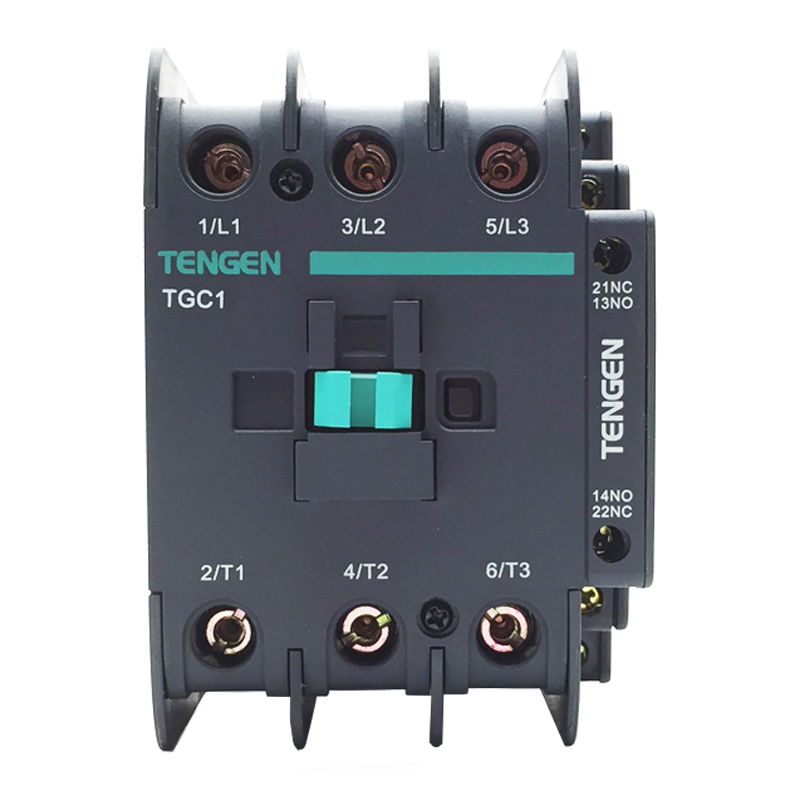
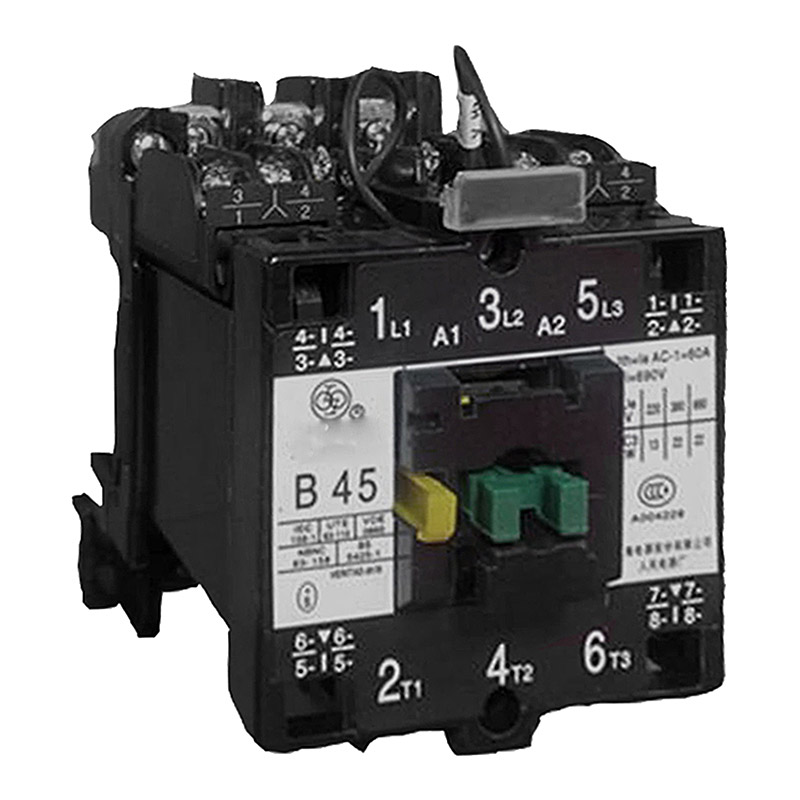
TENGEN TGCH1N-3230 AC230V
Brand:
Series:
TGCH1N
Main Contacts:
3NO
Control Circuit:
AC 50/60Hz
Control Coil Voltage:
230VAC
Auxiliary Contacts:
-
Rated Current:
32A
Poles:
3P
Rated Voltage:
400VAC
Model:
TGCH1N-3230 AC230V (Xiangyun 3.0)
Order Number:
339020600372
Description:
AC contactor TGCH1N-3230 AC230V, pole number 3P, control circuit AC 50/60Hz, main contact 3NO, 400VAC
Product parameters
| Product attributes | Attribute value | Filter product attributes |
|---|---|---|
| Brand: | TENGEN | |
| Series: | TGCH1N | |
| Main Contacts: | 3NO | |
| Control Circuit: | AC 50/60Hz | |
| Control Coil Voltage: | 230VAC | |
| Auxiliary Contacts: | - | |
| Rated Current: | 32A | |
| Poles: | 3P | |
| Rated Voltage: | 400VAC |
Products with the same attribute : 0
Show details
Series Overview
Series Overview
Product Description
- The TGCH1N series household AC contactors (hereinafter referred to as contactors) are mainly suitable for AC 50Hz (or 60Hz), with a rated operating voltage of up to 400V. In circuits where the rated operating current is up to 100A under the AC - 7a usage category and up to 20A under the AC - 7b usage category, they control low - inductive loads of household electrical appliances and similar applications; they can also be used to control household motor loads, and at this time, the control power should be appropriately reduced.
- Contactors are not used to interrupt short - circuit currents, so appropriate short - circuit protection electrical appliances should be selected when in use.
- The product is applied in power distribution places such as families, hotels, apartments, shopping malls, and urban lighting systems to realize automatic control functions.
- Compliance with standards: GB/T17885, IEC/EN61095, GB/T14048.4, IEC/EN60947 - 4 - 1.
Normal Operation and Installation Conditions
- Ambient air temperature: - 5°C ~ + 40°C, with the 24 - hour average value not exceeding + 35°C.
- Altitude: not exceeding 2000m.
- Atmospheric conditions: The relative humidity of the air at the installation site does not exceed 50% at the maximum temperature of + 40°C; higher relative humidity is allowed at lower temperatures, for example, reaching 90% at + 20°C. Special measures should be taken for condensation occasionally generated due to temperature changes.
- Pollution level: 2.
- Installation category: II.
- Shock and vibration: There should be no obvious impact and vibration at the installation site.
- Installation method: Installed on TH35 - 7.5 type standard guide rails.
- Installation conditions: Vertical installation, with the inclination in all directions not more than ± 30°.
- Protection level: IP20.
Product Working Principle
- The working principle of the contactor is: when the coil is energized, the coil current generates a magnetic field, generating sufficient electromagnetic attraction to overcome the reaction force, attracting the armature, and making the contacts conduct. When the coil voltage disappears or the coil voltage drops to a certain value, that is, the so - called release voltage, due to the decrease of the magnetic flux generated on the armature surface, the electromagnetic attraction force begins to be smaller than the reaction force generated by the reaction spring and the contact spring. The armature is then released under the action of this reaction force, leaving the iron yoke, and the contacts are immediately disconnected.
Product Structural Features
- The contactor belongs to modular control electrical appliances, with a novel, compact, and small structure. The contact system has a direct - acting inverted structure.
- The card - rail - type installation can be combined with small circuit breakers and installed in the control lighting box.
- Using high - quality environmentally friendly insulation materials, greatly improving safety.
- Beautiful appearance, the streamlined design of the head and handle conforms to ergonomics.
- The product is equipped with a working status indicator, and the action is clear.
- Large contact capacity and long service life.
- Low power consumption, low noise, high reliability, suitable for places such as hotels and hospitals.
Installation, Use and Maintenance
- Before installation, first check whether the actual use site meets the purpose, applicable scope, technical parameters, normal working conditions, and installation conditions of the contactor.
- During installation, pull down the stopper of the contactor, place the contactor on the installation rail, and then push the stopper upward to fix the contactor on the installation rail without loosening or falling off. When needing to disassemble the contactor, pull down the stopper to easily remove it.
- When the contactor is wired, insert the wire into the terminal, then tighten the terminal screw to prevent the wire from loosening or being pulled out. The exposed copper wire end cannot be exposed outside the terminal.
- The contactor must not be used to tighten the terminal screws during wiring. The screwdriver used for tightening and loosening the screws should be appropriate. Avoid using pneumatic tools to slip the screws.
- After checking that the wiring is correct, under the condition that the main contacts are not live, first energize the coil for several times to check whether the product action is reliable, and then put it into use.
- When contactors are installed closely between contactors and between contactors and circuit breakers, an interval accessory (TGCH1N - G) is required for heat dissipation; when the temperature inside the distribution box exceeds + 60°C, the contactor needs to be derated for use.
- During the use of the contactor, the tightness of the terminal screws should be regularly checked. If loosening is found, they should be tightened in time; regularly clean the dust on the surface of the shell to maintain good insulation of the shell; if there is a large noise during use or the external insulation fails, the product should be replaced in time; calculate according to the product working frequency and use time. When the number of working times of the product reaches (or approaches) the service life of the product, the product should be replaced in time.

Rachel
Industrial Control Sales Specialist: Focuses on delivering high-performance, cost-effective industrial control products. Offers end-to-end one-stop procurement support—covering rapid quotation, streamlined order fulfillment, and responsive after-sales service—to simplify clients’ procurement processes.
Email: Anthony@icxsg.com
We offer competitive product pricing. For fast support, send your email, phone, address, and the product model & quantity you want—we’ll reach out quickly!
We typically respond via email within one business day! You can also contact us at Anthony@icxsg.com