





 English
 Français
 Deutsch
 Português
 Español
 русский
  한국어
한국어 العربية
 Italiano
 Indonesia
 Schweiz
 Polski
 Nederlands
 ישראל - עברית
 Perzisch
 ไทย
ไทย 日本語
日本語 ኢትዮ-አማርኛ
 Việt Nam
 Kiswahili
 Srpski
 Ελληνικά
 简体中文
简体中文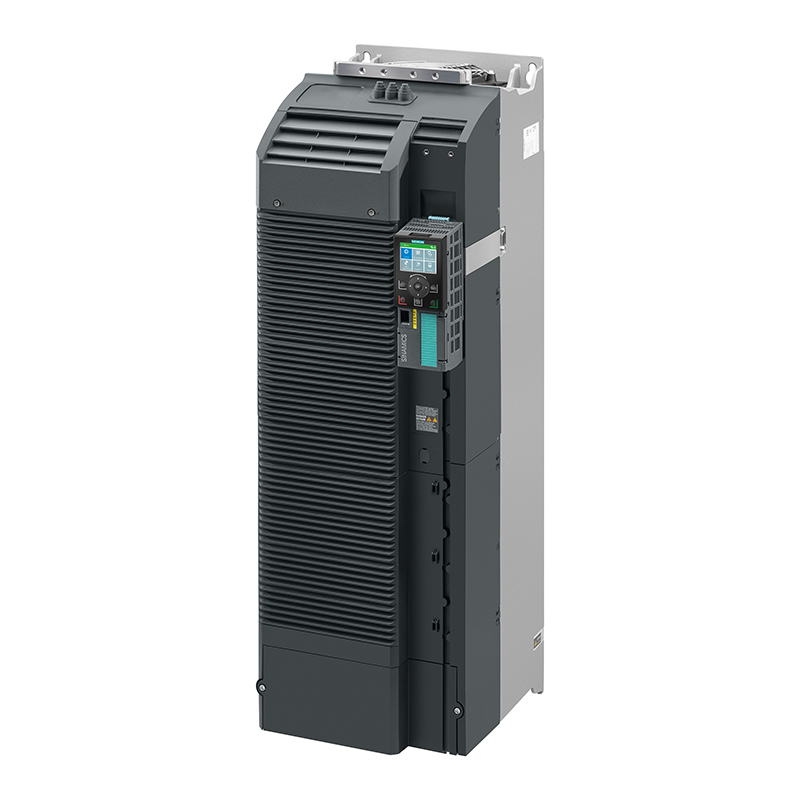
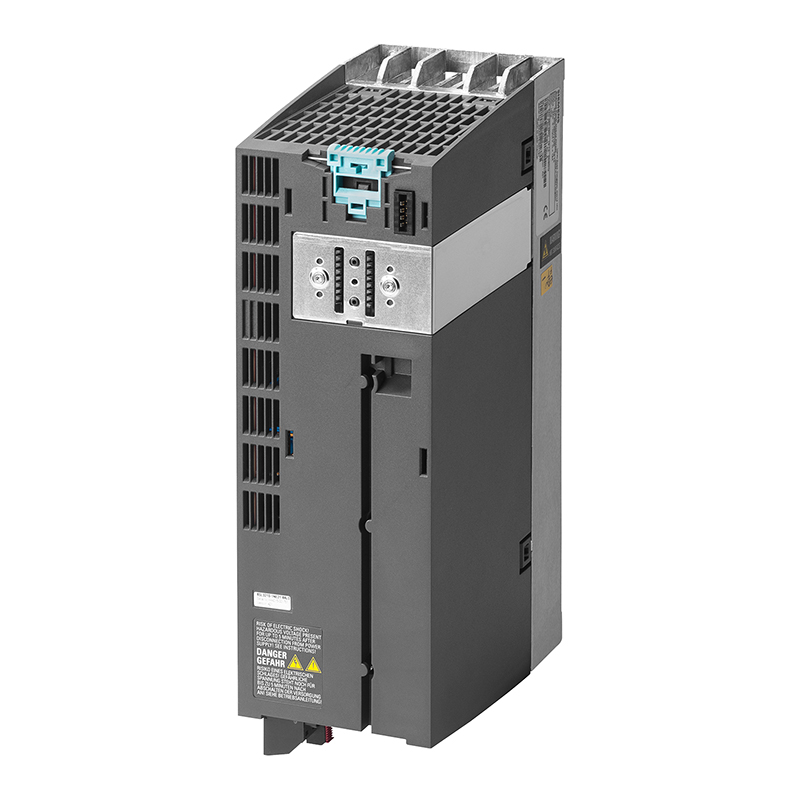
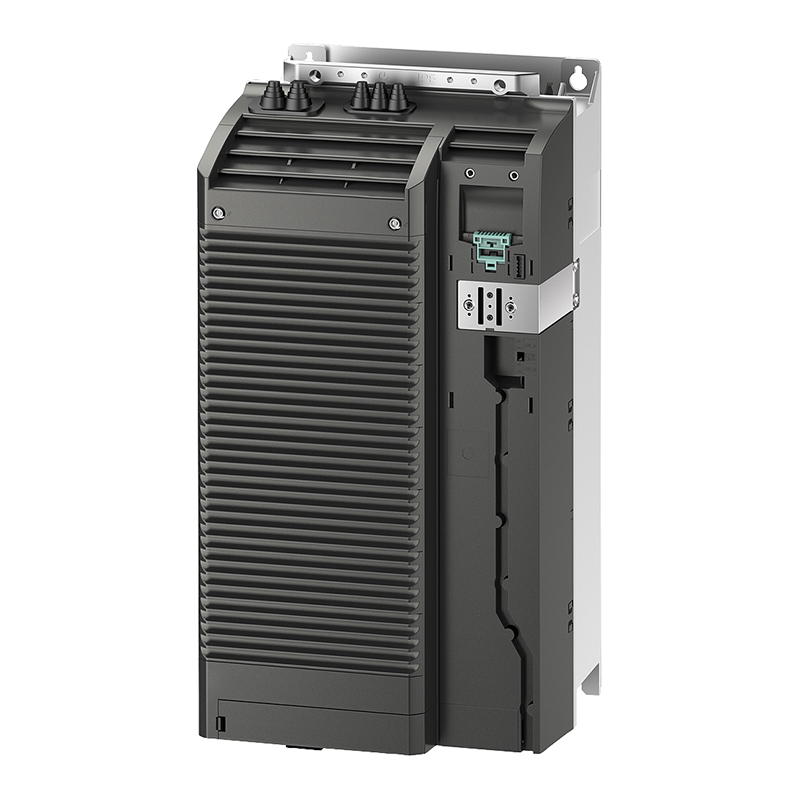
Siemens 6SL3210-1PE34-8CL0 250KW Engineering Inverter G120
Brand:
Series:
G120
Remote Display Terminal:
-
Protection Level:
IP20
Control Panel:
-
Communication Protocol:
-
Voltage Level:
Three-phase 380-480VAC
Rated Power:
250KW
Applications:
Various engineering applications
Rated Current:
470A
Model:
6SL3210-1PE34-8CL0 250KW
Order Number:
6SL32101PE348CL0
Description:
Siemens 6SL3210-1PE34-8CL0 250KW, IP20, 470A, 250KW, three-phase 380-480VAC
Product parameters
| Product attributes | Attribute value | Filter product attributes |
|---|---|---|
| Brand: | Siemens | |
| Series: | G120 | |
| Remote Display Terminal: | - | |
| Protection Level: | IP20 | |
| Control Panel: | - | |
| Communication Protocol: | - | |
| Voltage Level: | Three-phase 380-480VAC | |
| Rated Power: | 250KW | |
| Applications: | Various engineering applications | |
| Rated Current: | 470A |
Products with the same attribute : 0
Show details
Series Overview
Series Overview
The design of the SINAMICS G120 frequency inverter targets three - phase induction motors and is used to achieve precise and economical speed/torque control.
This series of products covers a power range from 0.37 kW to 250 kW and provides a rich variety of specifications (outer dimensions from FSA to FSGX), so it can be widely used in various drive solutions.
Easy - to - operate Design
SINAMICS G120 is a modular frequency inverter system, which mainly consists of two functional units:
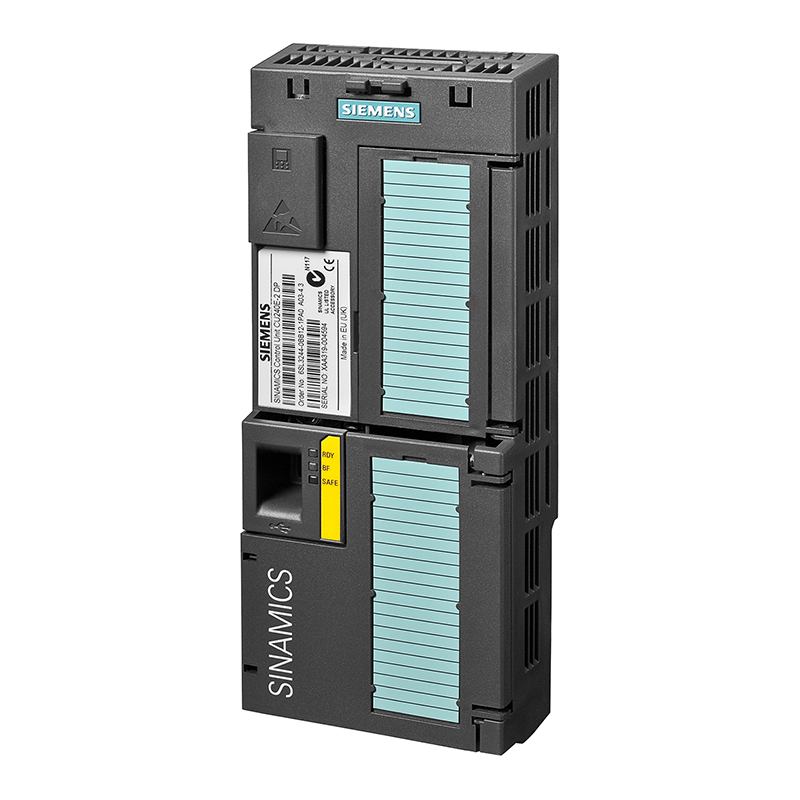
- Control Unit (CU)
- Power Module (PM)
The control unit can control and monitor the power module and the motor connected to it. There are multiple control modes, which can be selected as needed. This component can support communication with local or central control systems and monitoring equipment.
The power module is used to supply power to the motor, with a power range from 0.37 kW to 250 kW. This module adopts the most advanced IGBT technology and pulse width modulation function, thus ensuring reliable and flexible motor operation. The rich protection functions provide a high degree of protection for the power module and the motor.
The control unit can be used in combination with the following power modules:
| Control Unit | Power Module - Protection Class IP20 | |||
|---|---|---|---|---|
| PM230¹) | PM240 - 2 | PM240 | PM250 | |
| CU230P - 2 | ✔ | ✔ | ✔ | ✔ |
| CU240B - 2 | ✔ | ✔ | ✔ | ✔ |
| CU240E - 2 | ✔ | ✔ | ✔ | ✔ |
| CU250S - 2 | - | ✔ | ✔ | ✔ |
Safety Integrated
The standard - type SINAMICS G120 frequency inverter provides specifications for safety - related applications. The power modules PM240 - 2 and PM250 support the Safety Integrated solution. The power module PM240 with outer dimension FSGX (that is, power above 160 kW) is only applicable to basic safety functions (STO, SSI, and SBC). The control unit, together with the safety functions (see description), can upgrade the drive to a Safety Integrated Drive. The types of Safety Integrated functions provided by the equipment depend on the type of the control unit.
| Control Unit | Basic Safety Functions | Extended Safety Functions | ||||
|---|---|---|---|---|---|---|
| STO | SSI | SBC¹) | SLS | SDI | SSM | |
| CU230P - 2 | - | - | - | - | - | - |
| CU240B - 2 | - | - | - | - | - | - |
| CU240E - 2 | ✔ | - | - | - | - | - |
| CU240E - 2 F | ✔ | ✔ | - | - | - | ✔²) |
| CU250S - 2 | ✔ | ✔ | ✔ | ✔³) | ✔³) | ✔³) |
Basic Safety Functions (Comply with IEC 61508 SIL 2 and EN ISO 13849 - 1 PL d and Category 3)
- Safe Torque Off (STO) is used to prevent the active operation of the drive.
- The PM240 - 2 power module, with outer dimensions FSD to FSF, is equipped with STO and complies with IEC 61508 SIL 3 and EN ISO 13849 - 1 PL e and Category 3.
- Safe Stop 1 (SS1) is used for continuous monitoring of the safety braking ramp.
- Safe Brake Control (SBC) is used for the safety control of the brake. When SBC is activated, it is always triggered together with STO. The safety braking relay is used for SBC.
Extended Safety Functions (Comply with IEC 61508 SIL 2 and EN ISO 13849 - 1 PL d and Category 3)
- Safely Limited Speed (SLS) is used to prevent dangers caused by overspeed operation.
- Safe Direction (SDI) This function is used to ensure that the drive only rotates in the selected direction.
- Safe Speed Monitor (SSM) This function is used to indicate the situation where the drive speed is lower than a specific set value.
Basic safety functions and extended safety functions can be activated through PROFIsafe or safety inputs.
All safety functions can be used without a motor encoder, thus minimizing the investment cost.
This is especially significant for the innovation of existing equipment. It can be conveniently upgraded to a safety - integrated solution without the need to replace the motor or change the mechanical system.
The Safe Torque Off (STO) function can be used for all applications without limitation. The SS1, SLS, SSM, and SDI functions are only allowed to be used in applications where no load acceleration will occur after the frequency inverter is disconnected. That is to say, these functions cannot be used for applications with tensile loads, such as hoisting mechanisms and dismounting machines.
Efficient Infeed Technology
The power module PM250 adopts the advanced Efficient Infeed Technology. In this way, the energy generated during the regenerative operation of the motor can be fed back to the power supply system through a standard - type frequency inverter. When using this solution, there is no need to use additional heat dissipation measures in the switch cabinet; since components such as braking resistors, braking choppers, and line reactors are omitted, the space requirement is also reduced. In addition, this solution can significantly reduce the wiring and configuration costs, and at the same time, can reduce energy consumption and long - term operating costs.
Innovative Cooling Solution and Coating of Electronic Modules
The innovative cooling solution and the coating on the electronic modules significantly increase the service life and continuous operation time of the equipment.
- The power loss is only dissipated through external heat sinks.
- Continuous airflow cooling is adopted, and electronic components are not placed in the ventilation duct.
- The airflow generated by the fan all passes through the heat sink.
High Energy Efficiency
According to specific applications, the integrated technical functions help to optimize the energy consumption of the equipment:
- Adopt high - energy - efficiency vector control without encoders and with encoders.
- Automatically reduce the magnetic flux through the V/f ECO mode.
- Integrate an energy - saving calculator.
Advantages
- The modular design provides a high degree of flexibility and can adapt to the future needs of drive solutions.
- The control unit can be replaced in the power - on state (hot swap).
- Adopt plug - in terminals.
- The equipment replacement steps are simple, convenient for maintenance.
- Integrate safety functions, thus significantly reducing the cost of integrating the drive into mechanical equipment adopting safety solutions.
- Support PROFInet or PROFIBUS communication based on PROFDrive Profile 4.0.
- Can realize engineering design within a wide range.
- Easy to operate and control.
- Adopt an innovative circuit design (bidirectional input rectifier and “drooping” DC bus). When using the power module PM250, the kinetic energy of the load can be fed back to the power supply system. Due to the feedback capability, there is no need to convert the regenerative energy into heat energy through braking resistors, thus significantly reducing energy consumption.
- Integrate a USB interface, making local commissioning and diagnosis simpler.
- Integrate functions for pump, fan, and compressor applications, such as:
- 4 freely programmable PID controllers.
- Wizards for specific applications.
- Equipped with Pt1000/Ni - 1000 temperature sensor interfaces.
- AC 230 V relays.
- 3 freely programmable digital time switches.
- With CU250S - 2 control unit: The integrated positioning function (basic positioner EPos) can realize positioning tasks with dynamic characteristics during operation. Positioning can be realized through incremental encoders and/or absolute value encoders (SSI).
- With CU250S - 2 control unit: Encoder interfaces DRIVE - CLIQ, HTL/TTL/SSI (SUB - D), and resolver/HTL (terminals).
- With CU250S - 2 control unit: Adopt vector control without encoders and with encoders.
- Adopt BICO technology, thus integrating control functions.
- The innovative cooling solution and the coating on the electronic modules help to improve robustness and prolong service life.
- Adopt external heat sinks.
- Electronic components are not placed in the ventilation duct.
- The control unit completely adopts airflow cooling.
- The most important components are specially coated.
- The equipment is easy to replace, and the current parameter replication can be realized through optional operation panels or memory cards.
- High pulse frequency, low noise generated during motor operation.
- Compact design, saving space.
- For 50Hz or 60Hz motors (IEC motors or NEMA motors), the application can be adjusted through software parameters.
- Perform 2 - wire/3 - wire control on static or pulse signals, thus performing global control through digital quantity input.
- Adopt unified configuration tools, such as SIZER for Siemens Drives, STARTER, SINAMICS Startdrive, and Drive ES, thus ensuring fast configuration and simple commissioning. STARTER is integrated into STEP 7 through Drive ES Basic, thus having the advantages of centralized data management and fully integrated communication.
- Pass CE, UL, cUL, and C - tick (RCM) global certifications, and Safety Integrated complies with IEC 61508 SIL 2 and EN ISO 13849 - 1 PL d and Category 3.
- The PM240 - 2 power module, with outer dimensions FSD to FSF, is equipped with STO and complies with IEC 61508 SIL 3 and EN ISO 13849 - 1 PL e and Category 3.
Design
Application - oriented Structural Design of SINAMICS G120
The standard - type SINAMICS G120 frequency inverter is a modular frequency inverter for standard drives. Thanks to the modular system design, the most suitable SINAMICS G120 specification can be selected through only two to three steps.
Selecting the Control Unit
First, take the number of I/O and possible additional functions (such as Safety Integrated or HVAC) as the basis for measurement, and select the most suitable control module. The communication options have been integrated into this module, so there is no need to purchase or splice them separately. According to different application fields, three product series are provided:
-
Control Unit CU230P - 2
- The control unit CU230P - 2 is specially designed for pump, fan, and compressor applications.
- The control unit CU230P - 2 is used for SINAMICS G120 frequency inverters and SINAMICS G120P frequency inverter cabinets for pumps, fans, and compressors.
-
Control Unit CU240B - 2 and CU240E - 2
- The control units CU240B - 2/CU240E - 2 are used for general - purpose drive applications, such as conveyors, mixers, and extruders.
-
Control Unit CU250S - 2
- The control unit CU250S - 2 is suitable for independent drives with high requirements for speed control (such as extruders and centrifuges) and positioning tasks (such as conveyors and dismounting machines).
- In addition, it can also realize multi - motor drives without speed sensors, such as wire drawing machines and simple material conveyors.

Rachel
Industrial Control Sales Specialist: Focuses on delivering high-performance, cost-effective industrial control products. Offers end-to-end one-stop procurement support—covering rapid quotation, streamlined order fulfillment, and responsive after-sales service—to simplify clients’ procurement processes.
Email: Anthony@icxsg.com
We offer competitive product pricing. For fast support, send your email, phone, address, and the product model & quantity you want—we’ll reach out quickly!
We typically respond via email within one business day! You can also contact us at Anthony@icxsg.com
Product Category
Related Articles
-

Exploring How Siemens SINAMICS Drives and ebm-papst Smart Fans are Reshaping the Factory of the Future
This article will focus on two industry giants—Siemens SINAMICS drive series and ebmpapst smart fans—and delve into how they are defining the performance standards for modern industry.Read More November 28, 2025 -
Industrial VFD Selection Guide – The Key to Efficient and Reliable Motor Control
In modern industrial automation systems, the motor drive acts as the core power unit that determines the efficiency, stability, and energy consumption of the entire process. For international projects and engineering contractors, selecting the right Variable Frequency Drive (VFD) is crucial. This article provides a detailed and practical guide to understanding how VFDs work, how to select them correctly, and how to avoid common mistakes during implementation.Read More October 22, 2025