







 English
 Français
 Deutsch
 Português
 Español
 русский
  한국어
한국어 العربية
 Italiano
 Indonesia
 Schweiz
 Polski
 Nederlands
 ישראל - עברית
 Perzisch
 ไทย
ไทย 日本語
日本語 ኢትዮ-አማርኛ
 Việt Nam
 Kiswahili
 Srpski
 Ελληνικά
 简体中文
简体中文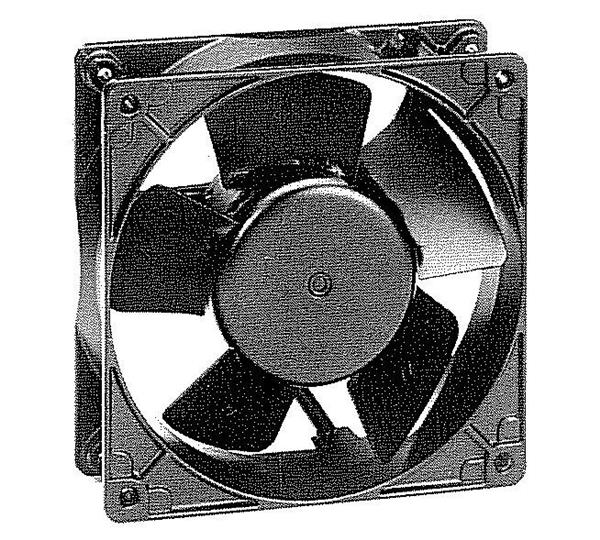
W2G110-AN27-13 ebm-papst
Product parameters
| Product attributes | Attribute value | Filter product attributes |
|---|---|---|
| Brand: | ebm-papst | |
| Type: | Axial Fan | |
| Voltage Type: | EC | |
| Airflow: | 100 CFM (2.8 m3/min) | |
| Operating Supply Voltage: | 24 VDC | |
| Size: | 110 mm x 38 mm Round | |
| Impulsion speed (m/s): | 2800 RPM | |
| Installed Power: | 4.3 W | |
| Degree of Protection: | IP22 | |
| Motor Bearing: | Ball | |
| Housing Material: | Aluminum | |
| Height: | 110 mm | |
| Width: | 110 mm | |
| Length: | 38 mm | |
| Series: | W2G110 |
Frequently asked questions
-
How does the Ebm-papst dedicated controller adjust the speed of the fan?
FFU is widely used in clean rooms in chip manufacturing, integrated circuits, and biopharmaceutical industries. The two EC centrifugal fans R3G470-AB05-24 and R3G470-AA05-24 are used in multiple projects with stable air volume, and are also used with the Ebm dedicated controller CHW040 to achieve speed regulation.
Users who have just come into contact may not know how to use it, don't worry, let us show you!
The connectors of the controller and the fan are already matched through the female and male connectors, just plug them in directly
The controller is connected to 1~220 volt 50hz AC power, and the controller starts working
Click the MODE button to switch to the on/off function. Select on with the up and down keys, and set to confirm to start the fan
Click the MODE button to switch to the SET function. Use the up and down keys to increase or decrease the speed value, set to confirm after selection, so that the fan can accelerate or decelerate, and the actual speed is displayed on the display.
The controller also supports fan monitoring function. When an alarm occurs, the controller will stop while displaying the alarm code. The cause of the fault can be queried based on the code. -
How to set the power derating of ebm-papst EC fan?
Take ebm-papst model R3G250-RR01-H1 as an example, the rated power is 500W, and the customer requires the fan power to be reduced to 350W. The settings are as follows:
The first step is to connect the fan neutral and live wires to the 230V AC power supply
The second step is to connect the fan RS485 interface to the computer through an adapter
The third step is to use EC control and change the Y2 parameter of input curve 1 in the setting to 83%.
The fourth step is to power on and run at full speed. The output power value is about 350W when observed through the software -
How to perform a withstand voltage test on an ebm-papst fan?
The basic wiring for a withstand voltage test on an ebm-papst fan is: 1. The high voltage output line of the withstand voltage tester (usually red) is connected to the power supply and signal input terminals of the device under test. 2. The loop grounding line of the withstand voltage tester (usually black) is connected to the accessible non-electrical metal part of the device under test.
The following points should be noted when wiring: 1. The fan must be insulated from the earth before testing. 2. The grounding terminal of the instrument must be reliably connected to the object under test during the withstand voltage test, and open circuit is strictly prohibited. 3. The withstand voltage tester must be reliably grounded to prevent accidents. 4. The withstand voltage tester operator must wear rubber insulating gloves and put rubber insulating pads under his feet to prevent high voltage electric shock.
Withstand voltage test voltage value: The test voltage value will be different under different standards:
Since ebm-papst will perform factory withstand voltage tests on the fan, the client repeats the high voltage withstand test. The safety regulations clearly state that the voltage value needs to be reduced for repeated withstand voltage tests, generally 80%, 1s. If the insulation of a product has been damaged after repeated voltage withstand tests lasting more than 1 second, ebm-papst strongly recommends that the product not be released from the factory for sale. -
Anti-corrosion grade of fan
Usually, the anti-corrosion grade of fan is determined according to the corrosion resistance of its materials and coatings. Common anti-corrosion grades of fans include:
Ordinary anti-corrosion: The fan surface undergoes certain anti-corrosion treatment, such as spraying anti-corrosion paint, etc., which can resist general corrosion to a certain extent.
High anti-corrosion: The fan is made of materials with better corrosion resistance, such as stainless steel, galvanized steel, etc., which can resist strong corrosion.
Explosion-proof and anti-corrosion: Suitable for fans used in flammable and explosive environments, with explosion-proof and anti-corrosion functions.
Marine anti-corrosion: Suitable for fans used in marine environments, with the characteristics of seawater corrosion resistance.
The anti-corrosion grade will vary according to different use environments and needs. It can be divided into C1, C2, C3, C4, C5, etc. The higher the grade, the longer the salt spray test time can be tolerated. You can choose a fan with a suitable anti-corrosion grade according to the specific situation.
Our ebm-papst products also have strict distinctions in terms of corrosion resistance. In the specifications, you can see words such as H1 and H2, which also correspond to the C1-C5 we mentioned earlier. -
Introduction to the principle of the fan with three-speed speed regulation function
Some customers want to buy a speed-regulating fan, but do not want to be equipped with a PWM speed regulator or a 0-10V speed regulation device. They ask us if we have any speed-regulating fans that meet the requirements?
Of course, some of our fans support three-speed or four-speed speed regulation functions. No external DC speed regulation power supply is required. The speed change can be achieved by changing the wiring. Customers can choose the appropriate gear according to their needs.
The speed regulation principle of the fan with three-speed speed regulation function:
The speed regulation function of the fan is realized by changing the impedance of the main winding and the capacitor winding inside the fan. No external DC speed regulation power supply is required, and the operation is simple and convenient. The high-speed gear requires the neutral wire and the live wire to be connected to the black wire and the blue wire of the fan. The medium-speed gear requires the neutral wire and the live wire to be connected to the black wire and the gray wire of the fan. The low-speed gear requires the neutral wire and the live wire to be connected to the black wire and the brown wire of the fan.
Take the ebm-papst D2E146-HR93-01 fan as an example:
The fan has 6 wires, including the neutral wire, the ground wire, and the 4-speed speed adjustment wire. Select the gear and connect it to the single-phase 230V AC power supply to test the fan speed. -
What are the reference standards for leakage current of withstand voltage test of different types of fans of ebm-papst?
Since EC fans are stepless speed regulating motors, most EC fans can refer to IEC61800-5-1 standard. EC fans are widely used in household appliances such as air conditioners and air purifiers, so many of our EC fans refer to IEC60335-1 standard.
AC fans are single-speed fans. Generally, we do not recommend speed regulation. Therefore, most AC fans can refer to IEC60334-1 standard. AC fans are also widely used in household appliances such as air conditioners and air purifiers, so many of our AC fans refer to IEC60335-1 standard.
Since DC fans are powered by low-voltage direct current, most DC fans can refer to IEC60950-1 standard. DC fans are widely used in household appliances such as air purifiers, so many of our DC fans refer to IEC60335-1 standard. -
Characteristics and classification of centrifugal fans
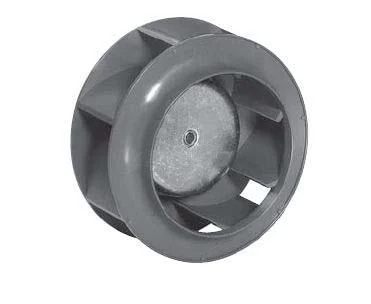
It is called a centrifugal fan because it relies on the centrifugal force of the impeller to inhale the gas axially but blow it out radially. Its structural characteristics enable it to withstand greater wind pressure than axial flow fans.
EBM-PAPST centrifugal fans are divided into forward centrifugal fans and backward centrifugal fans according to the different impeller structures. Different impellers create different characteristics and applications of the two fans.
The forward centrifugal fan has small blades, large numbers, and high density, so the overall structure is more compact and quieter, suitable for small spaces and high wind pressure environments, but it outputs a small amount of air and generally needs to be used with a volute.
The backward centrifugal fan adopts a free wheel design and does not require a volute. Compared with the forward centrifugal fan, it can output a larger amount of air, but it can withstand less wind pressure.
For centrifugal fans with external rotor motors, the motor is integrated into the impeller, which not only ensures excellent cooling of the motor, but also achieves a very compact design.
The entire product range offers AC fans and EC fans with EC technology. In addition to energy saving, the integrated control circuit of EC fans can also realize control, monitoring and maintenance functions, which are particularly suitable for purification, industrial air conditioning, fresh air systems, electronic cooling and other related applications.
ebm-papst centrifugal fans are unparalleled high-pressure experts in centrifugal design with 90° air deflection and carefully optimized impellers.

Rachel
We offer competitive product pricing. For fast support, send your email, phone, address, and the product model & quantity you want—we’ll reach out quickly!
We typically respond via email within one business day! You can also contact us at Anthony@icxsg.com
Product Category

Related Articles
-

Exploring How Siemens SINAMICS Drives and ebm-papst Smart Fans are Reshaping the Factory of the Future
This article will focus on two industry giants—Siemens SINAMICS drive series and ebmpapst smart fans—and delve into how they are defining the performance standards for modern industry.Read More November 28, 2025 -
A Comprehensive Analysis of Fan Technology: Principles, Classification, and Applications
Fans, as key equipment that converts mechanical energy into gas energy, play a vital role in various fields such as industrial production, building ventilation, and energy development. This article will delve into the working principles, classification methods, performance parameters, design essentials, application fields, and future development trends of fans, presenting a comprehensive knowledge system of fan technology to readers.Read More August 22, 2025