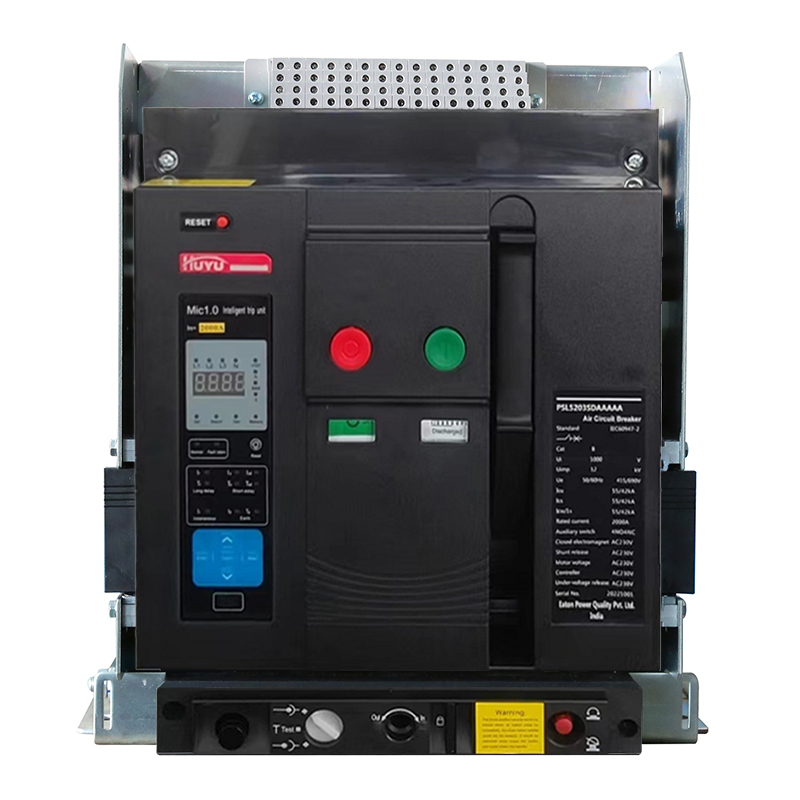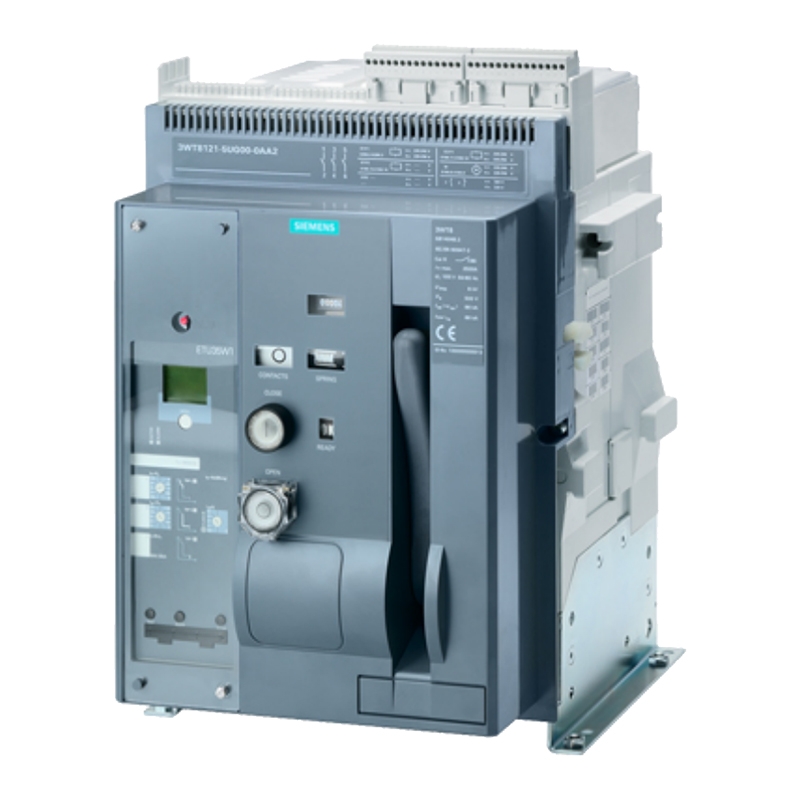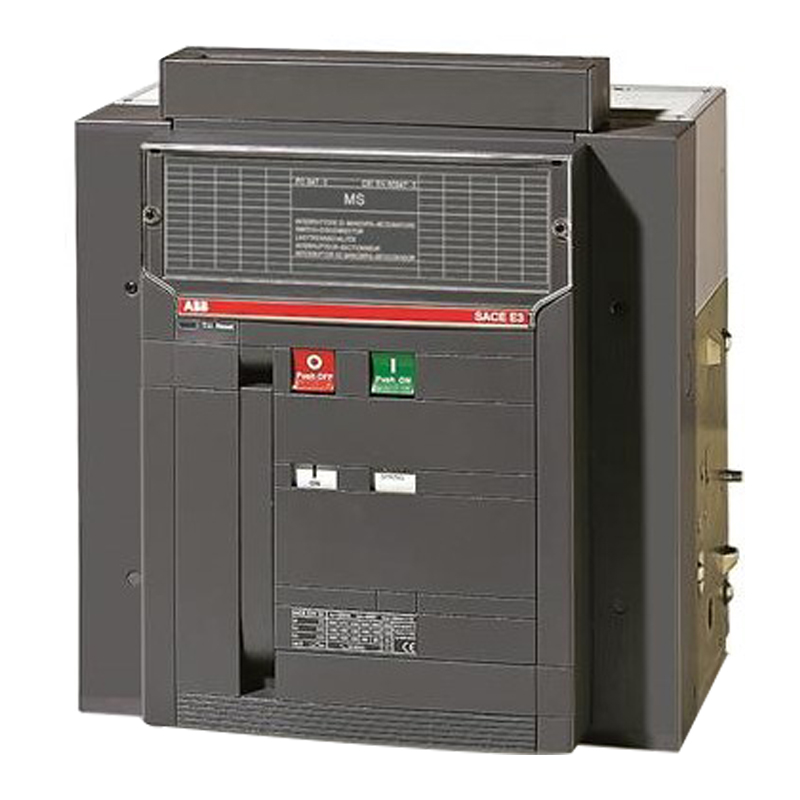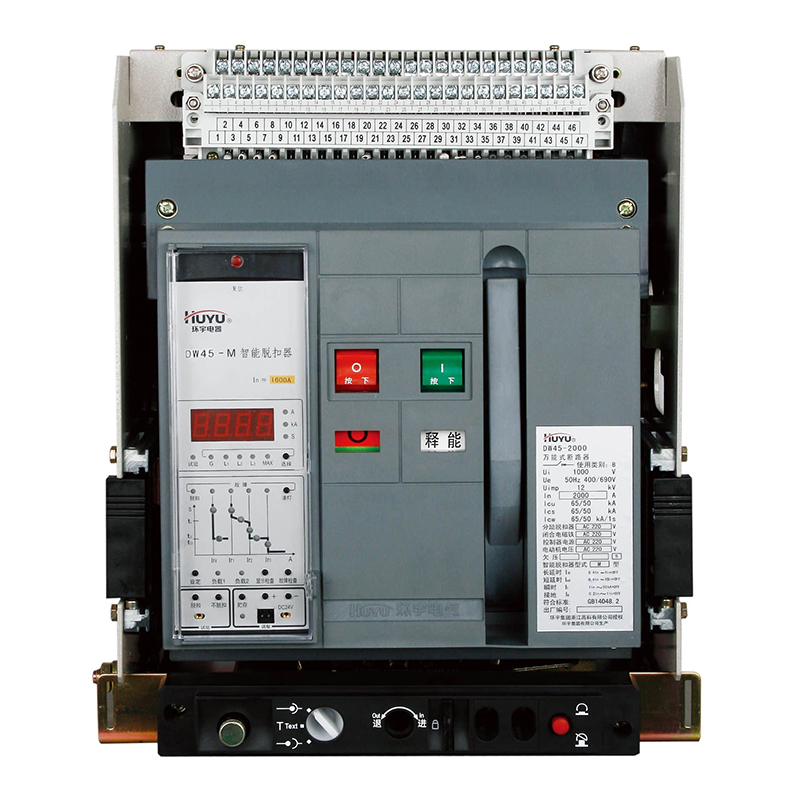



HYW3 Intelligent Universal Circuit Breaker
Product Overview
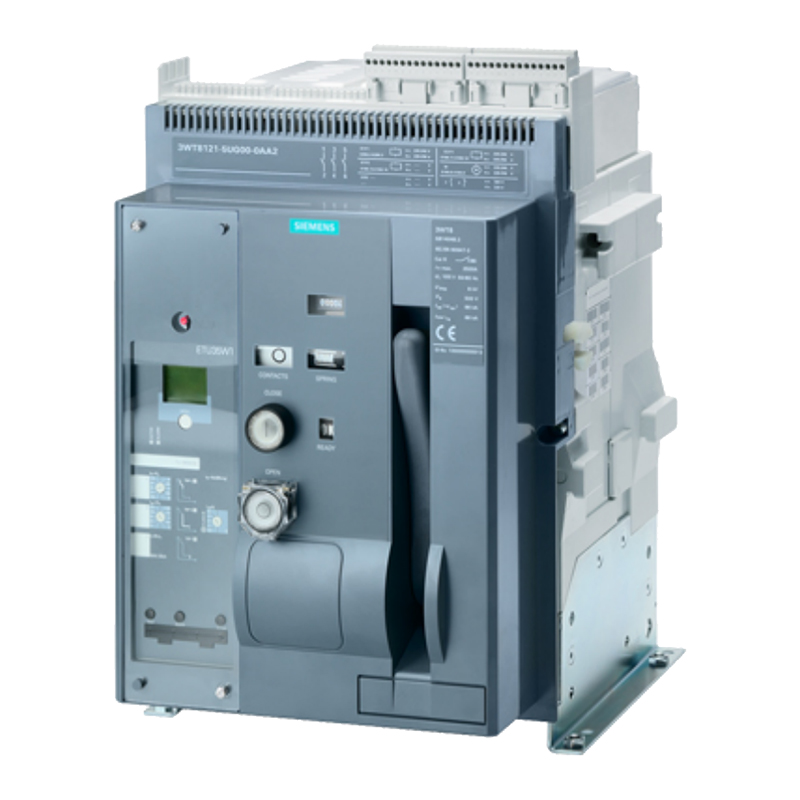
The HYW3 series intelligent universal circuit breaker (hereinafter referred to as the "circuit breaker") is suitable for AC 50/60Hz power systems with rated operational voltages up to 690V and rated currents up to 6300A. It is primarily used for power distribution, feeder protection, and generator protection in electrical networks, safeguarding lines and equipment from overloads, undervoltage, overvoltage, current/voltage imbalance, short circuits, and grounding faults. The circuit breaker can also directly protect motors and generators against overloads, undervoltage, and short circuits. Its core component employs an intelligent controller, enabling precise selective protection to minimize unnecessary power outages and enhance power supply reliability, continuity, and safety. It may also include an open communication interface to achieve "Four Remote" functions (remote measurement, signaling, control, and adjustment) for integration with control centers and automation systems.
● Compliance Standards: GB/T 14048.2, IEC 60947-2.
Normal Operating Conditions
-
1. Ambient Temperature:
- Applicable range: -5°C to +40°C.
- Extended ranges:
- -40°C to +70°C (Mic1.0 Standard Type).
- -25°C to +70°C (Mic2.0 Multifunctional Type, Mic5.0 Intelligent Type).
-
2. Altitude: Installation altitude ≤ 2000 meters.
-
3. Atmospheric Conditions:
- Relative humidity ≤ 50% at +40°C. Higher humidity is permissible at lower temperatures (e.g., 90% at 20°C). Special measures must be taken to address occasional condensation due to temperature fluctuations.
-
4. Pollution Degree: Level 3.
-
5. Installation Categories:
- Main circuit, undervoltage release coil, and primary coil of the power transformer: Category IV.
- Auxiliary and control circuits: Category III.
-
6. Application Category: Class B.
Classifications
- 1. Mounting Types: Fixed type; Drawer type.
- 2. Operation Modes: Motorized operation; Manual operation (for maintenance).
- 3. Pole Configurations: 3-pole; 4-pole.
- 4. Trip Unit Types:
- Intelligent controller;
- Undervoltage instantaneous (or delayed) release;
- Shunt release.
- 5. Intelligent Overcurrent Controller Functions:
- Mic5.0 (Intelligent Type);
- Mic2.0 (Multifunctional Type);
- Mic1.0 (Standard Type).
Functional Overview
-
Primary Protection Features
- Overload long-time inverse-time delay protection;
- Short-circuit short-time definite-time or inverse-time delay protection;
- Short-circuit instantaneous protection;
- Ground/leakage current definite-time or inverse-time delay protection;
- Neutral (N-phase) protection;
- Current imbalance protection (e.g., phase loss);
- Load inverse-time monitoring.
-
Measurement & Operational Monitoring
- Real-time measurement of grid parameters: frequency, power factor, active power, etc.
- Real-time status indicators: fault, alarm, self-diagnosis, normal operation.
-
Query Functions
- Operational parameter queries;
- Protection setting queries;
- Historical fault records;
- Self-diagnostic logs;
- Grid measurement data.
-
Parameter Configuration
- On-panel adjustments for:
- Overload long-time current/time values;
- Short-circuit short-time inverse-time/definite-time current/time values;
- Instantaneous protection current;
- Load monitoring current/time;
- N-phase protection settings;
- Ground/leakage current protection values, time, and inverse-time coefficients;
- Current imbalance ratio and time;
- Harmonic influence coefficients.
- Additional operations (password-protected):
- System clock calibration (if enabled);
- Internal parameter adjustments (without a programmer).
-
Programmer Interface
- Enables modification of specific parameters via an external programmer:
- Signal output contact functions;
- Voltage measurement wiring modes;
- System clock;
- Protection characteristic curves;
- Thermal memory function;
- Communication address;
- Baud rate.
-
Communication & Networking (Mic5.0 Only)
- Standard RS485 interface with Modbus-RTU protocol;
- Profibus-DP or DeviceNet compatibility via external modules.
-
Test Functions
- Instantaneous Trip Test: Simulates instantaneous tripping and displays inherent trip time.
- Non-Trip Simulation Test: Applies simulated fault currents and displays delayed trip time and fault type.
-
Self-Diagnosis
- Detects and alarms controller malfunctions.
-
Fault Time Stamping (Optional)
- Records fault occurrence timing (year/month/day/hour/minute/second; up to 8 events).
-
Historical Data Logging (Optional)
- Logs 4-phase currents, 3-phase voltages, frequency, power, power factor, and active energy every 30 minutes (retained for 3 months).
-
Load Monitoring & Control
- Manages loads to prioritize critical power supply. Provides two programmable dry contacts for pre-alarms or load control.
-
MCR Make-Break & Override Trip (Optional)
- Make-Break: Prevents closure if a fault exceeding the MCR threshold is detected during the closing phase (<100ms).
- Override Trip: Instantly trips the breaker during operation if short-circuit current exceeds the limit (bypasses instantaneous settings).
-
Communication Protocols
- Native Modbus-RTU support;
- Profibus-DP or DeviceNet via external modules.