






 English
 Français
 Deutsch
 Português
 Español
 русский
  한국어
한국어 العربية
 Italiano
 Indonesia
 Schweiz
 Polski
 Nederlands
 ישראל - עברית
 Perzisch
 ไทย
ไทย 日本語
日本語 ኢትዮ-አማርኛ
 Việt Nam
 Kiswahili
 Srpski
 Ελληνικά
 简体中文
简体中文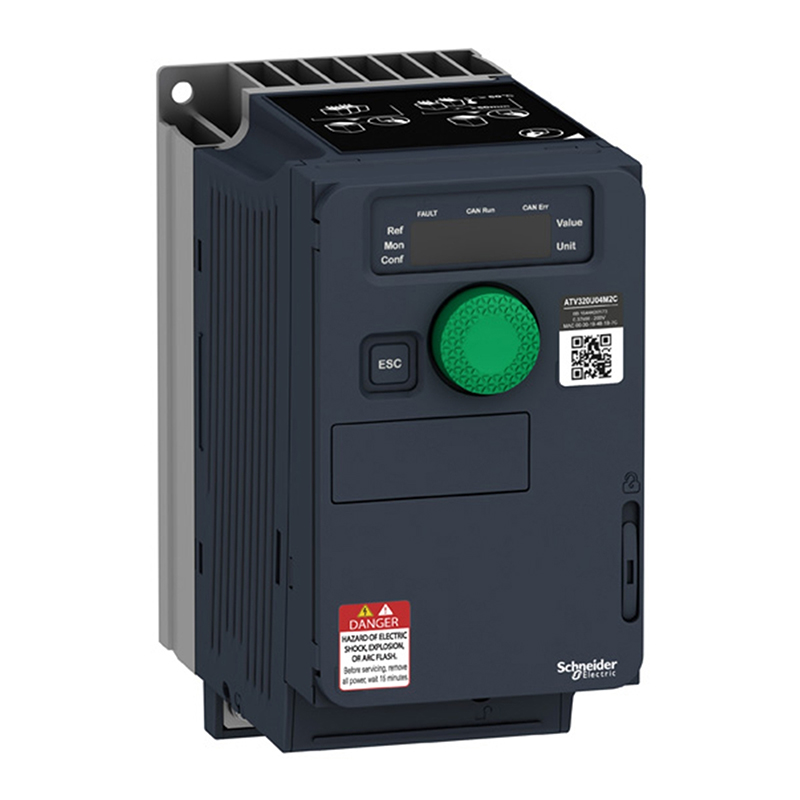
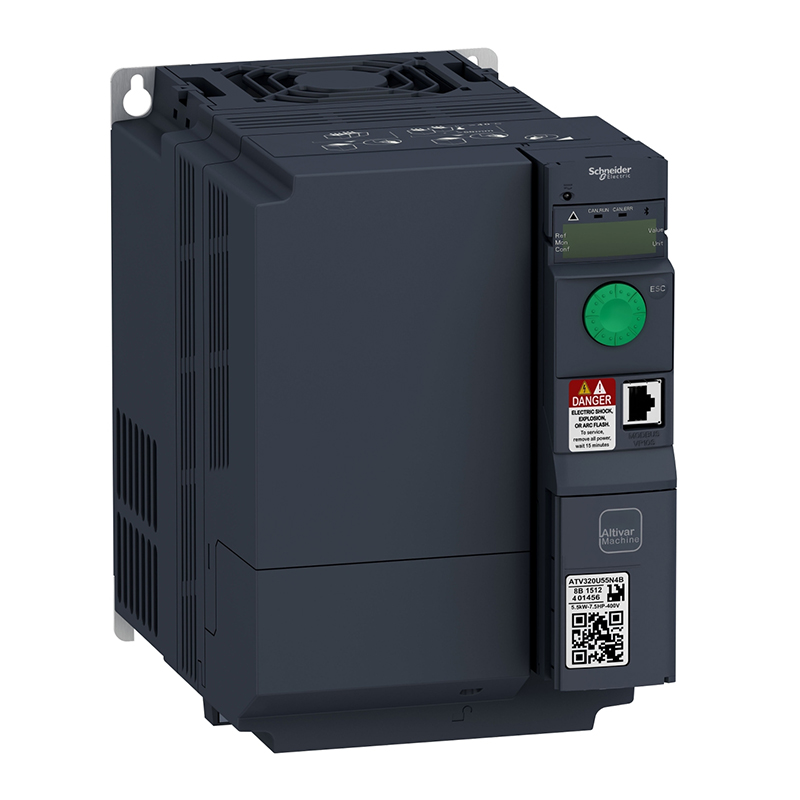
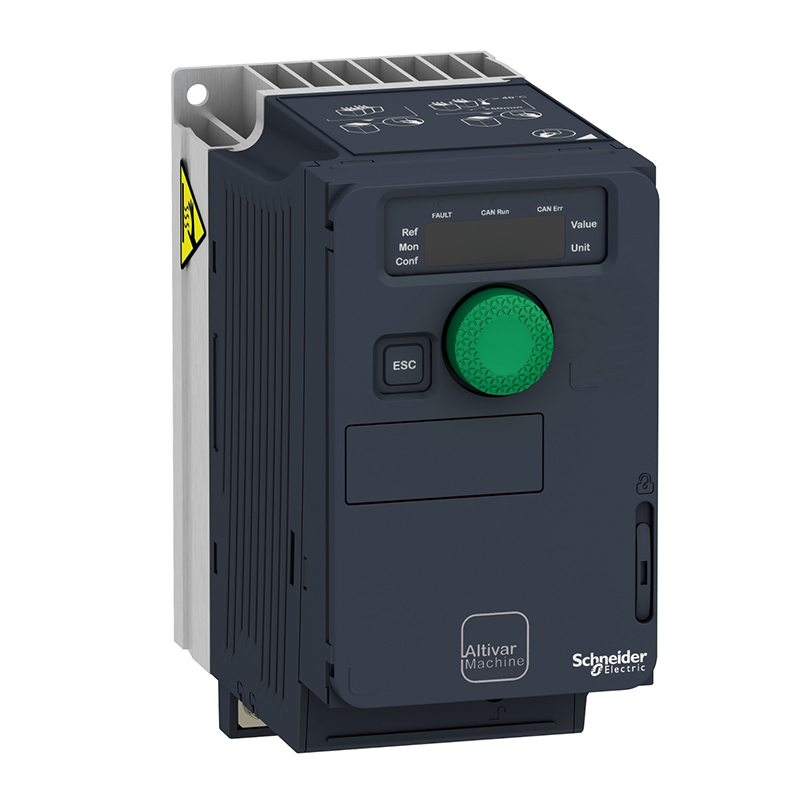
Schneider ATV-320U04M2C Universal Inverter ATV320
Brand:
Series:
ATV320
Protection Level:
IP20
Control Panel:
Standard
Communication Protocol:
Modbus/CANopen
Voltage Level:
Single phase 200-240VAC
Rated Power:
0.37KW
Rated Current:
3.3A
Model:
ATV-320U04M2C
Order Number:
ATV320U04M2C
Description:
Schneider general purpose inverter ATV320 ATV-320U04M2C, remote display terminal optional, 0.37KW, communication protocol Modbus/CANopen, IP20, 3.3A, single phase 200-240VAC
Product parameters
| Product attributes | Attribute value | Filter product attributes |
|---|---|---|
| Brand: | Schneider | |
| Series: | ATV320 | |
| Remote Display Terminal: | Alternative | |
| Protection Level: | IP20 | |
| Control Panel: | Standard | |
| Communication Protocol: | Modbus/CANopen | |
| Voltage Level: | Single phase 200-240VAC | |
| Rated Power: | 0.37KW | |
| Applications: | Various simple mechanical operations | |
| Rated Current: | 3.3A |
Products with the same attribute : 0
Show details
Series Overview
Series Overview
Mechanical Solutions
ATV320 is an IP20 frequency inverter for three - phase asynchronous and synchronous motors. Its functions are applicable to the most common application scenarios, including:
- Packaging
- Material handling
- Textile
- Material processing
- Fluid actuators
- Lifting
The ATV320 series is committed to achieving simple integration for both simple and advanced mechanical requirements with its proven motor control and connection capabilities. It provides stronger automation capabilities and performance for industrial machinery application scenarios:
- Reliable motor control for asynchronous and permanent magnet motors
- Can be fully integrated into any system architecture (Ethernet, Canopen, Profibus, etc.)
- Offers both compact and 书本 (book) types, which can be integrated into all cabinet types
- Built - in safety functions can easily meet safety regulations
- Stronger ability to withstand polluted air environments
Since we considered the constraints in terms of product layout and usage limitations from the design stage, we have been able to simplify the integration of the ATV320 frequency inverter into industrial machinery. It has more than 150 functions, is robust, easy to install, and complies with the Machinery Directive 2006/42/EC.
Schneider Electric's MachineStruxure solution provides a redundant and easy - to - use PLC - open compatible library. SoMachine can be used to develop, configure, and set up the entire mechanical equipment in a unified software environment. With FDT/DTM technology, the same software component (DTM) can be directly used in SoMachine and SoMove software to configure, control, and diagnose the ATV320. Thanks to the seamless integration under this platform, the ATV320 is capable of reducing engineering and design time. The optional Ethernet - based communication solution can access real - time production data of all levels of the automation system through a web server.
The ATV320 frequency inverter is a frequency inverter for three - phase asynchronous and synchronous motors from 0.18 to 15kW. The ATV320 frequency inverter is robust, easy to commission, easy to integrate into different machine layouts and cabinet sizes, and can possibly be integrated into common automation architectures. The ATV320 frequency inverter is particularly suitable for the application requirements of general machinery.
In addition, the ATV320 has many practical functions built - in to meet advanced application requirements. The ATV320 is designed to improve mechanical performance, increase mechanical availability, and reduce the overall cost of the machinery.
Flexibility
For products below 4kW, there are 2 different types (using 240V single - phase and 480V three - phase power supplies), namely the 书本 type and the compact type:
- The 书本 type (45 or 60mm wide) is designed for side - by - side installation, thus saving space occupied for installation
- The compact type is designed to be integrated into compact electrical cabinets (with a depth of 200mm or less), and due to its compact design, it can also be directly integrated into the high - level connection capabilities of the machine
High - level Connection Capability for ATV320
The frequency inverter can operate in commonly used automation architectures; CANopen and Modbus RTU communication protocols are built - in; and, various additional fieldbus options are provided to meet the needs of the following protocols:
- Based on Ethernet, Modbus TCP, EtherNet/IP, Profinet, EtherCAT
- Serial connection, CANOpen (daisy chain), ProfibusDP
Robust Design
The ATV320 frequency inverter can operate in harsh environmental conditions:
- Up to 50°C without derating
- Up to 60°C with derating, without the need for additional fans
All printed circuit boards are coated in accordance with IEC 60721 - 3 - 3 for 3C3 for industrial environments and 3S2 for solid particles.
Reliable Motor Control
The reliable motor control and simplicity for asynchronous and synchronous motors are unified. The ATV320 can achieve a motor speed accuracy of +/- 10% when used with asynchronous motors in open - loop mode.
Safety Functions
As a benchmark, the ATV Machine ATV320 frequency inverter provides innovative features including electrical safety functions and control system functions to meet the requirements of the most professional application scenarios.
The comprehensive built - in safety solutions include from the simple requirement of Safe Torque Off (STO) to more advanced monitoring functions, such as Safe Limited Speed (SLS), Safe Maximum Speed (SMS), Guard Door Locking (GDL), and Safe Stop 1 (SS1).
Applications
The functions of the ATV320 frequency inverter are applicable to the most common application scenarios, including:
Material Handling
- Small conveyors
- Large conveyor systems
- Rotary conveyors, etc.
Packaging and Packaging Machinery
- Small bag - making machines
- Labeling machines
- Carton packaging machines, etc.
Textile
- Rapier looms
- Knitting machines
- Rolling and cutting machines
Lifting
- Picking and placing
- Industrial elevators for manufacturing
- Gantry cranes and bridge cranes
Fluid Actuators
- Pumps
- Fans
- Compressors
Material Processing
- Woodworking machinery
- Saws
- Grinding machines
- Planers
- Metal processing
- Bending machines
- Welding machines
- Cutting machines
- Grinding and polishing machines
Special - purpose Machinery
- Mixers
- Dough kneading machines
- Conveyors
Safety Functions
The safety functions provided by the ATV320 series frequency inverters (in accordance with IEC 61508 standards) are equivalent to the performance level e (PL e) of the ISO/EN 13849 - 1 - 2 standard.
The ATV320 frequency inverter software includes 5 safety functions, which can help mechanical equipment meet safety requirements, regardless of whether it is used in combination with the Prevena safety module (2):
- STO: Safe Torque Off, safe torque removal
- SLS: Safely Limited Speed, safe limited speed
- SS1: Safe Stop 1, safe stop 1
- SMS: Safe Maximum Speed, safe maximum speed
- GDL: Guard Door Lock, guard door locking
The configuration of these safety functions is carried out through SoMove software.
ATV Logic
- Through the integrated control system function that can be programmed according to customer needs, ATV Logic is used to expand the ATV320 frequency inverter to adapt to specific application scenarios.
- The integrated control system function with ATV Logic can be used to perform simple operations without the need to add external devices, thus reducing costs.
Functions Special for Synchronous Motors
The ATV320 frequency inverter has new functions suitable for most synchronous motors.
- Simplified setting due to the minimum number of configuration parameters (up to 4)
- Automatic tuning of the frequency inverter/motor combination
- High - frequency input for achieving high - performance operation in open - loop mode
Application Functions
The ATV Machine ATV320 frequency inverter includes 150 application functions, such as:
- Configuration: standard or customized
- Special functions for material handling, textile, lifting, and fluid actuators
- Functions for energy efficiency (motor current adjustment, motor noise reduction)
- Adjustable monitoring, in the form of My Menu, to obtain user - specific monitoring
- Upload/download of frequency inverter configuration without a power supply

Rachel
Industrial Control Sales Specialist: Focuses on delivering high-performance, cost-effective industrial control products. Offers end-to-end one-stop procurement support—covering rapid quotation, streamlined order fulfillment, and responsive after-sales service—to simplify clients’ procurement processes.
Email: Anthony@icxsg.com
We offer competitive product pricing. For fast support, send your email, phone, address, and the product model & quantity you want—we’ll reach out quickly!
We typically respond via email within one business day! You can also contact us at Anthony@icxsg.com
Product Category
Related Articles
-
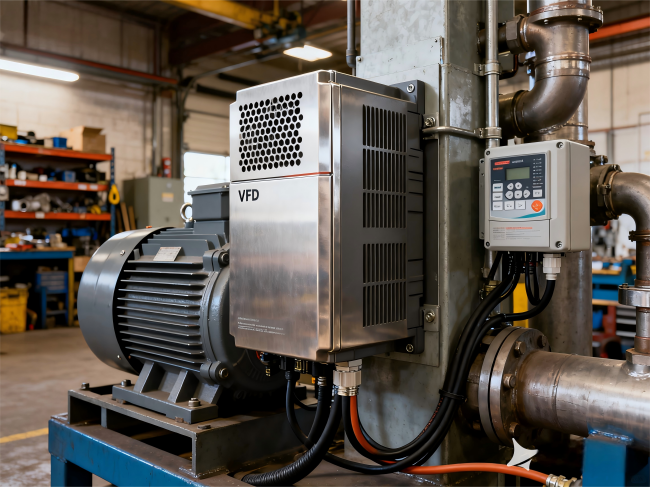
Industrial VFD Selection Guide – The Key to Efficient and Reliable Motor Control
In modern industrial automation systems, the motor drive acts as the core power unit that determines the efficiency, stability, and energy consumption of the entire process. For international projects and engineering contractors, selecting the right Variable Frequency Drive (VFD) is crucial. This article provides a detailed and practical guide to understanding how VFDs work, how to select them correctly, and how to avoid common mistakes during implementation.Read More October 22, 2025 -
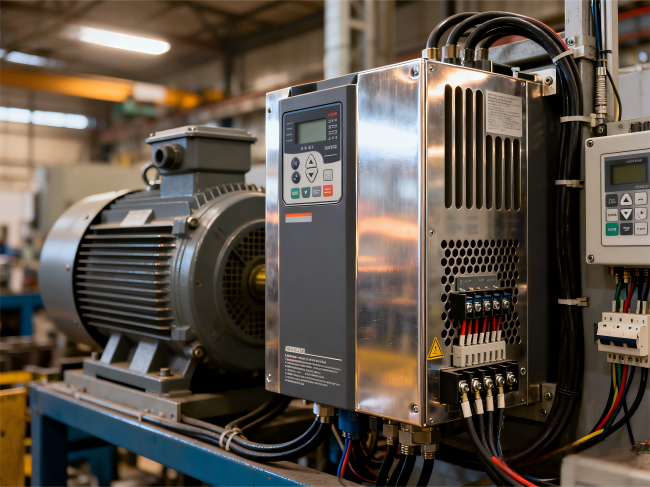
The Core Role of Frequency Converters in Modern Motor Control Systems
A frequency converter regulates the speed and torque of an AC motor by adjusting the frequency and voltage supplied to it. This not only enhances process control but also significantly reduces power consumption, equipment wear, and system maintenance costs.Read More October 16, 2025