






 English
 Français
 Deutsch
 Português
 Español
 русский
  한국어
한국어 العربية
 Italiano
 Indonesia
 Schweiz
 Polski
 Nederlands
 ישראל - עברית
 Perzisch
 ไทย
ไทย 日本語
日本語 ኢትዮ-አማርኛ
 Việt Nam
 Kiswahili
 Srpski
 Ελληνικά
 简体中文
简体中文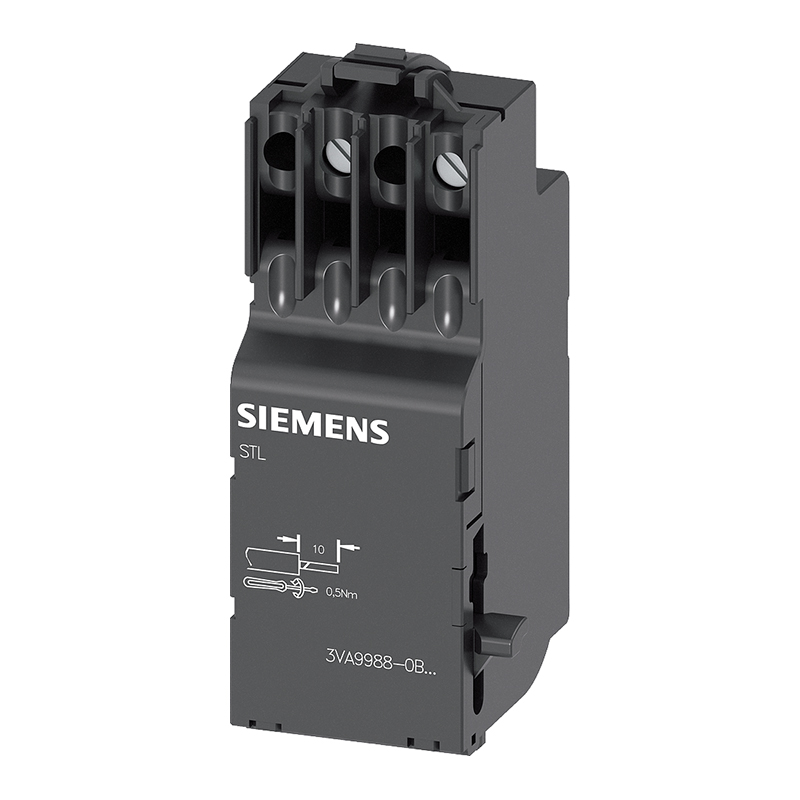
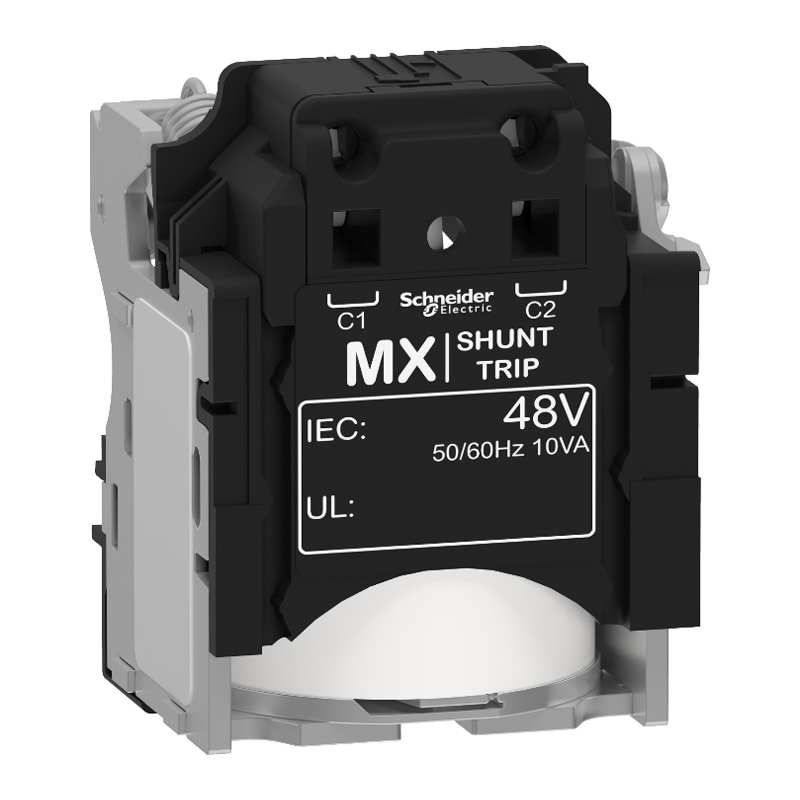
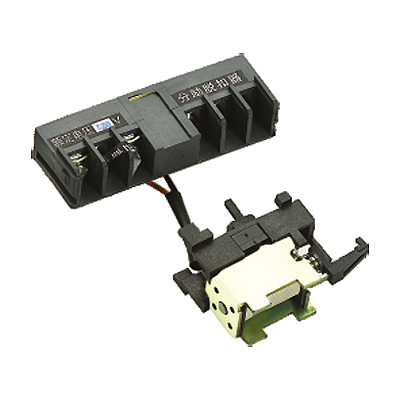
Siemens 3VA99880BL20 Molded Case Circuit Breaker Accessories
Brand:
Series:
3VA
Attachment Name:
Shunt release
Model:
3VA-shunt release, AC380V~600V, for 3VA1/2, 2P/3P/4P, left side installation
Order Number:
3VA99880BL20
Description:
Siemens molded case circuit breaker accessories 3VA-shunt release, AC380V~600V, for 3VA1/2, 2P/3P/4P, left side installation
Product parameters
| Product attributes | Attribute value | Filter product attributes |
|---|---|---|
| Brand: | Siemens | |
| Series: | 3VA | |
| Attachment Description: | Shunt release, AC380~600V, left side installation | |
| Attachment Type: | - | |
| Attachment Name: | Shunt release |
Products with the same attribute : 0
Show details
Series Overview
Product Features
Auxiliary and Release Units
- Auxiliary releases are used to achieve remote electrical tripping of the circuit breaker, controlling the main circuit to protect the system from hazards such as unexpected reclosing after power failure recovery.
- Undervoltage releases are used to cause the 3VA circuit breaker to trip and disconnect the power supply circuit when the main circuit voltage drops below the minimum permissible limit.
- Ensures electrical equipment does not operate under low voltage conditions, safeguarding system and equipment lifespan.
- Shunt releases are used for remote tripping of molded case circuit breakers.
- STF can be installed on the left or right side of the accessory unit. SIL and SL.E1 series are specifically designed for assembly on the left side.
- SIL(E) can be used to achieve electrical interlocking between molded case circuit breakers.
- Combined release units are single 2-module wide units that include one auxiliary release and one undervoltage release. They offer the same functionality as separate auxiliary or undervoltage releases.
- All auxiliary and alarm switches for 3VA molded case circuit breakers belong to the integrated accessory range.
- Auxiliary switches can be easily assembled and installed in the accessory compartments on both sides of the circuit breaker's front handle.
- The function of auxiliary switches is to indicate the position of the molded case circuit breaker's main contacts. The auxiliary switch contacts open and close synchronously with the main contacts of the molded case circuit breaker.
- Early-break auxiliary switches (LCS) indicate the opening of the main contacts 36ms before the circuit breaker trips, used in applications like unloading.
- Trip alarm switches (16) indicate every tripping operation of the circuit breaker, regardless of the tripping cause. Whenever the molded case circuit breaker switches to the tripped position, this trip alarm switch activates.
- The electrical signaling switch (GLS) activates whenever the molded case circuit breaker is tripped by a release. Dedicated EMC-compatible auxiliary switches are used when auxiliary switch signals need to be directly fed into fully automated systems.
Advantages
- Internal accessories are very easy to install; accessory units can be conveniently installed in the accessory compartments on the left or right side of the handle without tools.
- Accessories use screw-type terminals to connect auxiliary conductors with cross-sections up to 1.5mm². These terminals are located on the top of the unit for easy access.
- Some auxiliary and alarm switches are designed as changeover contacts, making selection and installation easy.
- All auxiliary switches are available in both compact (1 - single module width) and heavy-duty (1F - double module width) versions to meet different application requirements.
- Each contact of auxiliary and alarm switches can accommodate two conductors, offering high connection capacity.
- Internal accessory installation diagrams are printed inside the circuit breaker's terminal cover for easy reference during installation.
Product Features
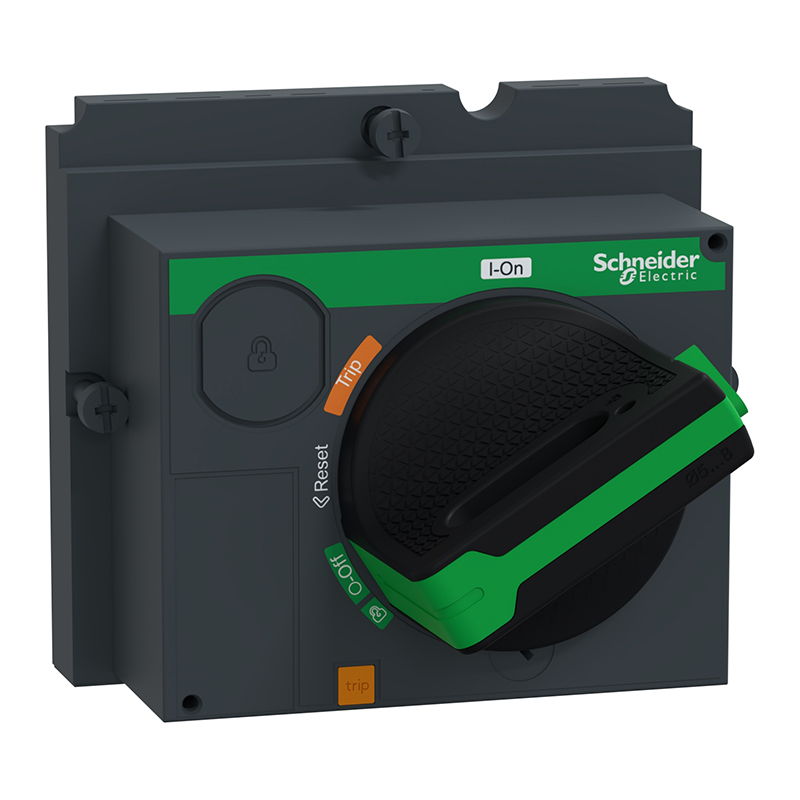
- Manual operating mechanisms are provided for manually operating the circuit breaker under various usage conditions. Manual operating mechanisms are installed directly on the circuit breaker or on the cabinet door or side wall.
- Direct Mount Rotary Operating Mechanism: Locks the door handle, but can be deliberately unlocked if necessary.
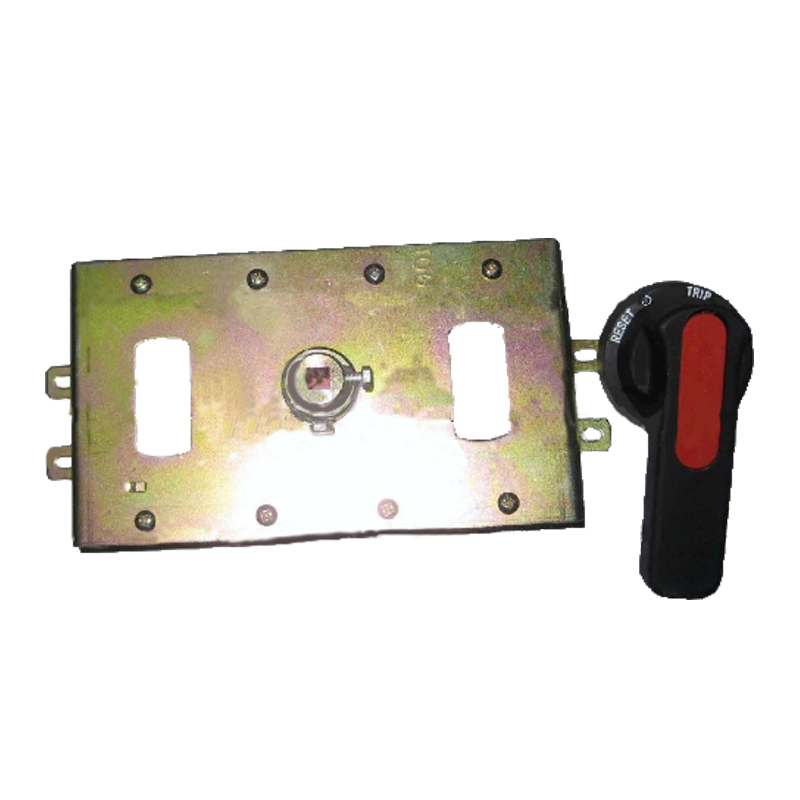
- Side Panel Mount Rotary Operating Mechanism: Designed for installation on the switchgear side panel. The mechanism can be flexibly equipped with short rods and mounting brackets for direct mounting on the cabinet wall. The cabinet wall unit meets IP20 protection requirements. Door interlocking can be achieved using a door interlock module with a steel cable, ensuring the cabinet door cannot be opened when the molded case circuit breaker is closed.
Product Features
Front Mounted Motor Operator M0320
- The M0320 motor operator opens and closes the molded case circuit breaker based on commands from a control cable (e.g., from a control system or PLC). It can also be operated manually using the included handle.
- This motor operator also features a clear switch position indicator showing ON and OFF states, and uses an LED light to indicate if the circuit breaker has tripped (TRIP). Therefore, this motor operator complies with the standards regarding isolation characteristics specified in IEC/EN 60947-1. Thus, the switch position of the molded case circuit breaker can be identified at any time.
- Two reset modes can be selected: one where the operator automatically resets the molded case circuit breaker, and another where the circuit breaker is reset by a separate reset operation.
- Additionally, this motor operator can be padlocked in the OFF position with multiple padlocks.
Side Mounted Motor Operator M0310
- The side-mounted motor operator M0310 is optimized for easy, single-piece installation and is commonly used with 3VA11 series circuit breakers.
- The motor operator has the same depth and height as the circuit breaker, and the same panel cutout dimensions (both 60mm).
- This motor operator has remote and local operation functions and can also be locked via a locking device.
Product Features
Plug-in Technology
- Plug-in technology requires fewer components in two solutions and saves space. High-base plug-in molded case circuit breakers have plug-in terminals on the rear. Plug-in terminals achieve reliable connection with the mating terminals.
- The plug-in unit can be ordered as a complete device or as a conversion kit, including screw-type terminal covers.
Withdrawable Technology
- The withdrawable solution for molded case circuit breakers is also equipped with plug-in main circuit contacts. Additionally, side modules including guide and support screws are clipped onto the sides of the molded case circuit breaker.
- Based on this solution, the mating component is the withdrawable base. A crank handle operates it to connect the circuit breaker to the main circuit. The molded case circuit breaker is moved into the withdrawable base using the configured guide device.
- The operating mechanism clearly indicates from the position indicator whether the circuit breaker is correctly connected to the main circuit or safely isolated from the main circuit (so that it can be withdrawn).
Product Features
- Residual Current Devices (RCDs) are used to prevent or reduce hazards from residual currents. They can protect personnel and prevent damage to homes and property loss.
- The new combination of residual current devices for the 3VA series includes three different RCD designs. Therefore, the optimal solution is available for every conceivable top, side, and modularized application.
- Modular residual current protection devices are tested according to IEC 60947-2 Annex M and IEC 60947-2 Appendix B.
Basic Residual Current Devices
- Basic residual current devices can be combined with 3VA molded case circuit breakers. The characteristics of these devices are as follows: Compact design.
- LED "ready" status and pre-alarm device with electrical contacts for signaling a trip signal.
- Trip reset button provided.
- Advantages:
- RCD310 and RCD510: Increased installation density in cabinets due to compact Type B design.
- Through-hole technology saves complex cabling between the circuit breaker and the residual current device. Guide rails ensure mounting of accessories on the rail.
- Identical panel dimensions allow side-by-side mounting with 3VA.
- Integrated RCR module enables automatic auxiliary tripping.
- Strict testing of residual current prevents maloperation.
- Advantages:
- Compact cabinet design saves space.
- Strict testing of residual current prevents maloperation.
- Status information transmission via potential-free connection or optional electrical output ensures fast status messaging, even suitable for remote transmission or purely as an alarm unit.
- Multiple pre-alarms prevent/avoid plant downtime.
- Confirmation, commissioning, and testing of the RCD via electrical contacts or optics, eliminating the need for on-site handling.
Modular Residual Current Devices
- Modular design allows installation on different circuit breaker designs (e.g., 2, 3, 4-pole circuit breakers).
- During replacement, only the faulty component needs to be replaced, reducing maintenance costs.
- Simple upgrade to residual current functionality based on standard factory settings saves time.
- Particularly suitable for applications with limited installation space.
- Advantages:
- Compact cabinet design saves space.
- Product tested residual current prevents maloperation.
Product Features
Metering Function
- Integrated into the 3VA molded case circuit breaker, the i-measure data system provides a range of measurement functions like a multi-channel measuring transducer for FLC (Full Load Current) values.
- External current sensors can be used to directly measure the neutral conductor current of 3-pole molded case circuit breakers. When a 3-pole circuit breaker is installed in a TN system, a voltage transformer is configured on the neutral conductor to keep the neutral point of the voltage network fixed.
- Advantages:
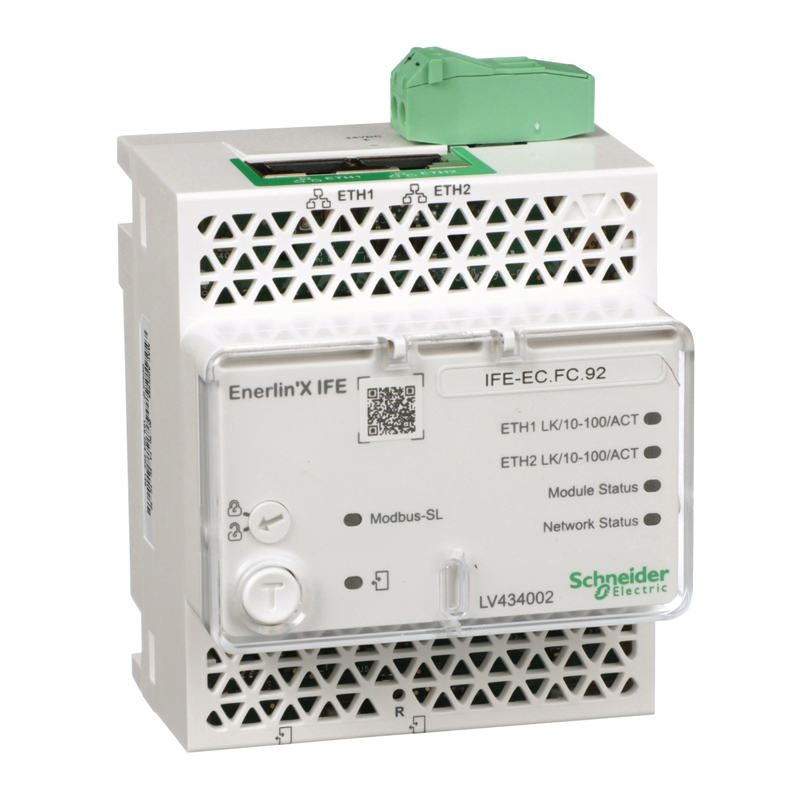
- The COM800/COM100 circuit breaker communication gateway connects up to 8 3VA2 devices, providing a cost-effective communication solution. It offers multiple communication bus interfaces.
- Universal 50 socket for pulse output.
- 100 test results can be stored in the TD500 test device.
- Can be equipped with the door display unit DSP800, supporting the status and measured values of up to 8 molded case circuit breakers.
Product Features
- Based on all types of 3VA molded case circuit breakers, a basic requirement can be implemented in the following ways:
- Circuit Breaker Locking: Locking devices enable locking the 3VA circuit breaker. Once the molded case circuit breaker is locked in a position, it cannot be operated.
- Interlocking: Using interlocking technology, the mutual locking of two or more molded case circuit breakers becomes possible. This interlocking zone is designed to ensure that only one molded case circuit breaker can be operated at a time. The interlocking zone ensures other molded case circuit breakers cannot close. Consequently, all molded case circuit breakers not released by the 3VA circuit breaker locking system are securely locked in the OFF state.
- The following methods are available for 3VA molded case circuit breaker interlocking:
- Mechanical interlocking
- Key interlocking
Product Features
- Correct functionality and safety, especially for electrical installations, depend not only on quality and component design but also on the installation method.
- For the safe and reliable connection of 3VA molded case circuit breakers, the following aspects of the electrical installation are crucial:
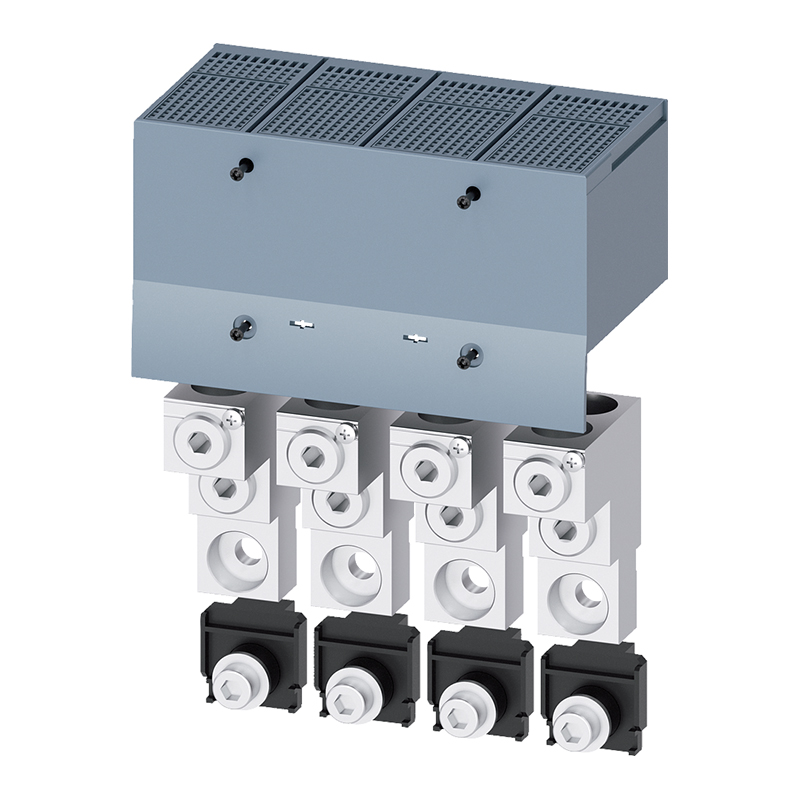
- Installation, e.g., connection of cables or busbars.
- Cable and busbar sizing.
- Connection material, such as rigid or flexible.
- The following catalog pages provide all the necessary information to ensure 3VA molded case circuit breakers are safely connected.
- Connection Technology for 3VA Molded Case Circuit Breakers: The connection technology for 3VA molded case circuit breakers supports simple and convenient commissioning and meets all installation requirements.
- To achieve this, a wide range of connection components is available in a modular system.

Rachel
Industrial Control Sales Specialist: Focuses on delivering high-performance, cost-effective industrial control products. Offers end-to-end one-stop procurement support—covering rapid quotation, streamlined order fulfillment, and responsive after-sales service—to simplify clients’ procurement processes.
Email: Anthony@icxsg.com
We offer competitive product pricing. For fast support, send your email, phone, address, and the product model & quantity you want—we’ll reach out quickly!
We typically respond via email within one business day! You can also contact us at Anthony@icxsg.com