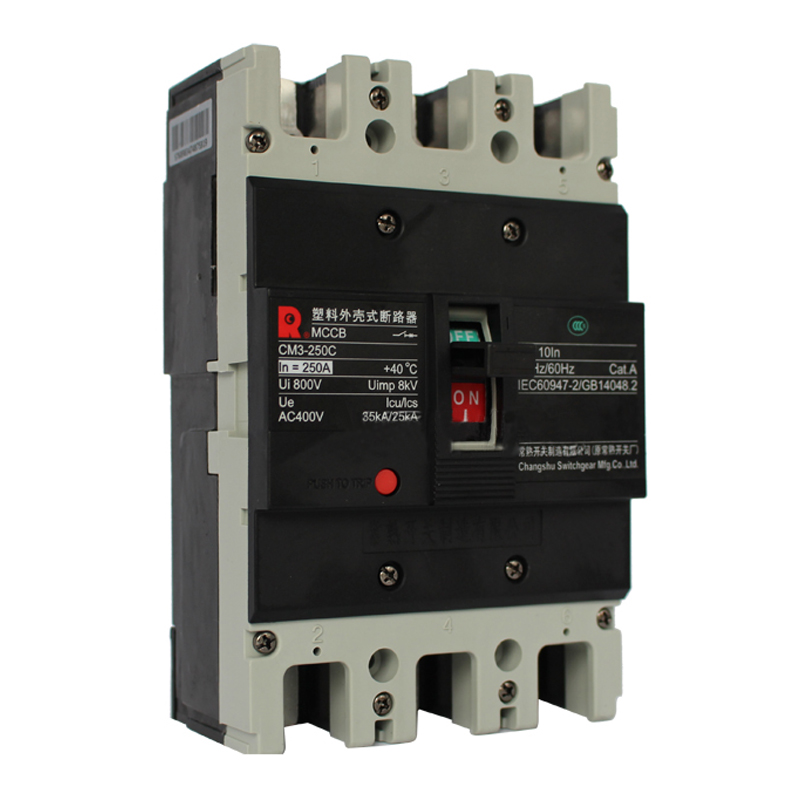
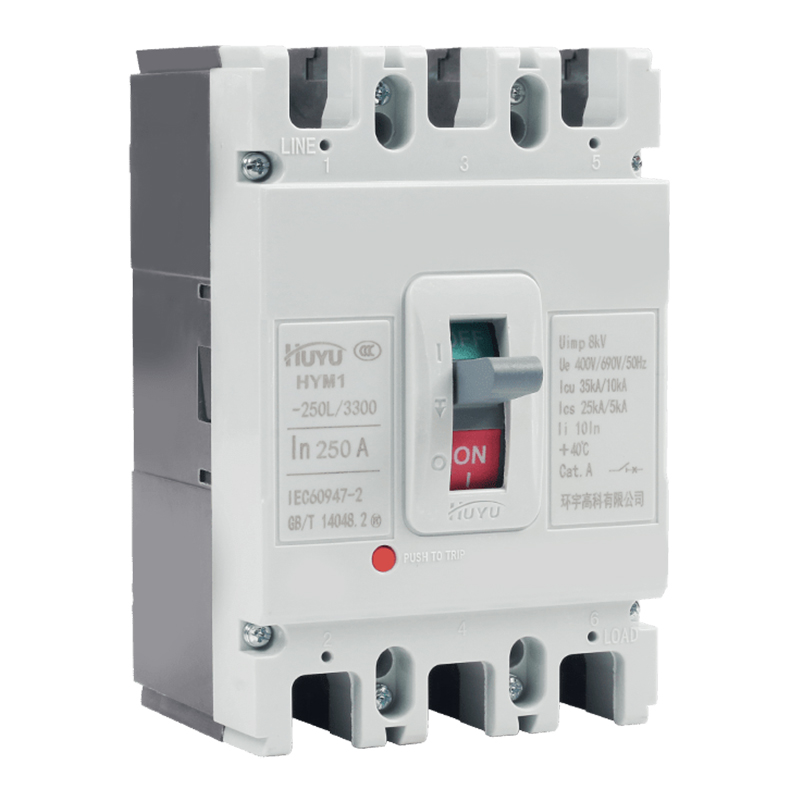
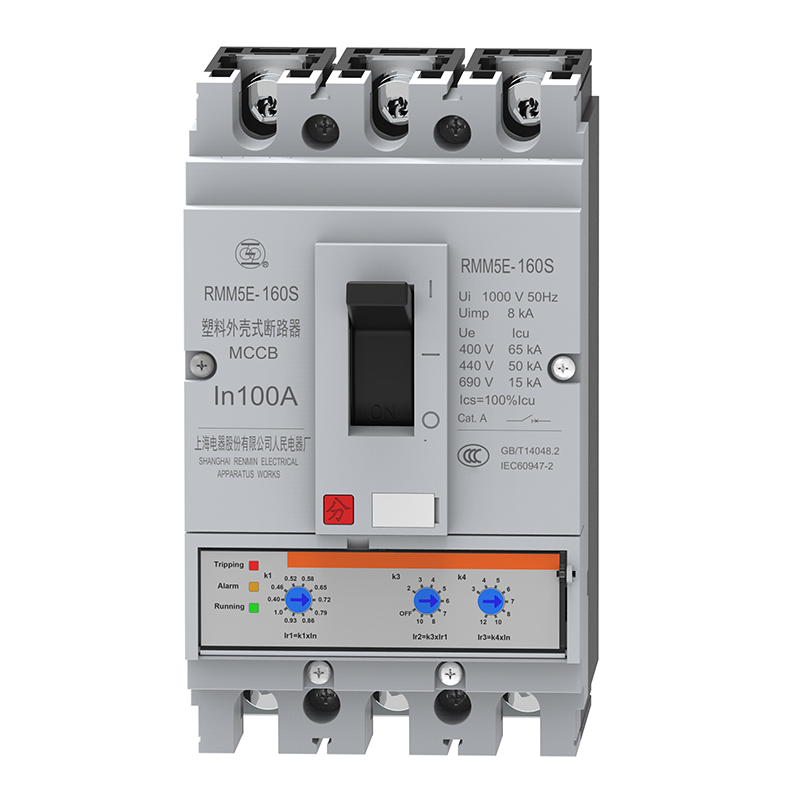
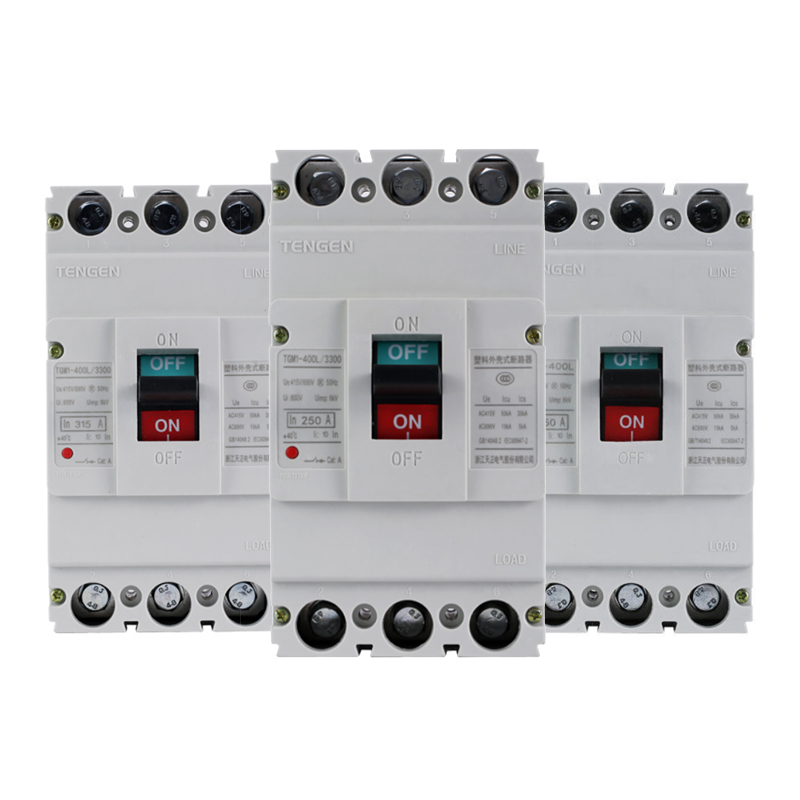
CS Switch CM3-250C/4300B 160A Molded Case Circuit Breaker

Brand:
Series:
CM3
Protection Type:
Main body (with protection function)
How It Works:
Manual
Frame Current:
250A
Tripping Mode:
Thermal Magnetic
Protection Function:
LI
Wiring Method:
Front panel wiring
Poles:
4P
Rated Voltage:
400VAC
Installation:
Fixed
Trip Unit:
Compound release
Rated Current of Release:
160A
Breaking Capacity:
35KA
Model:
CM3-250C/4300B 160A
Order Number:
C0156188
Description:
CS Switch Molded Case Circuit Breaker CM3-250C/4300B 160A,LI,35KA,250A,Fixed,Manual,4P

Product parameters

Product attributes Attribute value Filter product attributes
Brand: CS Switch
Series: CM3
Appendix: -
Protection Type: Main body (with protection function)
How It Works: Manual
Frame Current: 250A
Tripping Mode: Thermal Magnetic
Protection Function: LI
Wiring Method: Front panel wiring
Poles: 4P
Rated Voltage: 400VAC
Installation: Fixed
Trip Unit: Compound release
Rated Current of Release: 160A
Breaking Capacity: 35KA
Products with the same attribute : 0
Show details

Series Overview

Product Series Overview​

● The ​​CM3​​ Molded Case Circuit Breaker (hereinafter referred to as the ​​breaker​​) is an upgraded product of the CM1 series.

● The thermomagnetic ​​CM3​​ series breakers have six frame sizes: 63A, 100A, 250A, 400A, 630A, 800A, with current ratings from 10A to 800A.
● Based on the level of rated ultimate short-circuit breaking capacity (​​Icu​​), the breakers are classified into four levels: ​​C​​ (Basic), ​​L​​ (Standard), ​​M​​ (Higher Breaking Capacity), and ​​H​​ (High Breaking Capacity).
● ​​CM3​​ breakers with breaking capacity levels ​​C​​, ​​L​​, ​​M​​ and ​​CM3E​​ breakers with breaking capacity level ​​M​​ allow ​​reverse connection​​ when used in AC400V distribution systems.
● The entire series of breakers can be installed ​​horizontally​​, ​​vertically​​, or ​​flat​​.
● All breakers in the series feature ​​isolation function​​, indicated by the symbol: ​​|​​.
● ​​CM3-100, 250​​ models (L/M/H types), ​​CM3-400, 630​​ models (C/L/M/H types), ​​CM3-800​​ models (L/M/H types), and the above specifications in four-pole configuration with neutral pole types ​​A​​ or ​​B​​, can feature a unique ​​"Overload Alarm Without Tripping"​​ function. This ensures power supply continuity and meets the requirements of ​​GB50054 Clause 6.3.6​​.
● The breakers comply with the following standards:
● ​​IEC 60947-1​​ & ​​GB/T 14048.1-2012​​ Low-voltage switchgear and controlgear - General rules
● ​​IEC 60947-2​​ & ​​GB/T 14048.2-2008​​ Low-voltage switchgear and controlgear - Circuit-breakers
● ​​IEC 60947-4-1​​ & ​​GB/T 14048.4-2010​​ Low-voltage switchgear and controlgear - Contactors and motor-starters - Electromechanical contactors and motor-starters (including motor protection devices)

​Application Scenarios​

​Low-Voltage Distribution Protection​

● ​​CM3​​ distribution breakers can be used in AC 50/60Hz ​​TN​​, ​​TT​​, ​​IT​​ distribution systems, meeting the requirements of ​​GB50054​​ regarding "Selection of Electrical Apparatus".
● The reliable ​​contact position indication​​ and ​​isolation function​​ of the entire series meet the requirements of ​​GB50054​​ for isolation devices.

​Motor Circuit Protection​

● ​​CM3​​ motor protection breakers provide overcurrent protection for motor starters, cables, and motors. Their protection characteristics meet ​​GB/T 14048.4​​, and their application meets ​​GB50055​​.
● ​​CM3-250C​​, ​​100C​​, and ​​CM3-63​​ breakers have a thickness of only ​​60mm​​, allowing installation in equipment control cabinets for device protection.

​Transfer Function​

● Two ​​CM3​​ breakers equipped with a ​​mechanical interlock​​ can achieve ​​manual transfer​​ between two power sources for the same device or between two devices on the same power source.
● Two breakers equipped with ​​mechanical-electrical interlocks​​ and controllers, etc., can achieve ​​automatic transfer​​ of power sources (refer to the ​​CA1/CA1B/CA1W​​ series Automatic Transfer Switching Equipment sample data).

​Photovoltaic (PV) Grid Connection​

● ​​CM3​​ breakers equipped with a ​​PV grid-connection dedicated undervoltage release​​ meet the ​​State Grid Corporation of China (SGCC) Q/GW 1972​​ and ​​Q/GDW 1973​​ standards, enabling ​​voltage presence detection for automatic closing​​.
● ​​CM3​​ and ​​CM3L​​ breakers featuring ​​loss-of-voltage/overvoltage trip protection​​ and ​​voltage presence detection for closing​​ comply with the requirements of the SGCC "Typical Design for Grid Connection Projects of Distributed Photovoltaic Poverty Alleviation Projects".

​Thermomagnetic Breaker Communication​

● ​​CM3​​ breakers configured with the ​​FZT3 status upload module​​ can provide ​​ON​​, ​​OFF​​, ​​TRIPPED​​ status signals to an upper-level computer and allow remote control of the breaker (ON/OFF), enabling communication functions for thermomagnetic breakers.

​High-Precision Measurement​

● ​​CM3​​ breakers with the ​​PMD3 power measurement module​​ assembled at the outgoing terminals enable ​​power measurement​​ in AC400V distribution systems ​​without requiring additional wiring​​ (no extra power supply needed, no external current transformers required, no voltage sampling connections needed, no communication lines needed). They feature ​​compact size​​ and small dimensions. Their measurement performance meets the ​​IEC 61557-12 (GB/T 18216.12)​​ standard. The ​​energy measurement accuracy class is 1​​, meeting the requirements for ​​Class 2 accuracy​​ electrical measurement applications on main distribution boards per ​​IEC 60364-8-1​​.

​Normal Service and Mounting Conditions​

● Ambient air temperature: ​​-5°C to +40°C​​;
● Altitude at installation site: ​​not exceeding 2000m​​;
● Relative humidity at installation site: ​​not exceeding 50%​​ at a maximum temperature of ​​+40°C​​; higher relative humidity is permissible at lower temperatures, e.g., ​​90% at 20°C​​. Special measures should be taken for ​​occasional condensation​​ due to temperature changes;
● ​​Pollution degree: 3​​;
● Breakers meet ​​GB/T 2423.10​​ test requirements, capable of withstanding mechanical vibration: ​​2Hz to 13.2Hz​​ at displacement ​​±1mm​​ and ​​13.2Hz to 100Hz​​ at acceleration ​​±0.7g​​;
● ​​Installation category​​ for the main circuit: ​​III​​; for other auxiliary and control circuits: ​​II​​;
● Breakers are suitable for ​​electromagnetic environment A​​;
● Tropical humid type (​​TH type​​) breakers meet ​​GB/T 2423.4​​ and ​​GB/T 2423.18​​ test requirements, capable of withstanding the effects of ​​damp heat, salt mist, oil mist, and mold​​;
● Breakers should be installed in locations ​​free from explosion hazards, conductive dust, and substances corrosive to metal or destructive to insulation​​;
● Breakers should be installed in locations ​​protected from rain and snow​​.

​Service Conditions:​

● Breakers meet ​​GB/T 2423.1​​ and ​​GB/T 2423.2​​ test requirements. Ambient air temperature can be ​​as low as -25°C​​ (products available down to ​​-40°C​​, please consult our company) and ​​as high as +70°C​​ (derating required above ​​+40°C​​, see technical data in this catalog);
● Breakers meet ​​GB/T 2423.4 Test Db​​ requirements (temperature ​​+55°C​​, relative humidity ​​95%​​);
● Characteristics unaffected up to ​​2500m​​ altitude (derating required above 2500m, see technical data in this catalog);
● ​​Storage conditions​​: Ambient air temperature ​​-25°C to +70°C​​.

​High Voltage AC Breakers​

​Overview​

● ​​Domestically pioneered high-breaking-capacity plastic-case breakers for voltages up to AC800V, 1000V​​.
● High-voltage ​​CM3​​ breakers have three frame sizes: ​​250, 400, 630​​, with current ratings from ​​63A to 630A​​;
● Can be used in ​​AC800V, 1000V systems​​ on the generation side of ​​photovoltaic power stations​​.

​AC550V Photovoltaic Dedicated AC Breakers​

​Overview​

● ​​CM3 PV dedicated breakers​​ launched specifically for ​​AC550V voltage systems​​ on the generation side of photovoltaic power stations; can also be used in ​​AC400V, 500V, or 690V​​ systems as needed. There are ​​four frame sizes​​, with current ratings from ​​10A to 400A​​.

Rachel

Industrial Control Sales Specialist: Focuses on delivering high-performance, cost-effective industrial control products. Offers end-to-end one-stop procurement support—covering rapid quotation, streamlined order fulfillment, and responsive after-sales service—to simplify clients’ procurement processes. Email: Anthony@icxsg.com

We offer competitive product pricing. For fast support, send your email, phone, address, and the product model & quantity you want—we’ll reach out quickly!

We typically respond via email within one business day! You can also contact us at Anthony@icxsg.com

Message*
email*
address
File upload:
Attention: Upload file types:. jpg,. png,. jpg,. pdf,. doc,. docx.
Upload file sizes up to 2 MB

Latest Articles

  • This article will focus on two industry giants—Siemens SINAMICS drive series and ebmpapst smart fans—and delve into how they are defining the performance standards for modern industry.
  • In today’s connected manufacturing environment, industrial communication protocols form the backbone of modern automation. They enable devices to exchange data, integrate seamlessly, and support remote monitoring across global networks. For industrial suppliers serving international customers, understanding and implementing mainstream communication standards is crucial for product compatibility and competitiveness.
  • As manufacturing shifts toward high precision, high flexibility, and intelligent automation, traditional motor control methods are no longer sufficient. AC servo drive systems have emerged as the preferred choice for CNC machines, industrial robots, and automated assembly lines. This article provides an in-depth look at AC servo drive principles, selection criteria, and application advantages in precision control environments.
  • In modern industrial automation systems, the motor drive acts as the core power unit that determines the efficiency, stability, and energy consumption of the entire process. For international projects and engineering contractors, selecting the right Variable Frequency Drive (VFD) is crucial. This article provides a detailed and practical guide to understanding how VFDs work, how to select them correctly, and how to avoid common mistakes during implementation.
  • Intelligent motor control systems integrate sensors, controllers, frequency converters, and communication modules into a unified platform capable of real-time decision-making. This shift marks the transition from simple control to smart orchestration—where data, algorithms, and hardware collaborate to maximize performance and reliability.
  • A frequency converter regulates the speed and torque of an AC motor by adjusting the frequency and voltage supplied to it. This not only enhances process control but also significantly reduces power consumption, equipment wear, and system maintenance costs.
  • In any industrial automation setup, power stability determines the overall reliability of control systems. A single voltage drop or surge can cause PLC malfunctions, sensor errors, or complete equipment shutdown. Therefore, designing a stable, efficient, and maintainable industrial power system is a fundamental task for electrical and automation engineers.
  • In the field of industrial automation, Industrial Ethernet has become a cornerstone of efficient communication, replacing many traditional fieldbus systems. Its high speed, flexibility, and openness make it an essential part of smart manufacturing and Industry 4.0. For engineers and plant operators, mastering how to deploy and optimize Industrial Ethernet networks is key to ensuring system stability, reducing downtime, and preparing for digital transformation.
  • In today’s interconnected industrial supply chains, businesses worldwide need reliable access to high-quality HVAC (Heating, Ventilation, Air Conditioning) systems, industrial control equipment, and electronic components—with fast delivery, clear technical support, and flexible sourcing solutions. As an international trade partner operated by APAC HVAC TECH PTE. LTD. and headquartered in Singapore, ICX (icxsg.com) delivers exactly that.
  • As the "first line of defense," Motor Protection Circuit Breakers (MPCBs) can minimize fault losses through accurate monitoring and rapid circuit interruption. This article provides a comprehensive analysis of MPCBs, covering technical principles, selection methods, installation and maintenance, as well as industry trends, to offer systematic solutions for industrial users.
  • The sequence of low-voltage fuses and low-voltage switches (including circuit breakers) in a circuit depends primarily on the core protection objectives of the circuit, the functional positioning of the equipment, and specific application scenarios; it is not absolutely fixed. The design of "connecting the fuse after the air switch" in machine tool distribution boxes is essentially an optimized protection logic tailored to the special power consumption needs of machine tool equipment, rather than a violation of general principles.
  • In modern industrial electrical systems, the vacuum contactor, as a key control and protection device, plays an extremely important role. With its unique arc-extinguishing method and many excellent performances, it is widely used in various power control scenarios to ensure the reliable operation of power systems. Next, let's deeply explore the working principle, structural composition, application fields and maintenance points of the vacuum contactor.​
  • As a professional engaged in overseas fan procurement, do you often encounter challenges such as difficult working condition adaptation, complex cost accounting, and delayed after-sales response during cross-border procurement? Combining 15 years of experience in serving the global fan market, we have sorted out professional solutions in three core dimensions—selection, cost, and after-sales service—based on the actual needs of overseas procurement, providing you with rigorous and practical procurement references.
  • Have you ever wondered why your home washing machine can "automatically power off after washing clothes"? Or why the factory assembly line can "feed materials first and then start stamping after 3 seconds"? Behind these scenarios of "doing things in a time sequence" lies a key component — the time relay.
  • Please read our Terms and Conditions and this Policy before accessing or using our Services. If you cannot agree with this Policy or the Terms and Conditions, please do not access or use our Services. If you are located in a jurisdiction outside the European Economic Area, by using our Services, you accept the Terms and Conditions and accept our privacy practices described in this Policy.
  • APAC HVAC TECH PTE. LTD. (hereinafter referred to as "we") is dedicated to safeguarding the privacy and security of your personal information. This Privacy Policy explains how we collect, use, and disclose your personal information when you use our website or purchase our import and export products.
  • As a core control device in industrial automation, the PLC has evolved from an early "relay replacement" to an "industrial nerve center" integrating logic control, motion control, and process control. This article will elaborate on the technical architecture, core functions, application scenarios, and development trends of PLCs, systematically sorting out their technical principles and engineering practice points.
  • The Frame Circuit Breaker, also known as the air circuit breaker (ACB), usually has a steel frame structure, and all components are installed within this frame. It can switch on, carry, and break currents under normal circuit conditions, and also has the ability to switch on, carry for a certain time, and break currents under specified abnormal circuit conditions (such as overload, short circuit, ground fault, etc.)
  • Fans, as key equipment that converts mechanical energy into gas energy, play a vital role in various fields such as industrial production, building ventilation, and energy development. This article will delve into the working principles, classification methods, performance parameters, design essentials, application fields, and future development trends of fans, presenting a comprehensive knowledge system of fan technology to readers.