





 English
 Français
 Deutsch
 Português
 Español
 русский
  한국어
한국어 العربية
 Italiano
 Indonesia
 Schweiz
 Polski
 Nederlands
 ישראל - עברית
 Perzisch
 ไทย
ไทย 日本語
日本語 ኢትዮ-አማርኛ
 Việt Nam
 Kiswahili
 Srpski
 Ελληνικά
 简体中文
简体中文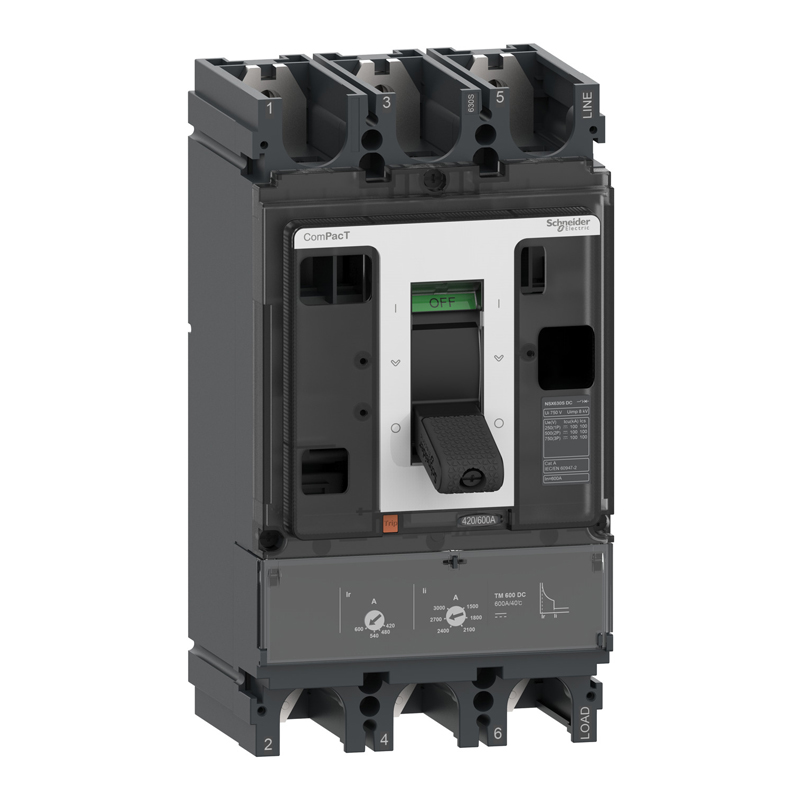
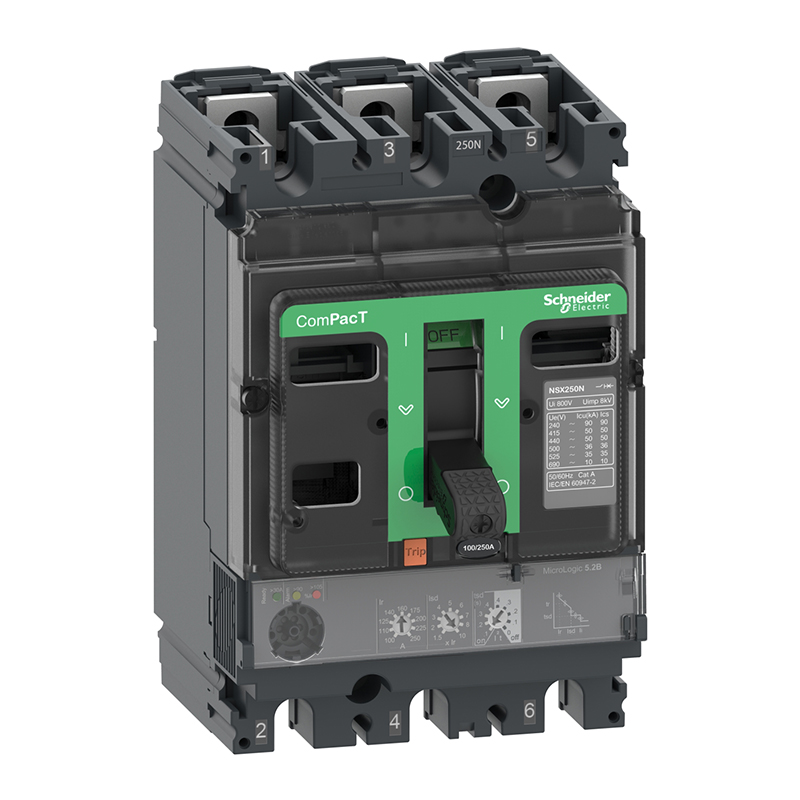
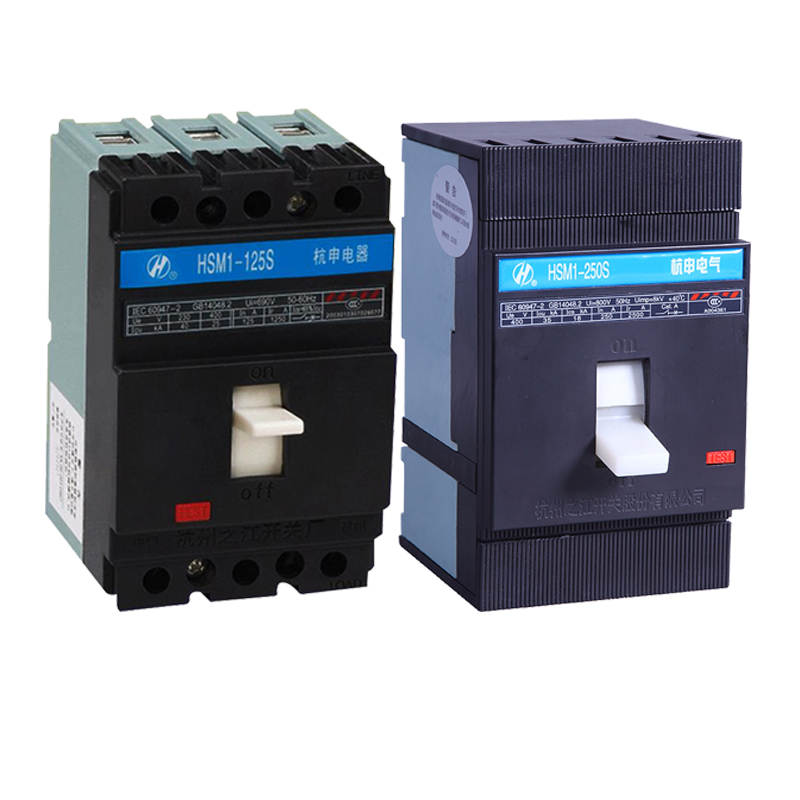
Schneider NSX630F TM630DC 3P 36KA Molded Case Circuit Breaker
Brand:
Series:
NSX DC
Protection Type:
Power distribution protection
How It Works:
Manual
Frame Current:
630A
Tripping Mode:
Thermal Magnetic
Protection Function:
LI
Wiring Method:
Front panel wiring
Poles:
3P
Rated Voltage:
750VDC
Installation:
Fixed
Trip Unit:
TMDC
Rated Current of Release:
630A
Breaking Capacity:
36KA
Model:
NSX630F TM630DC 3P 36KA DC molded case circuit breaker
Order Number:
C63F3TM630D
Description:
Schneider molded case circuit breaker NSX630F TM630DC 3P 36KA DC molded case circuit breaker, LI, distribution protection, 36KA, 630A, fixed, manual, 3P
Product parameters
| Product attributes | Attribute value | Filter product attributes |
|---|---|---|
| Brand: | Schneider | |
| Series: | NSX DC | |
| Appendix: | - | |
| Protection Type: | Power distribution protection | |
| How It Works: | Manual | |
| Frame Current: | 630A | |
| Tripping Mode: | Thermal Magnetic | |
| Protection Function: | LI | |
| Wiring Method: | Front panel wiring | |
| Poles: | 3P | |
| Rated Voltage: | 750VDC | |
| Installation: | Fixed | |
| Trip Unit: | TMDC | |
| Rated Current of Release: | 630A | |
| Breaking Capacity: | 36KA |
Products with the same attribute : 0
Show details
Series Overview
Comprehensive Optimization Benefits
● The combination of ComPacT NSX and Masterpact NW DC-DC PV circuit breakers provides a flexible and cost-effective solution to meet the diverse requirements of DC systems, offering a comprehensive series with wide application and excellent performance.
● Schneider Electric DC-DC PV-DC EP circuit breakers and switches provide a complete solution for application areas in DC systems.
● ComPacT NSX and Masterpact NW DC series meet a range of current ratings (16-4000A) and breaking capacities (up to 100 kA) at rated operational voltages up to 900V DC.
● ComPacT NSX and Masterpact NW DC-DC PV series are designed for photovoltaic applications below 1000V.
● ComPacT INS/INV meets a range of current ratings (40-2500 A) at rated operational voltages up to 250V DC.
Flexible, Optimized Design
● All standard accessories for ComPacT NSX, ComPacT INS/INV, and Masterpact NW DC are common with AC systems.
● Optimized industrial design provides modular accessories, offering greater selectivity.
Safe, Simple Operation
● All accessories for the ComPacT NSX, ComPacT INS/INV, and Masterpact NW DC series are common with AC products.
● Parallel and series connection kits are designed according to customer usage habits.
● ComPacT NSX, ComPacT INS/INV, and Masterpact NW DC equipment can be installed in Class II distribution enclosures with protection ratings up to IP54.
Compliance with Standards
● ComPacT NSX, ComPacT INS/INV, and Masterpact DC circuit breakers comply with:
● International standards IEC 60947-1/2/3
● European standards (EN 60947-1 and EN 60947-2) and corresponding national standards: French NF, German VDE, British BS, Australian AS, and Italian CEI
● Marine standards (Veritas, Lloyd's Register of Shipping, Det Norske Veritas, etc.)
● French standard C79-130 and the recommendations for machine tool protection issued by the CNOMO organization.
● ComPacT NSX, ComPacT INS/INV, and Masterpact NW DC-DC PV switches and auxiliary devices comply with:
● International standards IEC 60947-1/2/3
● European standards (EN 60947-1, EN 60947-2, and EN 60947-3) and corresponding national standards: French NF, German VDE, British BS, Australian AS, and Italian CEI.
Convenient Communication
● ComPacT NSX and Masterpact NW DC equipment can be equipped with communication options for integration into monitoring systems via Modbus.
Pollution Degree
● According to IEC 60947 standard, ComPacT NSX and Masterpact NW DC circuit breakers are certified for operation under industrial environmental pollution conditions, corresponding to pollution degree:
● Pollution Degree 3 (ComPacT NSX, ComPacT INS/INV)
● Pollution Degree 4 (Masterpact NW)
Resistance to Damp Heat
● ComPacT NSX, ComPacT INS/INV, and Masterpact NW DC circuit breakers have successfully passed tests defined by the following standards for extreme atmospheric conditions:
● IEC 60068-2-1 - Dry cold (-40°C)
● IEC 60068-2-1 - Dry heat (+85°C)
● IEC 60068-2-30 - Damp heat (+55°C, 95% relative humidity)
● IEC 68-2-52 (Class 2) - Salt mist
Environmental Protection
● Schneider circuit breakers benefit from eco-design:
● Use of environmentally friendly materials
● Pollution-free production units compliant with ISO 14001 standard
● High current rating graded interruption to avoid contaminating the switchboard
● Low energy dissipation per pole, significantly reducing energy consumption
● Products marked for material recycling at end of life
Designed Specifically for DC-DC PV Applications
● ComPacT NSX DC and Masterpact NW DC circuit breakers meet requirements for various optimized pole connection methods.
DC-Specific Design
Inheriting Schneider Electric's Quality Assurance
● Building upon AC products, we have created and designed specific characteristics for DC applications to ensure the reliability of DC products.
● Leveraging Schneider Electric's extensive industrial experience in AC applications and recognized expertise in current interruption, a series of high-performance DC products has been developed.
● ComPacT NSX and Masterpact NW series feature:
● Arc chamber electrodes specifically designed for DC applications (e.g., 100kA per pole at 250V for ComPacT NSX, 85kA for two poles at 900V for Masterpact NW).
● Fast trip units developed for DC applications.
● Simple, reliable optimized pole connection and insulation choices.
Optimized Solutions for Various DC Systems
● Due to cost and technical optimization needs, various DC systems require series or parallel connection of two-pole, three-pole, or four-pole circuit breakers.
● ComPacT NSX and Masterpact NW series products enable series connection, optimizing high-voltage breaking capacity. Series connection reduces the voltage across each pole terminal (total voltage divided by two, three, or four depending on the breaker type) and provides the full breaking capacity of the entire device for all pole operations.
● This enables interruption of short-circuit currents at high voltages and optimizes the solution (e.g., ComPacT NSX at 100 kA per pole 250V in three-pole series can be used for a 750V system, reducing cost compared to a 750V solution).
● ComPacT NSX series products enable parallel connection, optimizing the utilized rated current.
Optimized, Reliable Series or Parallel Connection
Series Connection - Controls Temperature Rise and Ensures Performance
● Schneider Electric DC circuit breakers comply with IEC 60947-1 and 2 product standards.
● To achieve this, series connection meets:
● Temperature rise conditions. Connection methods specifically designed for heat dissipation demonstrate a thermal model equivalent to that of AC applications. The equipment can dissipate the temperature rise generated by the relatively short series wiring.
● Optimal safety conditions. Designed according to connection methods for extreme operating conditions (insulation and safety clearances, ultimate breaking capacity, high pollution degree, etc.).
Parallel Connection - Optimization
● Some systems require products to handle high power (currents reaching hundreds or thousands of amperes) at low voltages (mostly ≤ 250V).
● ComPacT NSX circuit breakers can meet such requirements through parallel connection schemes.
● This technology increases the breaking current by two, three, or four times depending on the circuit breaker type, thereby reducing the cost of these solutions.

Rachel
Industrial Control Sales Specialist: Focuses on delivering high-performance, cost-effective industrial control products. Offers end-to-end one-stop procurement support—covering rapid quotation, streamlined order fulfillment, and responsive after-sales service—to simplify clients’ procurement processes.
Email: Anthony@icxsg.com
We offer competitive product pricing. For fast support, send your email, phone, address, and the product model & quantity you want—we’ll reach out quickly!
We typically respond via email within one business day! You can also contact us at Anthony@icxsg.com