





 English
 Français
 Deutsch
 Português
 Español
 русский
  한국어
한국어 العربية
 Italiano
 Indonesia
 Schweiz
 Polski
 Nederlands
 ישראל - עברית
 Perzisch
 ไทย
ไทย 日本語
日本語 ኢትዮ-አማርኛ
 Việt Nam
 Kiswahili
 Srpski
 Ελληνικά
 简体中文
简体中文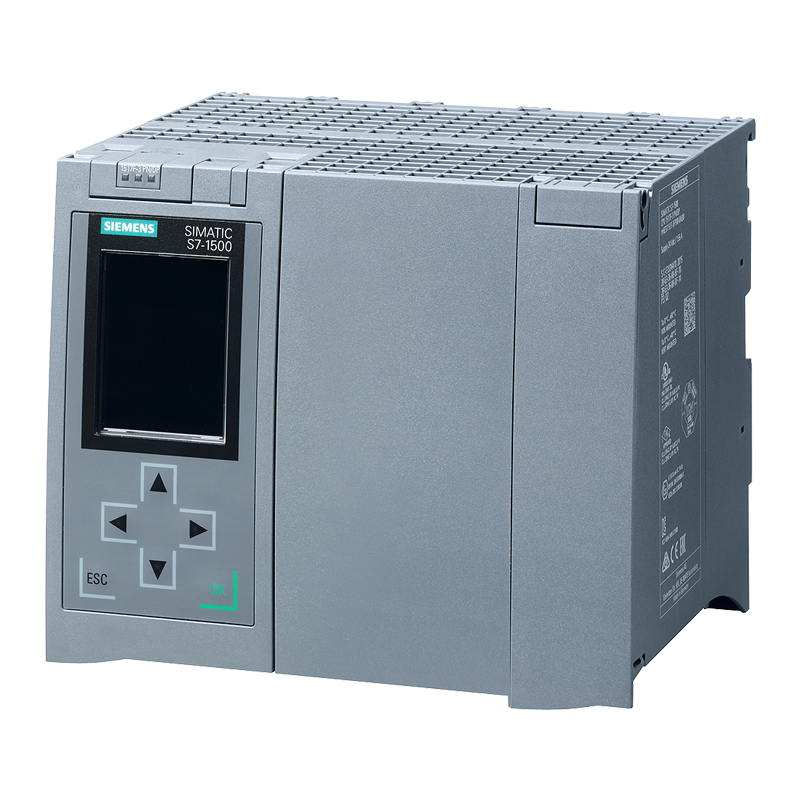
Siemens 6ES7517-3FP00-0AB0 PLC Programmable Controller S7-1500
Brand:
Series:
S7-1500
Digital Output Type:
-
Digital Input Voltage:
-
Analog Output:
-
Digital Input:
-
Digital Output:
-
Analog Output Type:
-
Analog Input:
-
Analog Input Type:
-
Supply Voltage:
19.2-28.8VDC
Product Type:
CPU Module
Model:
6ES7517-3FP00-0AB0
Order Number:
6ES75173FP000AB0
Description:
Siemens S7-1500 6ES7517-3FP00-0AB0, power supply voltage 19.2-28.8VDC, CPU module
Product parameters
| Product attributes | Attribute value | Filter product attributes |
|---|---|---|
| Brand: | Siemens | |
| Series: | S7-1500 | |
| Digital Output Type: | - | |
| Digital Input Voltage: | - | |
| Analog Output: | - | |
| Digital Input: | - | |
| Digital Output: | - | |
| Analog Output Type: | - | |
| Analog Input: | - | |
| Analog Input Type: | - | |
| Supply Voltage: | 19.2-28.8VDC | |
| Product Type: | CPU Module |
Products with the same attribute : 0
Show details
Series Overview
Series Overview
CPU
- The SIMATIC S7-1500 delivers outstanding performance, featuring a high-performance backplane bus, rapid end-to-end response, and ultra-fast signal processing capabilities.
- The controller (CPU) can execute various user programs. The controller integrates a system power supply and can supply power to connected modules via the backplane bus.
- All SIMATIC S7-1500 controllers (except C-CPU) also offer a failsafe variant. To use safety functions in TIA Portal, the “STEP 7 Safety Advanced” add-on package must be installed.
- During factory commissioning, the CPU’s IP address can be directly changed on the display, saving significant time and costs. During maintenance, quick access to diagnostic alarms significantly reduces factory downtime.
- All CPU variables of the SIMATIC S7-1500 have powerful tracing functions, enabling efficient commissioning and rapid optimization of drives and controls.
- The SIMATIC S7-1500 controller also supports the following functions:
- Data communication via Ethernet/PROFINET;
- Data communication via PROFIBUS;
- HMI communication;
- Communication via OPC;
- Web server, process functions, system diagnostics, and integrated protection functions;
- When using F-CPU, it also supports safety modes;
- When using S7-1500 R/H CPU: Redundancy.
Digital Modules
Advantages of Digital Input Modules:
- High channel density with few components, reducing the workload of spare parts ordering, transportation, and storage;
- The module size is 25 mm and no parameter assignment or diagnostics are required, simplifying the commissioning process;
- Screw-type connection system or front connector for the 35 mm-wide or 25 mm module’s plug-in system;
- All modules use the same mechanical design, same processing, and same accessories;
- Wiring uses the same pin assignment, meaning circuit diagrams and wiring schemes can be reused;
- Supports any combination of narrow and wide modules;
- Can be centrally used in SIMATIC S7-1500 and ET 200MP distributed I/O systems;
- Through high-performance modules DI16x24VDC HF and DI 32x24V DC HF, each with two counter inputs, simple counting tasks can be efficiently implemented.
Advantages of Digital Output Modules:
- High channel density with few components, reducing the workload of spare parts ordering, transportation, and storage;
- The module size is 25 mm and no parameter assignment or diagnostics are required, simplifying the commissioning process;
- Screw-type connection system or front connector for the 35 mm-wide or 25 mm module’s plug-in system;
- All modules use the same mechanical design, same processing, and same accessories;
- Wiring uses the same pin assignment, meaning circuit diagrams and wiring schemes can be reused;
- Supports any combination of narrow and wide modules;
- Can be centrally used in SIMATIC S7-1500 and ET 200MP distributed I/O systems;
- High-performance module DQ 8x24VDC/2A HF: Can use Pulse Width Modulation (PWM) to easily generate periodic pulses with a constant voltage and variable pulse width;
- Typical use: Control proportional valves and valves (e.g., by reducing holding current for energy saving), and perform heating control by switching external power devices.
Analog Modules
- Analog input modules detect process signals, such as pressure or temperature, and then transmit the process signals to the CPU in digital form (16-bit format). Use analog input modules to measure current (2-wire and 4-wire transmitters), voltage, resistance (resistance thermometers), and temperature (thermocouples). The measurement type depends on the module used.
Advantages of Analog Input Modules:
-
Screw-type connection system or front connector for the 35 mm-wide or 25 mm module’s plug-in system;
-
All modules use the same mechanical design, same processing, and same accessories;
-
Shielding components are included in the delivery list and support simple and quick installation without tools;
-
Wiring uses the same pin assignment, meaning circuit diagrams and wiring schemes can be reused;
-
Supports any combination of narrow and wide modules;
-
Can be centrally used in SIMATIC S7-1500 and ET 200MP distributed I/O systems.
-
Analog output modules convert 16-bit digital values into current or voltage and output them during the process. Through controlled analog output modules, such as proportional valves or small servo drives.
Advantages of Analog Output Modules:
- Screw-type connection system or front connector for the 35 mm-wide or 25 mm module’s plug-in system;
- All modules use the same mechanical design, same processing, and same accessories;
- Shielding components are included in the delivery list and support simple and quick installation without tools;
- Wiring uses the same pin assignment, meaning circuit diagrams and wiring schemes can be reused;
- Supports any combination of narrow and wide modules;
- Can be centrally used in SIMATIC S7-1500 and ET 200MP distributed I/O systems.
Communication Modules
- According to the special requirements of the factory, the data security function of the Communication Processor (CP) can ensure the information security of Industrial Ethernet.
- If the system needs more interfaces, communication modules (CM) can be used to expand other types of interfaces for S7-1500 CPU, such as PROFINET, PROFIBUS, or point-to-point connections. Suitable for point-to-point connection communication modules, also supporting RS232, RS 422, and RS 485 interfaces for Freeport or Modbus communication.
Advantages of Point-to-Point Connection Communication Module for S7-1500:
- Supports the connection of traditional and external systems;
- Connection of card readers or special sensors;
- Can be centrally used in SIMATIC S7-1500 and ET 200MP distributed I/O systems;
- Various physical interfaces, such as RS232, RS422, or RS485;
- Predefined protocols, such as 3964(R), Modbus RTU, or USS;
- Application-specific protocols based on Freeport (ASCII);
- All modules use a unified programming interface;
- Diagnostic interrupts for simple fault correction.
Technology Modules
- The TM NPU technology module can be used to implement applications based on artificial intelligence. The technology module TM NPU is used in S7-1500 automation systems/ET 200MP distributed I/O systems.
- The integrated AI processor (AI - Artificial Intelligence) can process large amounts of data from connected sensors and data from CPU user programs. And can connect sensors via the integrated USB interface of TM NPU, such as cameras or microphones. For TM NPU with firmware version V1.0.0, Intel RealSense D435 model USB cameras can be used.
- The provided data is processed at high speed in TM NPU through neural networks. TM NPU sends the processing results to CP via the backplane bus, and then the CPU will evaluate the data in the user program.
Typical Application Areas:
- Visual quality inspection in production workshops;
- Pick-and-place applications;
- Image-guided robot systems.
Advantages:
- Flexible design, precise production process;
- Reduce the time required for configuration, programming, and commissioning.
Power Supply Modules
- Determine the required automation system power supply according to the factory scale. The SIMATIC S7-1500 CPU is powered via a load power supply or a system power supply.
- The system power supply for the backplane bus is integrated in the CPU. According to the specific system configuration, up to two additional system power supply modules can be used to expand the integrated system power supply.
- If the factory has high power requirements (e.g., I/O load groups), an additional load power supply can be connected.
Load Current Power Supply (PM):
- Provides 24 V DC voltage for S7-1500 system components, such as CPU, system power supply (PS), I/O circuits of I/O modules, and various sensors and actuators;
- The load power supply can be directly installed on the left side of the CPU (without connecting to the backplane bus);
- If the system power supply supplies power to the backplane bus, you can choose to supply power to the CPU or interface modules via DC 24 V.
System Power Supply (PS):
- Only provides the required internal system voltage;
- Powers electronic components and LED indicators of some modules;
- Additionally, PS 60W 24/48/60V DC HF will retain the integrity of the CPU working memory.

Rachel
Industrial Control Sales Specialist: Focuses on delivering high-performance, cost-effective industrial control products. Offers end-to-end one-stop procurement support—covering rapid quotation, streamlined order fulfillment, and responsive after-sales service—to simplify clients’ procurement processes.
Email: Anthony@icxsg.com
We offer competitive product pricing. For fast support, send your email, phone, address, and the product model & quantity you want—we’ll reach out quickly!
We typically respond via email within one business day! You can also contact us at Anthony@icxsg.com
Product Category
Related Articles
-
Exploring How Siemens SINAMICS Drives and ebm-papst Smart Fans are Reshaping the Factory of the Future
This article will focus on two industry giants—Siemens SINAMICS drive series and ebmpapst smart fans—and delve into how they are defining the performance standards for modern industry.Read More November 28, 2025 -
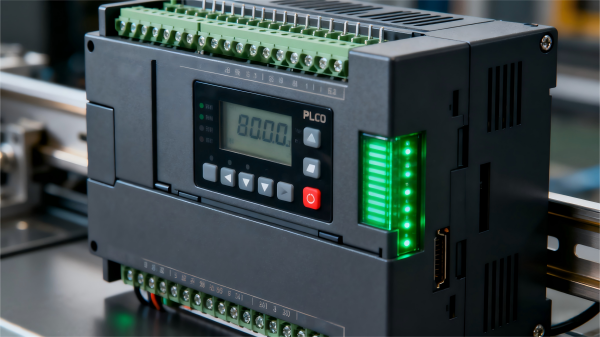
Key Points for Selecting Industrial PLCs in 2025: A Comprehensive Guide from Function to Compatibility
In industrial automation, the PLC (Programmable Logic Controller) is the core control component. Choosing the right PLC can boost production efficiency by over 30%. Many international customers make the mistake of overlooking key selection factors, leading to mismatches between the PLC and production requirements — and additional costs for later adjustments. Based on years of industry experience, here’s a practical, field-tested PLC selection guide.Read More October 13, 2025