





 English
 Français
 Deutsch
 Português
 Español
 русский
  한국어
한국어 العربية
 Italiano
 Indonesia
 Schweiz
 Polski
 Nederlands
 ישראל - עברית
 Perzisch
 ไทย
ไทย 日本語
日本語 ኢትዮ-አማርኛ
 Việt Nam
 Kiswahili
 Srpski
 Ελληνικά
 简体中文
简体中文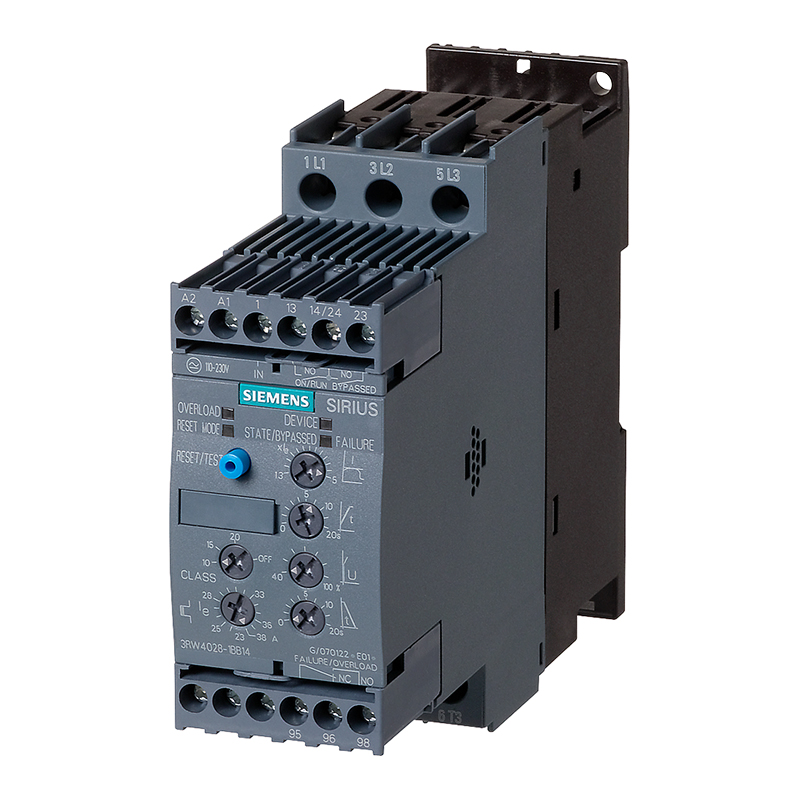
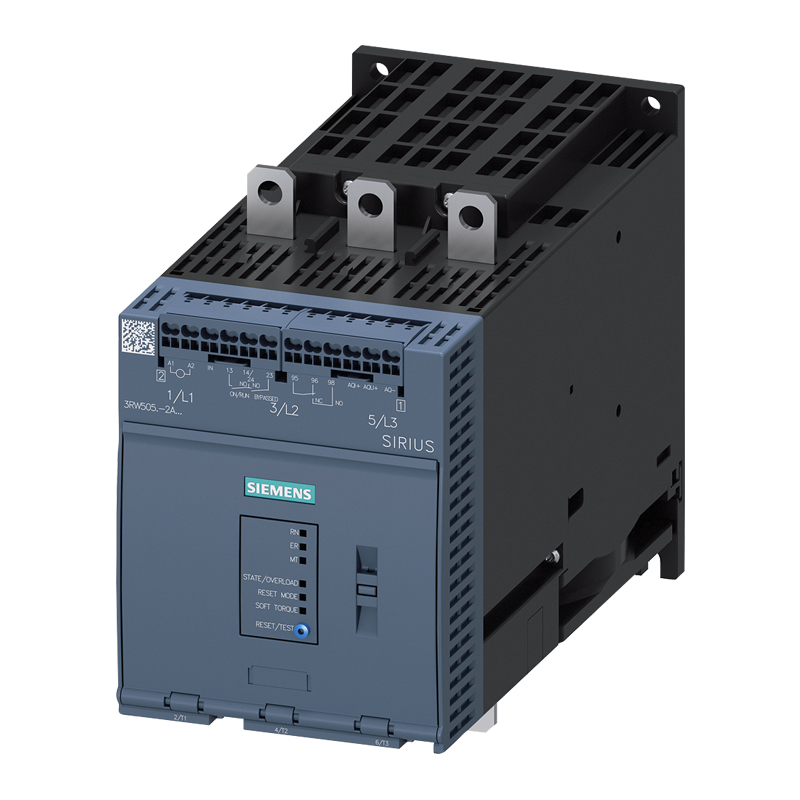
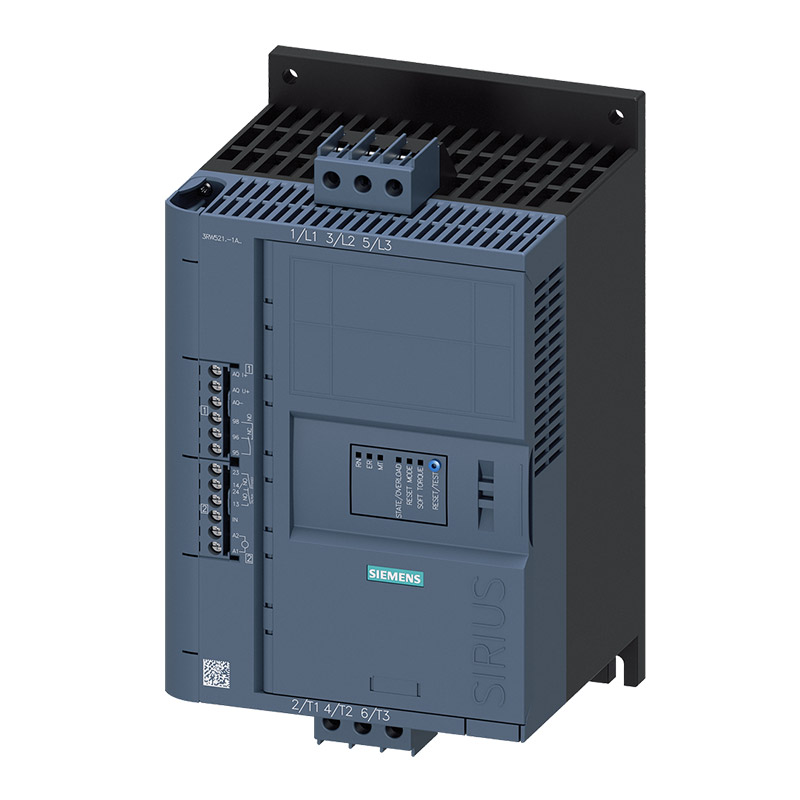
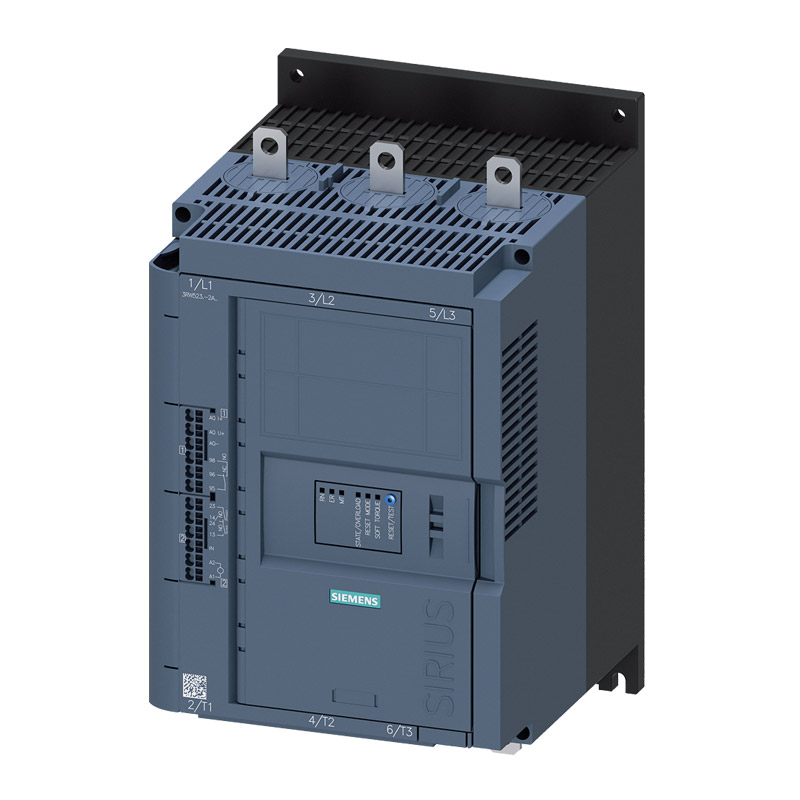
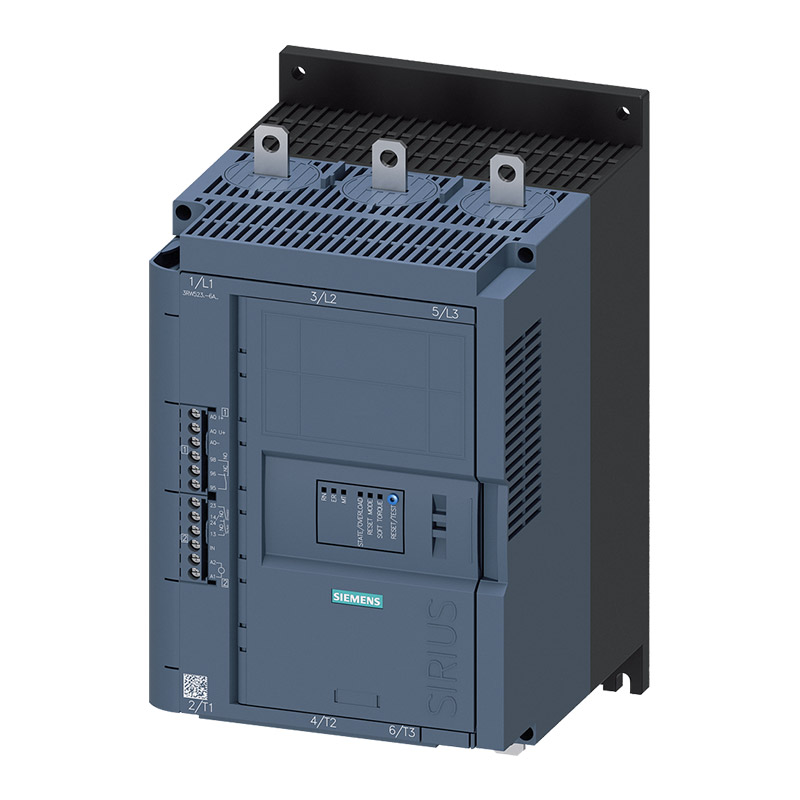
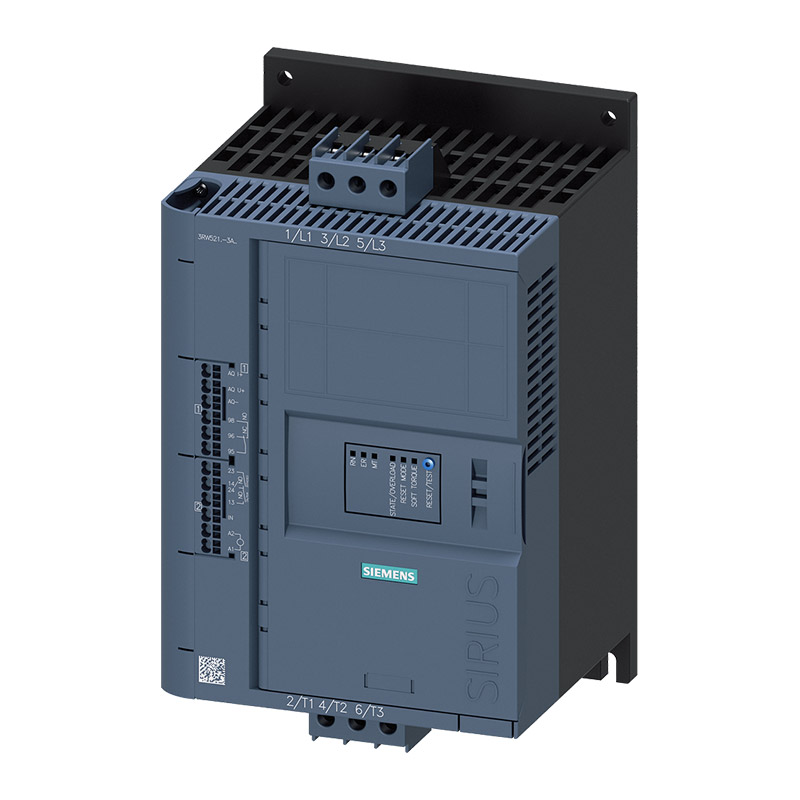
Siemens 3RW4027-1BB04 Soft Starter 3RW
Brand:
Series:
3R
Product Categories:
Standard
Built-In Bypass Contactor:
built-in
Voltage Level:
Three-phase 400VAC
Rated Power:
15KW
Applications:
Standard applications
Rated Current:
32A
Model:
3RW4027-1BB04
Order Number:
3RW40271BB04
Description:
Siemens soft starter 3RW 3RW4027-1BB04, three-phase 400VAC, built-in bypass contactor, product classification standard, rated power 15KW, 32A
Product parameters
| Product attributes | Attribute value | Filter product attributes |
|---|---|---|
| Brand: | Siemens | |
| Series: | 3R | |
| Product Categories: | Standard | |
| Built-In Bypass Contactor: | built-in | |
| Voltage Level: | Three-phase 400VAC | |
| Rated Power: | 15KW | |
| Applications: | Standard applications | |
| Rated Current: | 32A |
Products with the same attribute : 0
Show details
Series Overview
Series Overview
The SIRIUS 3RW30 soft starter reduces the motor terminal voltage through phase angle control, smoothly ramping up the voltage from the starting voltage to the power supply voltage during start-up. When starting, the soft starter can limit the motor torque and current, reducing mechanical impact. Thus, it can mitigate voltage drops in the power grid, lower the stress on connected equipment, decrease wear and tear, and consequently reduce maintenance time. Since the soft starter is selectable, it means it can be adjusted according to specific applications, unlike star-delta starters which are limited to two-stage starting with a fixed starting voltage.
The SIRIUS 3RW30 soft starter occupies very little space. It integrates bypass contacts, and after the motor starts, the thyristor (controllable) can be bypassed. This significantly reduces heat loss. The structure is extremely compact, and no external bypass circuit is required.
The rated power of the soft starter can be up to 55 kW (at 400 V). It has a small size, low power consumption, and is easy to commission. It can be used for three-phase power grid standard applications.
Functions
The space requirement of the compact SIRIUS 3RW30 soft starter is only one-third of that of a star-delta contactor with equivalent power. This not only saves installation space in the control cabinet but also completely eliminates the wiring required for star-delta starters. Moreover, the number of cables between the starter and the motor is greatly reduced from six to three. The compact structure, short commissioning time, simple wiring, and quick commissioning make this product have obvious cost advantages.
The equipped electronic monitoring system can protect the bypass contacts of the soft starter during operation, preventing damage to the bypass contacts in case of faults (such as short-term disconnection of control voltage, mechanical impact, or wear of the coil operating mechanism/main contact springs).
For two-phase control soft starters, the currents from the two control phases will flow through the uncontrolled phase, causing imbalance in the three-phase currents during motor start-up and also generating DC components. At a starting voltage of less than 50%, it will cause severe noise. The 3RW30 series soft starters adopt the "phase balance" control method. By continuously dynamically adjusting and balancing the half-wave currents of different phases during motor start-up, it can not only avoid the DC components generated in two-phase control soft starters but also prevent the braking torque caused by two-phase control, thus making the motor start smoothly with speed, torque, and current rising steadily. Moreover, its starting noise level is close to that of three-phase control soft starters.
Cases
The roller conveyor puts forward high requirements:
- The roller conveyor must start smoothly to prevent conveyed products from tipping over and being damaged.
- The wear and maintenance intervals of the machine must be as small as possible. This is because the belt slips during start-up.
- The voltage ramp starting method reduces the high starting current during motor start-up.
- The load feedback device should be as small as possible to save control cabinet space.
Optimal Performance of SIRIUS 3RW30:
- By optimizing the start-stop voltage ramp, the roller conveyor can quickly accelerate to the rated speed and stop smoothly.
- Reduce the motor starting current.
- When used in combination with the SIRIUS 3RA3 reverse contactor combination device, the conveyor can move in both directions.
- The SIRIUS 3RV circuit breaker is used to protect the load feedback device and the motor.
- By using SIRIUS series components, the wiring and space requirements can be significantly reduced.
SIRIUS 3RW40
The SIRIUS 3RW40 soft starter has all the advantages of the 3RW30 soft starter.
- The SIRIUS 3RW40 soft starter occupies very little space. It integrates bypass contacts, and after the motor starts, the thyristor (controllable) can be bypassed, significantly reducing heat loss. The structure is extremely compact, and no external bypass circuit is required.
- In addition, this soft starter also integrates other functions, such as an adjustable current limiting function, motor overload and equipment self-protection functions, and an optional thermal resistance motor overload protection function. The larger the rated power of the motor, the more important these functions are. There is no need to purchase and install other protection devices, such as overload relays.
- The equipment self-protection function can prevent the thyristor from overloading, thus avoiding power unit failures. As an option, the thyristor can also be provided with short-circuit protection through a semiconductor fuse.
- With integrated status monitoring and fault monitoring functions, this soft starter provides many different diagnostic options. Using 4 LEDs and relay outputs, it indicates the working status as well as power supply or phase faults, load loss, unacceptable trip time/level settings, thermal overload or equipment faults, etc., thus realizing monitoring and diagnosis.
- The rated power of the soft starter can be up to 250 kW (at 400 V) and can be used for three-phase power grid standard applications. This soft starter has the advantages of small size, low power consumption, and easy commissioning.
- “Intrinsically safe” protection Ex e, conforms to ATEX directive 94/9/EC
- The 3RW40 soft starters of SO to S12 specifications are suitable for starting “intrinsically safe” type Ex e explosion-proof motors.
Functions
The space requirement of the compact 3RW40 soft starter is only one-third of that of a star-delta contactor with equivalent rated power. This not only saves installation space in the control cabinet but also completely eliminates the wiring required for star-delta starters. Moreover, the number of cables between the starter and the motor is greatly reduced from six to three. The compact structure, short commissioning time, simple wiring, and quick commissioning make this product have obvious cost advantages.
The equipped electronic monitoring system can protect the bypass contacts of the soft starter during operation, preventing damage to the bypass contacts in case of faults (such as short-term disconnection of control voltage, mechanical impact, or wear of the coil operating mechanism/main contact springs).
The large starting current of high-power motors will cause uncontrollable impacts on the local power grid and loads. Using the SIRIUS 3RW40 soft starter, through voltage ramp, the starting current can be reduced (i.e., the adjustable current limiting function), reducing the power grid pressure. During start-up, the set starting ramp is used for soft starting until the selected current limit value is reached. The slope depends on the starting voltage and starting time. In this way, the voltage of the soft starter can be controlled to keep the current of the motor constant. When the motor start-up is completed, or when the equipment self-protection function or motor overload protection function acts, the ramp starting process ends. In this case, the actual starting time of the motor will be longer than the slope time selected by the soft starter.
Due to the integration of the motor overload protection function and compliance with standard IEC 60947-4-2, the 3RW40 soft starter does not need to additionally install an overload relay. The rated current of the motor, overload trip time setting (such as trip class time), and the setting of the motor overload protection function can all be quickly and conveniently adjusted. Using a 4-position potentiometer, the different trip trip times of the soft starter can be set. Except for Class 10, 15, and 20, if other motor management control devices are used (such as connected to PROFIBUS or PROFINET RT), the motor overload protection function can also be turned off.
In addition, it also provides soft starter models with a rated power of 55 kW (at 400 V) and thermal resistance motor protection functions. It can be directly connected to a Thermoclick measurement probe or Type PTC. Open circuits and short circuits in the motor overheating and sensor circuits can all cause the soft starter to disconnect. In addition, various reset options are provided for resetting the trip soft starter: reset via the reset button - manual reset, automatic reset, or reset by short-term disconnection of the control voltage.
For two-phase control soft starters, the currents from the two control phases will flow through the uncontrolled phase, causing imbalance in the three-phase currents during motor start-up and also generating DC components. At a starting voltage of less than 50%, it will cause severe noise. The 3RW40 series soft starters adopt the "phase balance" control method. By continuously dynamically adjusting and balancing the half-wave currents of different phases during motor start-up, it can not only avoid the DC components generated in two-phase control soft starters but also prevent the braking torque caused by two-phase control, thus making the motor start smoothly with speed, torque, and current rising steadily. Moreover, its starting noise level is close to that of three-phase control soft starters.
As an option, the thyristor can also be provided with short-circuit protection by a STOR semiconductor fuse, so that the soft starter is not damaged after a short circuit (coordination type 2). The 3RW40 soft starter uses 3 LEDs to indicate the working status and possible faults, such as unacceptable trip time (trip level setting), power supply or phase faults, load loss, thermal overload, or equipment faults.
- Voltage ramp soft start; the adjustment range of the starting voltage US is 40% to 100%, and the slope time tr is 0 s to 20 s.
- Voltage ramp soft stop; the adjustment range of the stop time toff is 0 s to 20 s.
- Electronic motor overload protection function and equipment self-protection function
- Optional thermal resistance motor protection function (for size S3 and below)
- Remote reset function (all models below size S3 have this function, and this function is optional for size S6 and above)
- Adjustable current limiting function
- Integrated bypass contact system, reducing power consumption
- Setting using a potentiometer
- Simple installation and commissioning
- Integrated status monitoring and fault monitoring
- Power supply voltage of 50/60 Hz, 200 to 600 V
- Multiple control voltage types
- Size S0 to S3:
24 V AC/DC and 110 to 230 V AC/DC
- Size S6 to S12:
115 V AC and 230 V AC.
Can be controlled via an internal 24 V DC power supply and directly via PLC.
Temperature range: -25 °C to +60 °C
Built-in auxiliary contacts, can be conveniently integrated into the control system
Success Cases
In addition to many other applications, the SIRIUS 3RW40 is most suitable for ensuring the soft start and soft stop of hydraulic pumps. For example, with a maximum power of 200 kW, it is used for hydraulic pumps in component production that drive presses.
The drive of the hydraulic pump is a sensitive issue:
- The motor starting current must be reduced to prevent the step-down transformer from overloading.
- Usually, it is necessary to integrate the motor protection function to reduce wiring costs and save installation space.
- Soft start and soft stop of the hydraulic pump to minimize the mechanical impact on the drive system and the hydraulic pump due to torque surges during start and stop.
Inherent Flexibility of SIRIUS 3RW40:
- The current limiting function of the SIRIUS 3RW40 soft starter can limit the load on the step-down transformer during motor start-up.
- Protect the motor through the motor overload relay with selectable trip levels integrated in the soft starter.
- Use an adjustable voltage ramp to start and stop the hydraulic pump smoothly.
SIRIUS 3RW44
To meet high-demand applications, in addition to soft start and soft stop, the electronic SIRIUS 3RW44 soft starter also provides many other functions. For the standard connection method, the power range of this soft starter can be up to 710 kW (400 V). For the delta connection method, the power range can be up to 1200 kW (400 V).
The SIRIUS 3RW44 soft starter has a compact structure, saving space, thus making the control layout clearer. Compared with frequency converters, through optimizing motor start and stop, the innovative SIRIUS 3RW44 soft starter has significant energy-saving potential. Its brand-new torque control and adjustable current limiting functions make this high-performance soft starter almost applicable to any task. During motor start and stop, it can avoid torque surges and current peaks. In terms of calculating switch sizes and maintaining equipment, whether it is the standard connection method or the delta connection method, the SIRIUS 3RW44 soft starter has cost-saving potential.
When it is detected that the motor start-up is completed, the bypass contacts integrated in the soft starter will bypass the thyristor. This can significantly reduce the heat loss of the soft starter during operation at the rated value.
It can realize various combinations of start, operation, and soft stop, and can be optimized according to specific application requirements. Use a backlit multi-line display, buttons, and menu prompts to perform operations and commissioning.
Through four-button operation and a pure text display screen, after selecting the menu language, only a few simple steps of setting are required to quickly, simply, and reliably optimize the parameters for motor start and soft stop. Parameter setting and operation are very intuitive.
Applicable Standards
- IEC 60947-4-2
- UL/CSA
Soft Starter ES Parameterization Software
Using the Soft Starter ES software, parameters can be set, monitored, and maintenance diagnosed for the SIRIUS 3RW44 high-performance soft starter.
Functions
- Through modern and user-friendly prompts, buttons, and a backlit multi-line display with menu prompts, the SIRIUS 3RW44 soft starter can be conveniently and quickly commissioned.
- Through four-button operation and a pure text display screen, after selecting the menu language, only a few simple steps of setting are required to quickly, simply, and reliably optimize the parameters for motor start and soft stop. Parameter setting and operation are very intuitive. During operation, the display area will continuously display measured values, operating states, and fault messages. External displays and operating modules can be connected via cables to realize display and operation from the control cabinet door.
- The SIRIUS 3RW44 soft starter has an optimized structure. Its integrated bypass contact system can reduce the power consumption of the soft starter during operation and prevent the heat increase in the switch cabinet environment.
- The SIRIUS 3RW44 soft starter has an internal equipment self-protection function, which can prevent the overloading of power unit thyristors. For example, due to unacceptable frequent closing operations leading to thyristor overheating.
- The SIRIUS 3RW44 soft starter has an integrated motor overload protection function, thus saving the wiring cost for installing a motor overload relay. In addition, it also provides an optional thermal resistance motor protection function. The thyristor can also be provided with short-circuit protection by a STOR semiconductor fuse, so that the soft starter is not damaged after a short circuit (coordination type 2). And, due to the adjustable current limiting function, the motor starting current can be limited.
- The SIRIUS 3RW44 soft starter can use the PROFIBUS DP module or PROFINET module. With communication functions, programmable control inputs, and relay outputs, it can very conveniently integrate the SIRIUS 3RW44 soft starter into the automation system.
- In addition, the selectable speed function can be used for setting and presetting. Using this function, the motor can start and reverse at a lower torque.
- The SIRIUS 3RW44 soft starter also provides a brand-new combination of DC braking functions for quickly stopping loads.
Outstanding Features
According to the load type, select from pulse ramp, torque control, voltage ramp, reversible or current limiting functions, and their function combinations for starting. The integrated bypass contact system can reduce power consumption.
- Starting parameters have multiple setting options, such as starting torque, starting voltage, starting ramp, and soft stop time. More options are located in three separate parameter groups.
- Start detection
- The delta connection method saves size and equipment costs.
- Selectable start, soft start, freewheel, soft stop, torque control stop, and combination DC braking.
- Electronic motor overload and equipment self-protection functions.
- Thermal resistance motor protection.
- With a backlit multi-line display, buttons, and menu prompts.
- PC communication interface for precise parameter setting, control, and monitoring.
- Motor torque display.
- Simple installation and commissioning.
- Display working status and fault messages.
- Using optional PROFIBUS DP or PROFINET modules, can be connected to PROFIBUS or PROFINET networks.
- External display and operator panel.
- Main circuit voltage of 200 - 690 V, 50 - 60 Hz.
- Applicable temperature up to 60 °C (40 °C without derating).
Success Cases
During production, it is necessary to use an iron car to drill holes on the engine block. Due to the large inertia of the iron car, it usually takes a long time for a 15 kW motor to stop, thus causing tool wear and long equipment downtime, without the phenomenon of tool breakage.
Stringent start requirements:
- The iron car requires optimized torque control characteristics to prevent tool breakage during start-up and avoid increased wear.
- The motor starting current must be reduced to minimize the impact on the power grid.
- The motor must be stopped quickly to reduce equipment downtime.
Optimal Solution Using SIRIUS 3RW44:
- The SIRIUS 3RW44 soft starter with torque control and dynamic current limiting functions can best meet such demanding applications.
- Through torque control and current limiting functions, prevent tool breakage during start-up.
- The iron car can quickly reach the specified speed without tool breakage.
- Use advanced current limiting functions to limit the motor starting current to a specified maximum value.
- Through the best combination of dynamic current limiting functions, stop the motor quickly.
- The high-performance SIRIUS 3RW44 soft starter can also perform motor and equipment overload protection functions.

Rachel
Industrial Control Sales Specialist: Focuses on delivering high-performance, cost-effective industrial control products. Offers end-to-end one-stop procurement support—covering rapid quotation, streamlined order fulfillment, and responsive after-sales service—to simplify clients’ procurement processes.
Email: Anthony@icxsg.com
We offer competitive product pricing. For fast support, send your email, phone, address, and the product model & quantity you want—we’ll reach out quickly!
We typically respond via email within one business day! You can also contact us at Anthony@icxsg.com