






 English
 Français
 Deutsch
 Português
 Español
 русский
  한국어
한국어 العربية
 Italiano
 Indonesia
 Schweiz
 Polski
 Nederlands
 ישראל - עברית
 Perzisch
 ไทย
ไทย 日本語
日本語 ኢትዮ-አማርኛ
 Việt Nam
 Kiswahili
 Srpski
 Ελληνικά
 简体中文
简体中文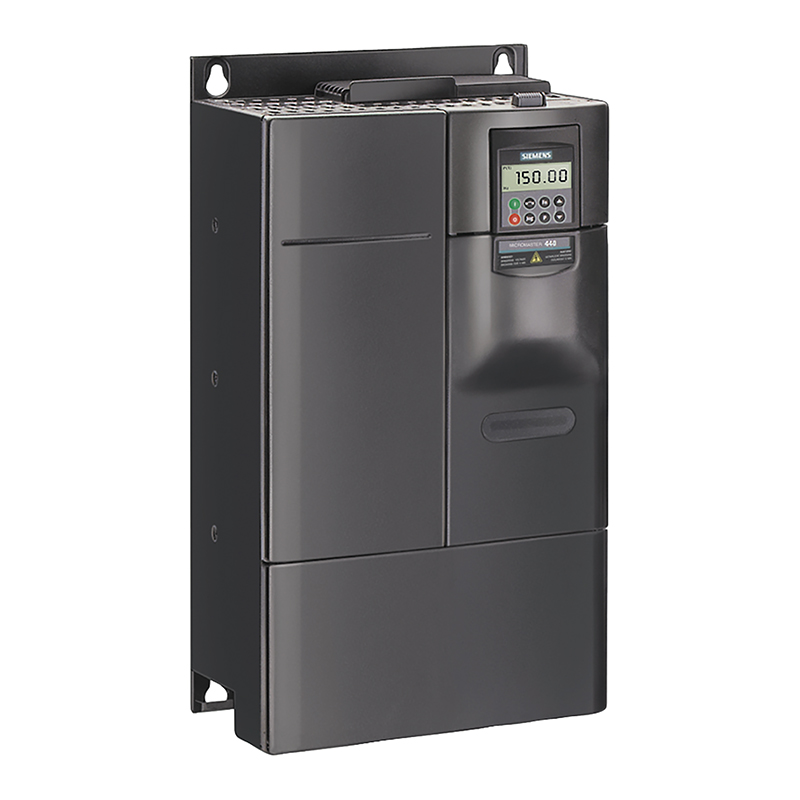
Siemens 6SE6430-2UD32-2DB0 dedicated inverter MM430
Brand:
Series:
MM430
Remote Display Terminal:
Alternative
Protection Level:
IP20
Control Panel:
Alternative
Communication Protocol:
USS
Voltage Level:
Three-phase 380-480VAC
Rated Power:
22KW
Applications:
Fan pump
Rated Current:
45A
Model:
6SE6430-2UD32-2DB0
Order Number:
6SE64302UD322DB0
Description:
Siemens dedicated inverter MM430 6SE6430-2UD32-2DB0, 45A, three-phase 380-480VAC, remote display terminal optional, communication protocol USS, IP20, 22KW
Product parameters
| Product attributes | Attribute value | Filter product attributes |
|---|---|---|
| Brand: | Siemens | |
| Series: | MM430 | |
| Remote Display Terminal: | Alternative | |
| Protection Level: | IP20 | |
| Control Panel: | Alternative | |
| Communication Protocol: | USS | |
| Voltage Level: | Three-phase 380-480VAC | |
| Rated Power: | 22KW | |
| Applications: | Fan pump | |
| Rated Current: | 45A |
Products with the same attribute : 0
Show details
Series Overview
Series Overview
Application Range
- The MICROMASTER 430 frequency inverter is suitable for various variable - speed drive devices. Due to its flexibility, it can be applied in a wide range of fields. This frequency inverter is especially suitable for pumps and fans in industrial departments. The feature of the frequency inverter is that the equipment performance can meet users' needs, and it is easy to use. Compared with the MICROMASTER 420 frequency inverter, this frequency inverter has more inputs and outputs, as well as an optimized operation panel with manual/automatic switching functions and software with self - adaptation functions.
Design
- The MICROMASTER 430 frequency inverter adopts a modular structure design, and the operation panel and communication module are very easy to replace.
Main Features
- Simple and convenient commissioning
- Adopts a modular structure, so the configuration is particularly flexible
- Has 6 programmable digital inputs with electrical isolation
- 2 analog inputs (0V to 10V, 0mA to 20mA, can be marked) and they can also be used as the 7th/8th digital inputs
- 2 programmable analog outputs (0mA to 20mA)
- 3 programmable relay outputs (30V DC / 5A, resistive load; 250V AC / 2A, inductive load)
- Due to the adoption of a relatively high pulse switching frequency, the noise of the motor during operation is very low (in the case of a relatively high switching frequency, the rated output power will be derated for use)
- Perfect motor and frequency inverter protection functions
- Control of three additional drive devices based on the PID controller (motor step - by - step control — multi - machine cycle)
- The drive device can be directly connected to operate on the power grid (with an external bypass switch circuit)
- Energy - saving operation mode
- When applied to drive pumps, it can identify whether the pump is running without water (drive belt fault detection function)
Options (Overview)
- Line reactor
- Output reactor
- LC filter
- Sealing cover
- Basic operation panel 2 (BOP - 2) for parameterizing the frequency inverter
- Communication module
- PROFIBUS
- DeviceNet
- CANopen
- PC connection components
- Combination components for installing the operation panel on the control cabinet door
- PC commissioning tool, running in Win - dows 95/98 and NT/2000/XP Professional environments
- Integration with Drive ES TIA
International Standards
- The MICROMASTER 430 frequency inverter meets the requirements of the EU — Low Voltage Directive; when the frequency inverter is equipped with a filter, it also meets the requirements of the EU - EMC Directive
- The MICROMASTER 430 frequency inverter has the CE mark
- Passed UL and cUL certification
- C - tick
Features of Mechanical Structure
- Modular design
- Operating temperature: - 10°C to + 40°C
- Compact structure, high kW number of frequency inverters per unit space
- Convenient cable connection, the power supply and motor connection wires are isolated from each other, achieving the best electromagnetic compatibility
- Embeddable operation panel
- On the detachable I/O board, the wiring of control terminals does not require screws
Features of Control Performance
- Adopts the latest IGBT technology
- Controlled by a digital signal processor
- Flux - current control (FCC) function improves dynamic response characteristics and optimizes motor control
- Linear v/f characteristics
- Square v/f characteristics
- Multi - point v/f characteristics (programmable v/f characteristics)
- Catch - up restart
- Slip compensation
- Automatic restart after power failure or fault clearance
- “Sleep” operation mode (when the PID output is low, stop the rotation of the fan or pump)
- Motor step - by - step control (according to operation needs, perform the connection and disconnection operations of the auxiliary motor, and in the step - by - step control of the pump, the frequency inverter is used to adjust the speed of the variable - speed drive device)
- Manual/automatic operation
- Load torque monitoring (can identify whether the pump is running without water)
- The frequency inverter has a built - in high - level PID regulator, which can be used for simple process control
- The time of the acceleration/deceleration ramp function can be determined by parameterization, with a range from 0 to 650 seconds
- Smooth function at the start and end segments of the ramp curve
- Fast current limitation function (FCU), avoiding unnecessary surges during operation
- Fast and repeatable digital input response characteristics
- Has 2 high - resolution 10 - bit binary analog inputs, achieving high - precision setting
- Composite braking, achieving fast braking
- 4 skip frequencies
- Detachable “Y” - shaped capacitor circuit, can be used in power supply systems with ungrounded neutrals (when the power supply neutral is ungrounded, the “Y” - shaped capacitor circuit must be removed and an output reactor installed)
Protection Functions
- Overload capacity: For 7.5kW to 90kW: 1.4x rated output current (i.e., allowing 140% overload) for a duration of 3 seconds; or 1.1x rated output current (i.e., allowing 110% overload) for a duration of 60 seconds, with a repeat cycle time of 300 seconds. For 110kW to 250kW: 1.5x rated output current (i.e., allowing 150% overload) for a duration of 1 second; or 1.1x rated output current (i.e., allowing 110% overload) for a duration of 59 seconds, with a repeat cycle time of 300 seconds.
- Overvoltage/undervoltage protection
- Frequency inverter over - temperature protection
- Direct connection with PTC or KTY to achieve motor over - temperature protection
- Ground fault protection
- Short - circuit protection
- 1²t motor over - temperature protection
- Motor lock - up protection
- Prevent motor overspeed
- Parameter interlock

Rachel
Industrial Control Sales Specialist: Focuses on delivering high-performance, cost-effective industrial control products. Offers end-to-end one-stop procurement support—covering rapid quotation, streamlined order fulfillment, and responsive after-sales service—to simplify clients’ procurement processes.
Email: Anthony@icxsg.com
We offer competitive product pricing. For fast support, send your email, phone, address, and the product model & quantity you want—we’ll reach out quickly!
We typically respond via email within one business day! You can also contact us at Anthony@icxsg.com