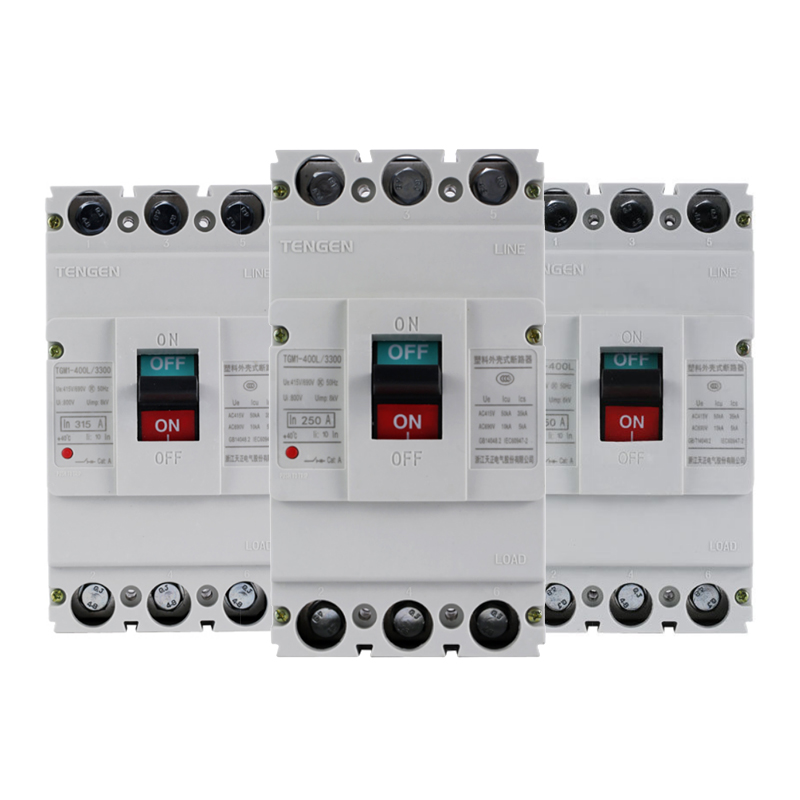
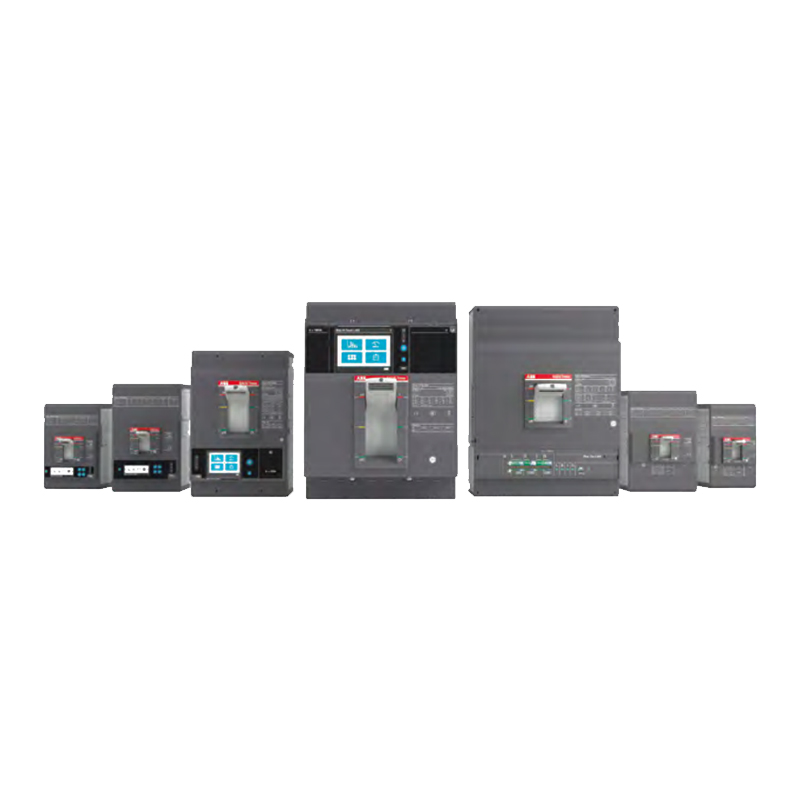
HSM2 Series Molded Case Circuit Breakers (MCCB) Outline
Purpose and Scope of Application
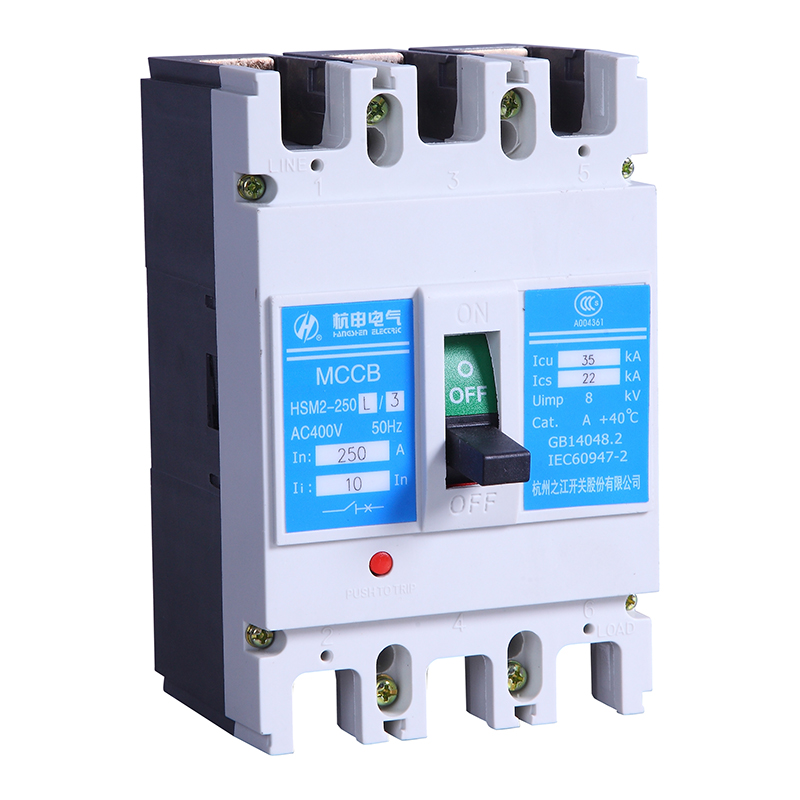
● The HSM2 Series Molded Case Circuit Breakers (hereinafter referred to as the circuit breaker) are suitable for circuits with AC 50Hz, rated insulation voltage 1000V, rated operational voltage up to 400V, and rated currents from 10A to 1250A. They are used for distributing electrical energy, for infrequent closing and opening under normal conditions, and for providing protection against overload, short-circuit, and under-voltage for lines and equipment.
● Circuit breakers with a rated frame current of 630A and below can also be used for the infrequent starting of squirrel-cage motors, interrupting during motor operation, and providing protection against motor overload, short-circuit, and under-voltage. The circuit breakers are available in transparent and opaque types. The transparent type allows clear visibility of the internal structure, significantly enhancing reliability and safety.
● This circuit breaker has an isolation function, indicated by the symbol: ●
● The circuit breaker complies with standards such as GB/T 14048.2.
Normal Service and Installation Conditions
Ambient Air Temperature
● Ambient air temperature: -25°C to +70°C, with the 24-hour average not exceeding +35°C; Derating is required for users where the ambient temperature exceeds +40°C. Refer to the technical data and performance in the catalog. Products suitable for temperatures as low as -40°C are also available; please contact our company when ordering.
Altitude
● The altitude of the installation site should not exceed 2000m; Derating is required for users at altitudes exceeding 2000m.
Relative Humidity
● The relative humidity of the air at the installation site should not exceed 50% at +40°C. Higher relative humidity is permissible at lower temperatures, e.g., up to 95% at +20°C. Appropriate measures should be taken against condensation caused by temperature changes.
Installation Environment
● The circuit breaker should be installed in a medium without explosion hazards, free from gases and conductive dust sufficient to corrode metals and damage insulation, and protected from rain and snow.
Pollution Degree
● Pollution Degree 3.
Installation Category
● The main circuit installation category is III. Other auxiliary and control circuits have an installation category of II.
Mounting Orientation
● The basic mounting method is vertical, but horizontal mounting is also possible.
Operation and Maintenance
● All characteristics and accessories of the circuit breaker are preset by the manufacturer. Users MUST NOT adjust them arbitrarily.
● The circuit breaker handle can be in three positions, indicating ON, OFF, and TRIPPED (free release). When the handle is in the TRIPPED position (middle position), pull the handle backward to reset the circuit breaker before closing it.
● Wiring for the circuit breaker is top entry (terminals "1, 3, 5" for the power supply, terminals "2, 4, 6" for the load). Reverse wiring (bottom entry) is NOT PERMITTED. If bottom wiring is absolutely necessary, the breaking capacity of the circuit breaker must be derated, typically by 20% to 30%.
● Provided the user adheres to the storage and usage conditions, the period from the date of shipment by the manufacturer does not exceed 18 months, and the circuit breaker's seal mark remains intact, the manufacturer shall replace or repair the product free of charge if it is damaged or fails to function normally due to manufacturing quality issues.
● To ensure personal safety and the safety of electrical equipment, PLEASE ENSURE the following before putting the circuit breaker into operation:
● MUST carefully read this product's user manual before installation and use.
● MUST only be put into operation under normal working conditions.
● Before installation, measure the insulation resistance of the circuit breaker with a 500V megohmmeter. At an ambient air temperature of 20°C ±5°C and relative humidity of 50%-70%, it should be no less than 10 MΩ. Otherwise, the circuit breaker must be dried until the insulation resistance meets the specified requirements before use.
● During installation, the position of the circuit breaker can be chosen arbitrarily without affecting its performance, but sufficient clearance must be maintained between the circuit breaker and the top, bottom, sides, panel of the compartment, and other circuit breakers.
● During installation, fix the circuit breaker to the bracket or baseplate using standard mounting screws.
● During installation, ensure no conductive foreign objects fall onto the circuit breaker.
● During installation, when connecting conductive busbars to the circuit breaker, ensure the connection is flat. DO NOT impose any additional mechanical stress on the circuit breaker to avoid damage or alteration of its characteristics.
● After installation is complete and before energizing the main circuit, the following operational tests MUST be performed. Only after confirming everything is normal can the circuit breaker be officially put into operation:
● Carefully inspect for any foreign objects that may have fallen onto the conductive busbars of the circuit breaker. If found, remove them immediately. Keep the circuit breaker clean.
● If the circuit breaker is equipped with electrical accessories or has a motor-operated function, the user MUST wire the control circuit according to the secondary circuit wiring diagram provided in our company's user manual. Check that the rated operating voltage of the shunt trip release, motor, etc., matches the actual power supply voltage.
● Check whether the overcurrent protection (overload, short-circuit) current setting values of the circuit breaker meet the actual requirements.
● Only after completing the above checks can the secondary circuit be energized.
● Manual Operation Test: Manually close and open the circuit breaker several times; it should operate normally.
● Electrical Operation Test: Electrically close and open the circuit breaker several times; it should operate normally.
● During use, users should periodically inspect the circuit breaker according to the above points.
● Periodically remove dust to maintain good insulation of the circuit breaker.
● After interrupting a short-circuit current, promptly inspect the circuit breaker for integrity. If it cannot continue to be used, it MUST be replaced with a new one.








 English
 Français
 Deutsch
 Português
 Español
 русский
  한국어
한국어 العربية
 Italiano
 Indonesia
 Schweiz
 Polski
 Nederlands
 ישראל - עברית
 Perzisch
 ไทย
ไทย 日本語
日本語 ኢትዮ-አማርኛ
 Việt Nam
 Kiswahili
 Srpski
 Ελληνικά
 简体中文
简体中文