






 English
 Français
 Deutsch
 Português
 Español
 русский
  한국어
한국어 العربية
 Italiano
 Indonesia
 Schweiz
 Polski
 Nederlands
 ישראל - עברית
 Perzisch
 ไทย
ไทย 日本語
日本語 ኢትዮ-አማርኛ
 Việt Nam
 Kiswahili
 Srpski
 Ελληνικά
 简体中文
简体中文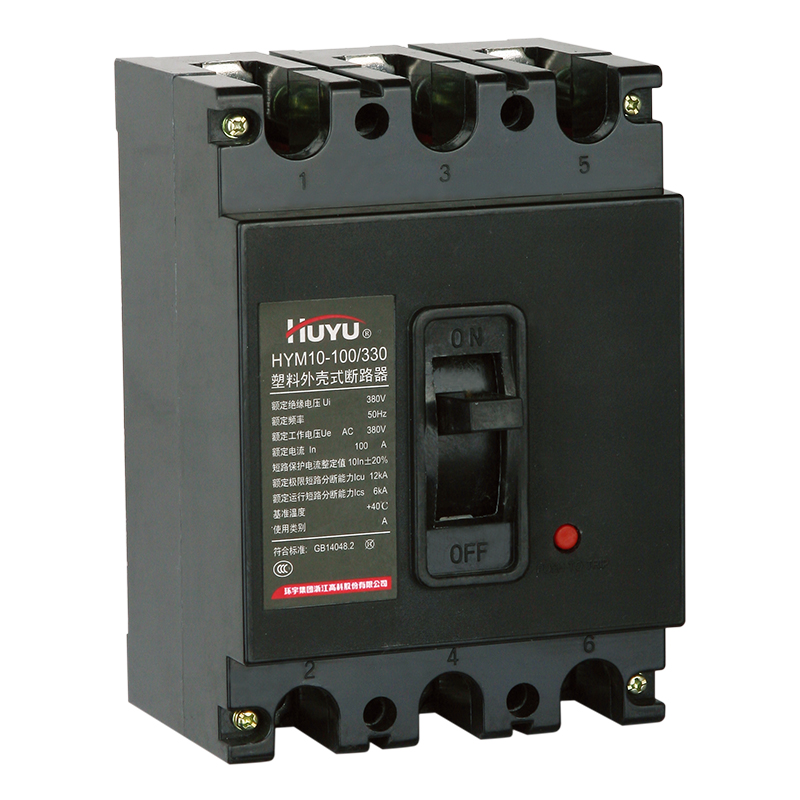
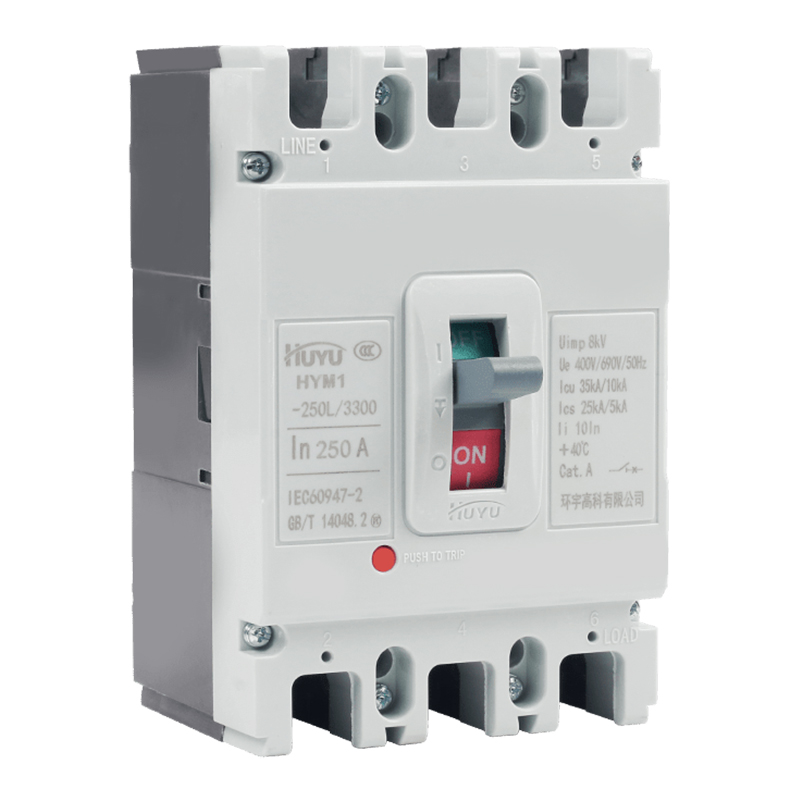
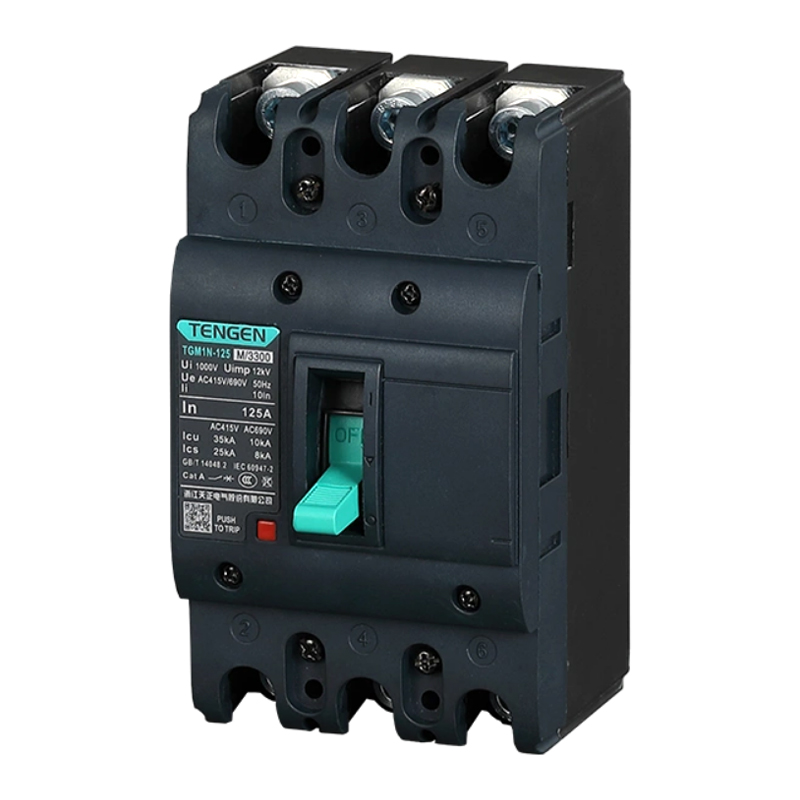
Huyu HYM10-100/331 80A 380V Molded Case Circuit Breaker
Brand:
Series:
HYM10
Protection Type:
Power distribution protection
How It Works:
Manual
Frame Current:
100A
Tripping Mode:
Thermal Magnetic
Protection Function:
LI
Wiring Method:
Front panel wiring
Poles:
3P
Rated Voltage:
380VAC
Installation:
Fixed
Trip Unit:
Compound release
Rated Current of Release:
80A
Breaking Capacity:
12KA
Model:
HYM10-100/331 80A 380V
Order Number:
1022300052
Description:
Huyu Molded Case Circuit Breaker HYM10-100/331 80A 380V,LI,Distribution Protection,12KA,100A,Fixed,Manual,3P
Product parameters
| Product attributes | Attribute value | Filter product attributes |
|---|---|---|
| Brand: | Huyu | |
| Series: | HYM10 | |
| Appendix: | Shunt release | |
| Protection Type: | Power distribution protection | |
| How It Works: | Manual | |
| Frame Current: | 100A | |
| Tripping Mode: | Thermal Magnetic | |
| Protection Function: | LI | |
| Wiring Method: | Front panel wiring | |
| Poles: | 3P | |
| Rated Voltage: | 380VAC | |
| Installation: | Fixed | |
| Trip Unit: | Compound release | |
| Rated Current of Release: | 80A | |
| Breaking Capacity: | 12KA |
Products with the same attribute : 0
Show details
Series Overview
Scope of Application
- The HYM10 series Molded Case Circuit Breakers (hereinafter referred to as the circuit breaker) are primarily suitable for infrequent switching in AC circuits with a frequency of 50Hz, voltage up to 380V, and rated operating currents ranging from 15A to 250A. The circuit breaker is equipped with overload and short-circuit protection devices to protect cables and lines from damage due to overload.
- This product complies with the GB14048.2 standard.
Normal Service Conditions
- Ambient Air Temperature
- Upper limit of ambient air temperature: +40°C.
- Average value of ambient air temperature over any 24-hour period shall not exceed +35°C.
- Lower limit of ambient air temperature: -5°C.
- Altitude: 2000m and below.
- Atmospheric Conditions
- Relative humidity of the atmosphere shall not exceed 50% at an ambient air temperature of +40°C; higher relative humidity is permissible at lower temperatures.
- The monthly average maximum relative humidity of the wettest month is 90%, and the monthly average minimum temperature of that same month is +25°C, taking into account condensation occurring on the product surface due to temperature changes.
- Pollution Degree: Pollution degree 3.
- The inclination of the mounting surface relative to the vertical plane shall not exceed 5°.
Installation Environmental Conditions
- Location without significant shaking, impact, or vibration.
- In non-explosive media, free from gases and dust (including conductive dust) sufficient to corrode metals and destroy insulation.
- Location not subject to rain or snow intrusion.
- Installation Category: Installation category for the main circuit is III; installation category for auxiliary and control circuits is II.
Main Technical Parameters
- Overcurrent Release Tripping under Overload Conditions (Inverse Time-Delay Action): The inverse time-delay tripping characteristics of the circuit breaker under simultaneous energization of all poles at an ambient air temperature of +40°C are shown in the [Characteristic Description Table].
- Overcurrent Release Tripping under Short-Circuit Conditions: The circuit breaker shall trip instantaneously at the set current values specified in the [Technical Parameters Table].
- Base of the Circuit Breaker: [Note: This line appears incomplete in the original. Translation assumes it's a section heading.]
Operating Conditions
- Closing by Electric Operating Mechanism:
- When operated by an electric mechanism, the circuit breaker shall close reliably at any voltage between 85% and 110% of the rated control supply voltage.
- Performing a no-load closing operation at 110% of the rated control supply voltage shall not cause any damage to the circuit breaker.
- At 85% of the rated control supply voltage, the circuit breaker shall be capable of closing reliably while carrying a current corresponding to its rated ultimate short-circuit breaking capacity within the permissible operating time.
- Opening:
- Opening by Shunt Release:
- When the control voltage during the operation of the release is between 70% and 110%, it shall cause the shunt release to trip under all operating conditions of the circuit breaker.
- Opening by Undervoltage Release:
- The undervoltage release shall operate when the rated operational voltage drops to between 70% and 35% of its rated value.
- The undervoltage release shall prevent the circuit breaker from closing when the supply voltage is below 35% of the release's rated operational voltage.
- The circuit breaker shall close reliably when the supply voltage is equal to or greater than 85% of the release's rated operational voltage.
- Opening by Shunt Release:
Coordination of Auxiliary Contacts with SCP (Short-Circuit Protection)
- The auxiliary contacts of the circuit breaker are recommended to be protected in series with RL6-16/6 fuses. They must withstand the prospective short-circuit current of 1000A (AC RMS) flowing during the fuse melting time in a test circuit with 1.1 times the rated operational voltage and a power factor between 0.5 and 0.7.
Installation
- Before installation, verify that the parameters on the nameplate match the actual requirements. Then securely fix the circuit breaker vertically onto the mounting plate using screws (or bolts).
- Main Circuit Wiring:
- Front Mounting Wiring: Use copper conductors with the corresponding cross-section (refer to the [Technical Parameters Table]). Strip an appropriate length of insulation, insert the conductor into the hole of the terminal lug, crimp the lug's outer sleeve tightly around the conductor, then fasten the lug's connection hole to the circuit breaker terminal using a screw. For copper busbars, first fix the terminal block to the circuit breaker, then secure it to the busbar.
- Rear Mounting Wiring: Fix the terminal block as shown in the dimensional drawing, then connect it to the corresponding conductors.
- Auxiliary Circuit Wiring: Wire the auxiliary circuits according to the corresponding diagram shown on the circuit breaker's nameplate.
- Insert the barrier plate.
- Inspection: Before putting the circuit breaker into operation, inspect it according to the installation requirements. Fixed connection parts must be secure. Operate the circuit breaker several times; its operating mechanism must be flexible and reliable.
Operation and Maintenance
- Perform periodic inspections and lubricate moving parts.
- Perform periodic inspections and remove dust from the outer casing to maintain good insulation.
- Perform periodic inspections and remove metal particles and soot from the inner walls and arc chute plates of the arc extinguishing chamber to maintain effective arc extinguishing. If the arc extinguishing chamber is damaged, the circuit breaker must not continue to be used.
- After prolonged use, remove burrs and metal particles from the contact surfaces to maintain good electrical contact.
- Maintenance of the above 4 items must only be performed by personnel with specific professional skills; unskilled personnel must not perform them.
- When selecting a circuit breaker, ensure its technical parameters match the actual requirements.
- The various characteristics and accessories of the circuit breaker are set by the manufacturer and must not be arbitrarily adjusted during use.
- After the circuit breaker trips due to overload or short-circuit protection, eliminate the fault first before performing the closing operation.
- The circuit breaker must not be exposed to rain or dropped during use, storage, or transportation.

Rachel
Industrial Control Sales Specialist: Focuses on delivering high-performance, cost-effective industrial control products. Offers end-to-end one-stop procurement support—covering rapid quotation, streamlined order fulfillment, and responsive after-sales service—to simplify clients’ procurement processes.
Email: Anthony@icxsg.com
We offer competitive product pricing. For fast support, send your email, phone, address, and the product model & quantity you want—we’ll reach out quickly!
We typically respond via email within one business day! You can also contact us at Anthony@icxsg.com