








 English
 Français
 Deutsch
 Português
 Español
 русский
  한국어
한국어 العربية
 Italiano
 Indonesia
 Schweiz
 Polski
 Nederlands
 ישראל - עברית
 Perzisch
 ไทย
ไทย 日本語
日本語 ኢትዮ-አማርኛ
 Việt Nam
 Kiswahili
 Srpski
 Ελληνικά
 简体中文
简体中文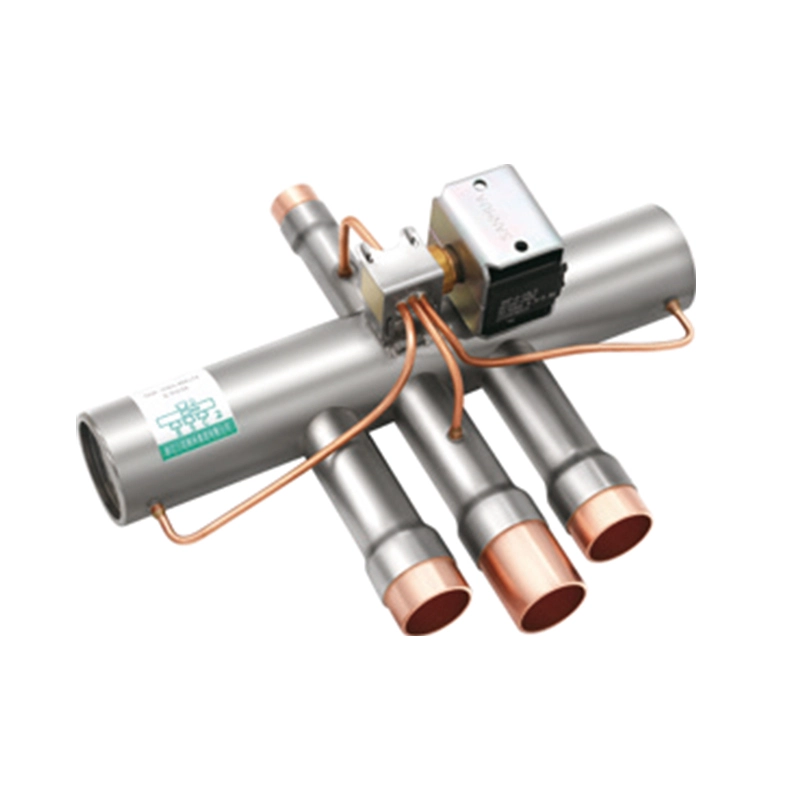
SHF(L)-70-810G34 Sanhua Stainless Steel 4 Way Reversing Valve
Product parameters
| Product attributes | Attribute value | Filter product attributes |
|---|---|---|
| Brand: | Sanhua | |
| Medium Temperature[℃ ]: | -30/+130 ℃ | |
| Min. OPD[MPa]: | 0.3 MPa | |
| Max. OPD[MPa]: | 3.1 MPa | |
| Max. Working Pressure[MPa]: | 4.2 MPa | |
| Connections ØE,S,C [inch]: | 1-1/4 inch | |
| Connections ØD [inch]: | 1 inch | |
| Fixed/Inverter AC: | Inverter | |
| Series: | SHF-G |
Series Overview
SHF series four-way reversing valves are applicable for heat
pump systems such as commercial and room air conditioners realize switching cooling mode, deforsting mode and heating mode by changing the fow path of refrigerant.
FEATURES
• ALL STAINLESS STEEL VALVE BODY AND CONNECTION BODY, HIGH COMPRESSIVE STRENGTH AND BETTER VIBRATION RESISTANCE
• LESS HEAT LOSS THAN COPPER VALVE, HIGH EFFICIENCY AND ENERGY SAVING
• THE TOP OF CONNECTION END IS DESIGNED AS A COPPER JOINT, WHICH IS CONVENIENT FOR WELDING AND INSTALLATION
• SUITABLE FOR COOLING CAPACITIES FROM 4.6kW TO 77.2 kW (R410A, CONDITION 1)
GENERAL SPECIFICATIONS
• Applicable for all common HCFC,HFC,HFO and HC refrigerants such as: R22, R134a, R404A, R407C, R410A, R507, R1234yf, R1234ze(E), R32, R290, etc.
• Ambient Medium Temperature min/ max: SHF 4G/7G/13G:
-30°C~+120°C
SHF20GR/20G/35G/50G/70G: -30°C~+130°C
• Ambient temperature min/max: -30°C~+55°C
• Relative humidity: 0 to 95% RH
• Max. operating pressure: 4.2MPa (42bar)
• Certifcations: CQC
• Installation position: - Coil upwards or with body axis in horizontal alignment
- Flow direction according to installation instruction
Details
| SHF | ||||||||||||||||||||
| Valve Series | Nominal Cooling Capacity (condition 1) KW | Nominal Cooling Capacity (condition 2) KW | ||||||||||||||||||
| R22 | R134a | R407C | R410A | R32 | R22 | R134a | R407C | R410A | R32 | |||||||||||
| ΔP:0.1bar | ΔP:0.2bar | ΔP:0.1bar | ΔP:0.2bar | ΔP:0.1bar | ΔP:0.2bar | ΔP:0.1bar | ΔP:0.2bar | ΔP:0.1bar | ΔP:0.2bar | ΔP:0.1bar | ΔP:0.2bar | ΔP:0.1bar | ΔP:0.2bar | ΔP:0.1bar | ΔP:0.2bar | ΔP:0.1bar | ΔP:0.2bar | ΔP:0.1bar | ΔP:0.2bar | |
| SHF3 | 3.1 | 4.4 | 2.4 | 3.4 | 2.9 | 4.1 | 3.8 | 5.3 | 4.9 | 6.9 | 2.9 | 4.1 | 2.2 | 3.1 | 2.7 | 3.8 | 3.4 | 4.8 | 4.6 | 6.4 |
| SHF4 | 3.5 | 5.0 | 2.7 | 3.9 | 3.3 | 4.7 | 4.3 | 6.1 | 5.5 | 7.8 | 3.3 | 4.7 | 2.5 | 3.6 | 3.1 | 4.4 | 3.9 | 5.5 | 5.2 | 7.4 |
| SHF7 | 6.4 | 9.1 | 5.0 | 7.0 | 6.1 | 8.6 | 7.8 | 11.1 | 10.1 | 14.2 | 6.1 | 8.6 | 4.6 | 6.5 | 5.6 | 7.9 | 7.1 | 10.0 | 9.4 | 13.3 |
| SHF11 | 10.0 | 14.1 | 7.7 | 10.9 | 9.4 | 13.3 | 12.1 | 17.1 | 15.6 | 22.1 | 9.4 | 13.3 | 7.1 | 10.1 | 8.7 | 12.3 | 11.0 | 15.6 | 14.6 | 20.7 |
| SHF14 | 14.6 | 20.7 | 11.3 | 15.9 | 13.8 | 19.5 | 17.8 | 25.2 | 22.9 | 32.4 | 13.8 | 19.5 | 10.5 | 14.8 | 12.7 | 18.0 | 16.1 | 22.8 | 21.5 | 30.4 |
| SHF20 | 21.9 | 31.0 | 16.9 | 23.9 | 20.7 | 29.3 | 26.7 | 37.7 | 34.3 | 48.6 | 20.7 | 29.2 | 15.7 | 22.2 | 19.1 | 27.0 | 24.2 | 34.2 | 32.2 | 45.5 |
| SHF35 | 32.5 | 46.0 | 25.1 | 35.5 | 30.7 | 43.5 | 39.6 | 56.0 | 51.0 | 72.1 | 30.7 | 43.4 | 23.4 | 33.0 | 28.4 | 40.1 | 36.0 | 50.9 | 47.8 | 67.6 |
| SHF50 | 41.8 | 59.2 | 32.3 | 45.6 | 39.5 | 55.9 | 50.9 | 72.0 | 65.6 | 92.7 | 39.4 | 55.8 | 30.0 | 42.5 | 36.5 | 51.6 | 46.2 | 65.4 | 61.5 | 86.9 |
| SHF70 | 63.1 | 89.2 | 48.7 | 68.8 | 59.6 | 84.3 | 76.8 | 108.6 | 98.9 | 139.8 | 59.5 | 84.5 | 45.3 | 64.0 | 55.0 | 77.8 | 69.7 | 98.6 | 92.7 | 131.1 |
| SHF100 | 89.6 | 126.8 | 69.1 | 97.8 | 84.7 | 119.7 | 109.1 | 154.3 | 140.5 | 198.7 | 84.5 | 119.6 | 64.3 | 91.0 | 78.1 | 110.5 | 99.1 | 140.1 | 131.7 | 186.3 |
| SHF140 | 129.3 | 182.8 | 99.7 | 141.0 | 122.1 | 172.7 | 157.4 | 222.6 | 202.6 | 286.5 | 121.9 | 172.4 | 92.8 | 131.2 | 112.7 | 159.3 | 142.9 | 202.0 | 190.0 | 268.7 |
| SHF175 | 156.1 | 220.7 | 120.4 | 170.2 | 147.4 | 208.4 | 190.0 | 268.7 | 244.5 | 345.8 | 147.2 | 208.1 | 112.0 | 158.4 | 136.0 | 192.3 | 172.5 | 243.9 | 229.3 | 324.3 |
| SHF210 | 186.8 | 264.2 | 144.1 | 203.8 | 176.4 | 249.5 | 227.4 | 321.7 | 292.8 | 414.0 | 176.2 | 249.1 | 134.1 | 189.6 | 162.8 | 230.3 | 206.5 | 292.0 | 274.5 | 388.3 |
| SHF350 | 306.4 | 433.2 | 236.3 | 334.2 | 289.3 | 409.2 | 373.0 | 527.4 | 480.1 | 678.9 | 288.9 | 408.5 | 219.9 | 311.0 | 267.0 | 377.6 | 338.6 | 478.8 | 450.2 | 636.7 |
| SHF420 | 391.8 | 554.1 | 302.2 | 427.4 | 370.0 | 523.3 | 477.0 | 674.6 | 613.9 | 868.3 | 369.4 | 522.5 | 281.2 | 397.7 | 341.5 | 482.9 | 433.0 | 612.3 | 575.8 | 814.2 |
| Note: 1.ΔP represents the pressure drop from ØC to ØS or from ØE to ØS; 2. The selection capacity of the four-way valve for R32 systems should be ≥60%. It is not recommended to use the four-way valve in systems with a capacity less than 60% of the nominal capacity. When used in R32 systems, it is essential to ensure the reliability of low-pressure commutation under extreme conditions. |
||||||||||||||||||||
Product Introduction
The Sanhua SHF (L)-70-810G34 Stainless Steel Four-Way Reversing Valve is a precision control component designed for medium-flow industrial fluid systems. Its core advantages lie in the standardized G34 interface and corrosion-resistant stainless steel construction. This model is particularly suitable for petrochemical and food processing applications, where both high fluid control accuracy and strong anti-corrosion performance are required. It enables bidirectional switching of fluid media, providing a stable flow-direction solution for medium-scale production lines.
Key Specifications
The valve’s nominal diameter complies with the 70-series standard, with an operating pressure range of 0.8–4.0 MPa and working temperature from -20°C to 120°C. Its G34 threaded interface (ISO 228 internal thread) supports DN32 pipeline connections.
Compared to the G35 version, the G34 interface is more suitable for medium to low flow applications (recommended flow rate: 15–25 m³/h). The 6H precision thread tolerance minimizes leakage risk. The 304 stainless steel valve body meets GB/T 12224 standards for chloride resistance, ensuring reliable corrosion protection in harsh environments.
Technical Advantages & Innovations
-
Optimized flow channel design reduces flow resistance by 18% compared to similar products, improving transmission efficiency.
-
Pilot-operated control mechanism combined with stainless steel sealing elements ensures a reversal response time ≤ 0.5 s under medium-pressure conditions.
-
Seal life exceeds 80,000 cycles, maintaining performance stability.
-
Passivated valve surface guarantees over 5 years of rust-free operation in industrial environments with up to 85% humidity, ideal for high-moisture production settings.
Typical Application Scenarios
-
Food-grade fluid transfer lines – Used for sterile fluids such as juice or dairy products. The G34 connection fits standard food-grade pipelines, and the 304 stainless steel body meets hygienic process requirements, preventing corrosion from acidic fluids.
-
Small and medium chemical reactors – Manages feed and discharge of acid/alkali media under 4.0 MPa working pressure. Corrosion-resistant materials enhance safety and prevent leakage.
-
HVAC water systems – Ideal for medium-sized commercial HVAC water loops. The G34 flow capacity suits 1,000–2,000 m² building systems, improving overall operational efficiency in heating/cooling cycles.
Installation & Compatibility Notes
-
Use G34 standard sealing gaskets to prevent leakage from interface mismatches.
-
The valve must be installed in alignment with the flow direction mark, with a maximum horizontal inclination of 15°.
-
During commissioning, verify switching response time; it is recommended to pair with a Sanhua pilot valve to ensure stable control signals and avoid response delay caused by pressure fluctuations.
Application scenarios
-
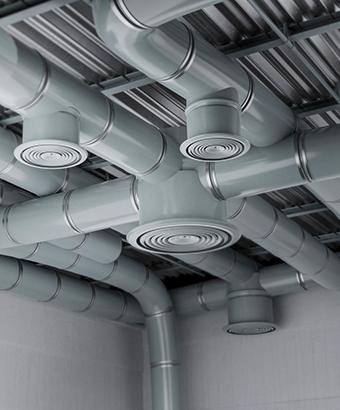
Distributed Ventilation System
The distributed ventilation system is a decentralized air treatment solution. Different from the traditional central ventilation system, it controls tSee more -
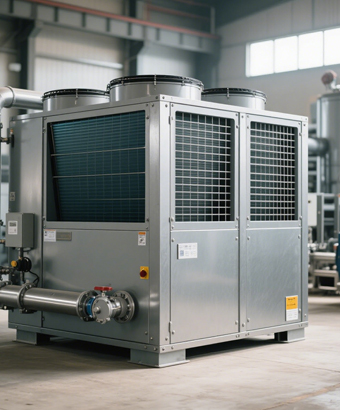
Heat Pumps
Heat pump is a device that transfers heat from a low-temperature environment to a high-temperature environment by consuming a small amount of electricSee more -
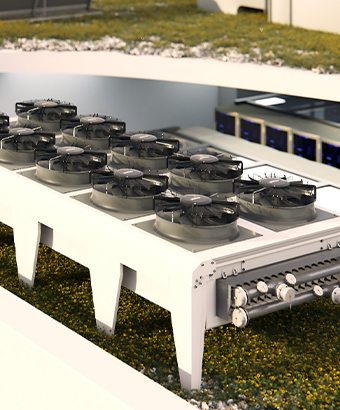
Condensers
In the condenser, the fan (especially the fan in the air-cooled condenser) is a key component to accelerate heat dissipation, improve energy efficiencSee more -

Data Center
Fans are key components of the data center's cooling system, directly affecting server stability, power usage effectiveness (PUE) and operation and maSee more

Rachel
We offer competitive product pricing. For fast support, send your email, phone, address, and the product model & quantity you want—we’ll reach out quickly!
We typically respond via email within one business day! You can also contact us at Anthony@icxsg.com